
One of the most common misconceptions in men’s skincare is that oily or acne-prone skin doesn’t need a moisturizer. If you are struggling with breakouts, your first instinct might be to 'dry out' the skin using harsh cleansers and spot treatments. However, as a dermatologist, I see the result of this approach every day: a damaged skin barrier, increased irritation, and—ironically—more acne.
Is Your Routine Acne-Safe?
Do not guess. Instantly check your products for pore-clogging ingredients with our AI-powered tool.
Check Ingredients NowWhen your skin becomes dehydrated, it compensates by producing even more sebum (oil). This excess oil, combined with dead skin cells, creates the perfect storm for clogged pores and inflammatory acne. The secret to breaking this cycle isn't skipping hydration; it’s choosing an 'acne-safe' moisturizer specifically formulated for a man’s skin.
Why Men’s Skin Needs Specific Care
Men typically have thicker skin and larger pores than women, largely due to higher testosterone levels. This often results in higher sebum production. Additionally, daily or weekly shaving can compromise the stratum corneum (the outermost layer of the skin), leading to micro-tears and increased sensitivity. An effective moisturizer for men must provide a protective barrier without feeling heavy or 'greasy.'
The Science of 'Non-Comedogenic' Ingredients
In the world of dermatology, we use the term 'comedogenic' to describe ingredients likely to cause 'comedones' (blackheads and whiteheads). An acne-safe moisturizer is essentially a non-comedogenic one. But the label 'non-comedogenic' isn't regulated by the FDA, which means you need to look closer at the ingredient list.
Ingredients to Prioritize
- Hyaluronic Acid: This is a humectant that can hold 1,000 times its weight in water. It provides deep hydration without adding a drop of oil to the skin.
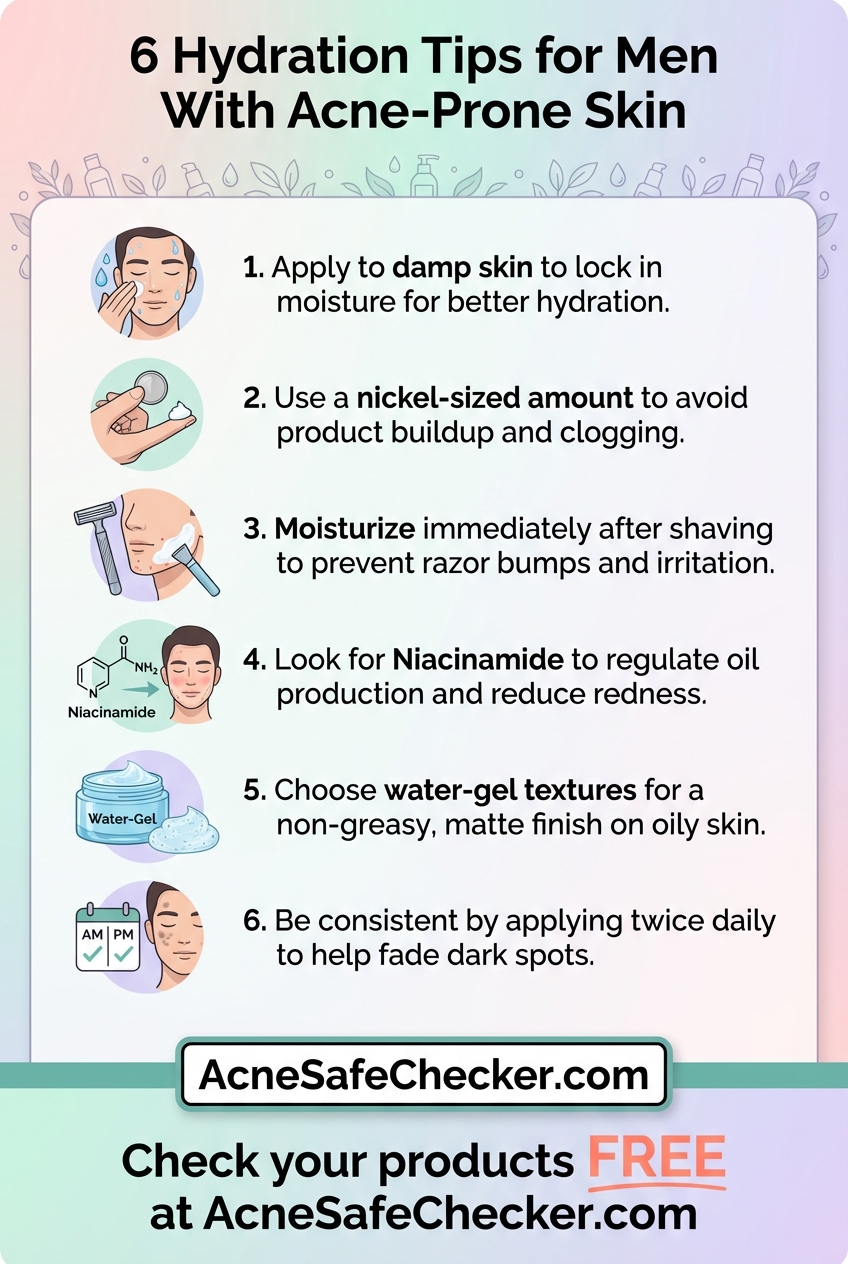
- Niacinamide (Vitamin B3): A powerhouse for acne-prone men. It regulates oil production, reduces redness from active breakouts, and strengthens the skin barrier.
- Ceramides: These are lipids that naturally occur in the skin. They help repair the damage caused by harsh acne treatments like benzoyl peroxide or salicylic acid.
- Squalane: Unlike heavier oils, squalane is a lightweight, non-clogging lipid that mimics the skin’s natural oils, providing moisture without the shine.
The 'Red Flag' Ingredients to Avoid
If you are prone to breakouts, you should strictly avoid the following 'pore-cloggers' commonly found in many drug-store moisturizers:
- Coconut Oil (Cocos Nucifera): Highly comedogenic and a major trigger for cystic acne.
- Isopropyl Palmitate & Isopropyl Myristate: These are fatty acid esters that give products a 'smooth' feel but are notorious for blocking pores.
- Cocoa Butter & Shea Butter: While great for the body, these are often too heavy for facial skin that is prone to congestion.
- Sodium Lauryl Sulfate: Often used as an emulsifier, it can be highly irritating to the skin barrier.
Choosing the Right Texture for Your Skin Type
Not all acne-safe moisturizers are created equal. You should choose your formulation based on your specific skin sub-type:
For Oily Skin: The Water-Gel
Water-gels or 'aqua-bombs' are usually silicone or water-based. They absorb almost instantly and leave a matte finish, which is ideal for men who dislike the feeling of 'product' on their face.
For Combination Skin: The Lightweight Lotion
If you are oily in the T-zone (forehead, nose, and chin) but dry on your cheeks, a lightweight lotion offers a balance. It provides enough occlusion to keep the cheeks hydrated without overwhelming the oily areas.
For Dry/Sensitive Acne-Prone Skin: The Oil-Free Cream
If you are using prescription retinoids (like Tretinoin or Adapalene), your skin might actually feel dry and flaky. In this case, look for an oil-free cream. These are thicker but formulated without the heavy oils that cause breakouts.
Practical Steps: How to Apply Like a Pro
To get the most out of your acne-safe moisturizer, follow these clinical best practices:
- Apply to Damp Skin: After washing your face, pat it gently with a towel so it remains slightly damp. Applying moisturizer at this stage 'traps' the water in your skin for better hydration.
- The 'Less is More' Rule: A nickel-sized amount is usually enough for the entire face and neck. Over-applying can lead to product buildup.
- Don't Skip the Post-Shave: Shaving is a form of exfoliation. Always apply your acne-safe moisturizer immediately after shaving to soothe the skin and prevent 'folliculitis' (razor bumps that look like acne).
- Consistency is Key: Use your moisturizer twice daily—once in the morning and once before bed. Hydrated skin heals faster, meaning your post-acne dark spots (hyperpigmentation) will fade more quickly.
Conclusion
Finding the right acne-safe moisturizer for men is not about finding the 'strongest' product, but the smartest one. By focusing on non-comedogenic ingredients like Hyaluronic Acid and Niacinamide, and avoiding heavy waxes and oils, you can maintain a healthy skin barrier that is resilient against breakouts. Remember, a well-hydrated face is a clear face. If you continue to struggle with persistent acne despite a clean routine, consult with a board-certified dermatologist to discuss professional treatment options.