
Finding a moisturizer that hydrates without triggering a breakout can feel like an endless quest, especially for those with oily or acne-prone skin. In the age of viral skincare, Byoma has emerged as a powerhouse brand, praised for its focus on barrier health and its vibrant, shelf-friendly packaging. But for those of us who scrutinize every label for fear of congestion, one question remains: Does Byoma Gel Cream clog pores?
Is Your Routine Acne-Safe?
Do not guess. Instantly check your products for pore-clogging ingredients with our AI-powered tool.
Check Ingredients NowAs a dermatologist, I see many patients who are wary of new products. In this guide, we will analyze the science behind the Byoma Moisturizing Gel Cream formula to determine if it is a safe bet for your pores.
Understanding the Byoma Moisturizing Gel Cream Formula
To understand if a product will clog your pores (a process known as comedogenesis), we have to look beyond the marketing and into the chemistry. The Byoma Moisturizing Gel Cream is designed to be a lightweight, daily moisturizer that focuses on strengthening the skin barrier.
Unlike traditional heavy creams that rely on occlusive waxes or thick oils, this product uses a "gel-cream" texture. This hybrid consistency is specifically formulated to provide the hydration of a cream with the weightless feel of a gel, making it naturally more appealing to those with congestion-prone skin.
The Science of "Non-Comedogenic" Labels
Byoma markets this product as non-comedogenic. However, as an expert, it is important to clarify that "non-comedogenic" is not a strictly regulated medical term. It generally means the product has been formulated without ingredients known to clog pores in most people.
To truly answer the question, we must look at the specific ingredients inside the bottle: the Tri-Ceramide Complex, Niacinamide, and Green Tea.
1. The Tri-Ceramide Complex
Byoma’s signature is their Tri-Ceramide Complex, which includes ceramides, cholesterol, and fatty acids. While "fatty acids" might sound scary to someone with oily skin, these are essential components of your skin’s natural lipid barrier. When your barrier is healthy, your skin is actually less likely to overproduce oil and become clogged. These ingredients are bio-identical to what your skin produces and are generally considered non-clogging.
2. Niacinamide (Vitamin B3)
Niacinamide is a superstar for acne-prone individuals. It is a water-soluble vitamin that helps regulate sebum (oil) production and minimizes the appearance of pores. Rather than clogging your skin, Niacinamide works to keep the "pore pipes" clear and calm inflammation.
3. Green Tea Extract
Green tea is rich in polyphenols, which have antioxidant and anti-inflammatory properties. It helps soothe the redness often associated with acne and provides hydration without adding weight or greasiness to the skin.
Does It Contain Pore-Clogging Culprits?
When we analyze the full ingredient list of the Byoma Gel Cream, we notice a distinct absence of common comedogenic offenders. It is:
- Oil-Free: It does not use heavy mineral oils or high-oleic vegetable oils that can sit on the surface and trap bacteria.
- Alcohol-Free: It avoids drying alcohols that can strip the skin and cause a rebound effect of excess oil production.
- Fragrance-Free: Fragrance is a common irritant that can cause micro-inflammation, leading to secondary breakouts.
Because the formula is water-based and uses lightweight humectants like glycerin, the risk of it causing "cosmetic acne" (acne caused by products) is remarkably low.
Practical Advice: How to Use Byoma Without Breaking Out
Even with a "safe" formula, how you apply your skincare matters. If you are prone to clogged pores, follow these dermatologist-approved steps:
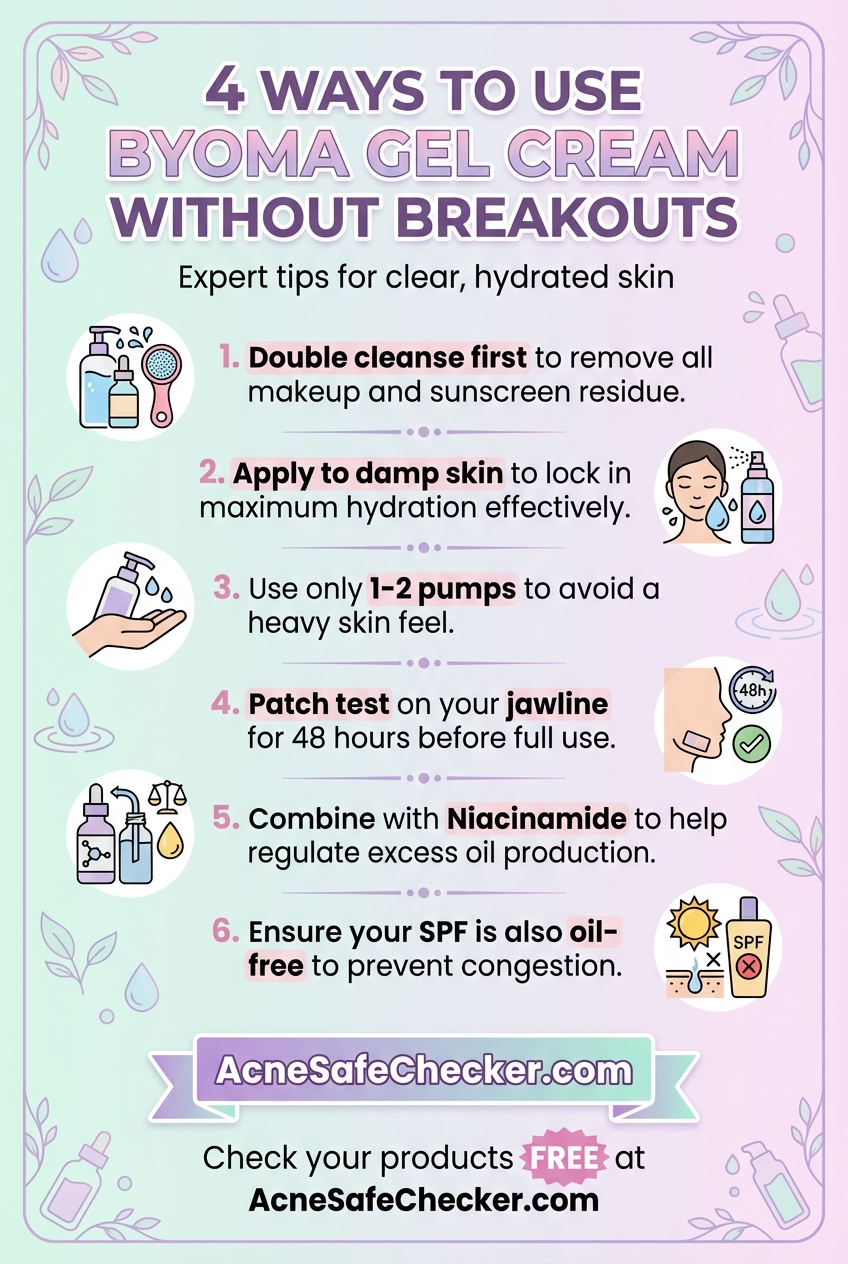
- Double Cleanse: If you wear makeup or water-resistant sunscreen, ensure you are removing it completely before applying the Gel Cream. A clean canvas prevents the moisturizer from trapping debris into your pores.
- Apply to Damp Skin: Gel-creams work best when applied to slightly damp skin. This helps the humectants pull moisture into the skin more effectively.
- The "Less is More" Rule: Because this formula is concentrated, you only need 1-2 pumps. Over-applying any product, even a lightweight one, can sometimes lead to a heavy feeling on the skin.
- Patch Test: Everyone’s skin is unique. Apply a small amount to your jawline for 48 hours to ensure your skin doesn't have a specific sensitivity to one of the botanical extracts.
The Verdict: Will It Clog Your Pores?
For the vast majority of users—including those with oily, combination, and acne-prone skin—Byoma Moisturizing Gel Cream will not clog pores.
Its oil-free, water-based structure and the inclusion of sebum-regulating Niacinamide make it an excellent choice for those who need hydration without the bulk. It provides the necessary lipids to repair the skin barrier (which is often damaged by harsh acne treatments) without the heavy occlusives that typically lead to blackheads and whiteheads.
Final Thoughts
If you have been avoiding moisturizers because you fear the "clog," Byoma Gel Cream is a scientifically sound place to start. It respects the skin's natural physiology while providing a breathable finish. However, if you find you are still breaking out, look at other steps in your routine—such as your cleanser or SPF—as these are often the more likely culprits for persistent congestion.