
For many makeup enthusiasts, setting spray is the ultimate holy grail—the final step that ensures a flawless look survives humidity, long workdays, and even a night out. However, if you are prone to breakouts, you may have noticed a frustrating pattern: a day of wearing a full face of 'locked-in' makeup often results in new blemishes by the next morning.
Is Your Routine Acne-Safe?
Do not guess. Instantly check your products for pore-clogging ingredients with our AI-powered tool.
Check Ingredients NowAs a dermatologist, I am frequently asked, "Does setting spray cause acne?" The answer isn't a simple yes or no, but rather a look into how these products interact with your skin's unique ecosystem.
Understanding the Mechanics of Setting Spray
To understand why setting spray might be triggering your acne, we first need to look at how it works. Unlike a hydrating facial mist, a setting spray is designed to create a literal barrier. Most formulas contain film-forming agents—typically polymers like PVP (polyvinylpyrrolidone) or acrylic copolymers.
When you mist these onto your face, the liquid evaporates, leaving behind a microscopic, plastic-like film that binds your makeup together and prevents it from budging. While this is great for your eyeliner, it can be problematic for your pores.
How Setting Sprays Can Trigger Breakouts
1. The "Greenhouse Effect"
Setting sprays are occlusive by nature. By creating a seal over your skin, they don't just keep makeup in; they can also trap sweat, sebum (skin oil), and environmental pollutants underneath. This creates a warm, moist environment—a literal "greenhouse"—where C. acnes bacteria thrive. If you wear setting spray during a workout or in high humidity, this risk increases significantly.
2. High Alcohol Content
Many traditional setting sprays rely heavily on denatured alcohol (Alcohol Denat) or SD alcohol. Alcohol is used because it allows the spray to dry almost instantly. However, for acne-prone individuals, high concentrations of alcohol can strip the skin’s natural lipid barrier. When your skin becomes overly dry and irritated, it often overcompensates by producing even more oil, which can lead to clogged pores and inflammatory acne.
3. Comedogenic Ingredients and Fragrances
Beyond the film-formers, many sprays contain fragrances, essential oils, or heavy silicones to provide a certain scent or finish. For sensitive or acne-prone skin, these additives can cause contact dermatitis or "acne cosmetica"—a specific type of acne triggered by topical products.
Is It the Spray or the Removal?
In many cases, the setting spray itself isn't the primary cause of the breakout, but rather the difficulty of removing it. Because setting sprays are designed to be water-resistant and long-wearing, a quick splash of water or a gentle foaming cleanser may not be enough to break down that polymer film.
If the film isn't fully dissolved, it leaves behind a residue that mixes with leftover foundation and dead skin cells, guaranteeing a breakout. This is why many dermatologists insist on a "double cleanse" routine for anyone using long-wear makeup products.
How to Choose an Acne-Friendly Setting Spray
You don't necessarily have to banish setting spray from your routine. Instead, look for formulas specifically designed with skin health in mind:
- Look for "Non-Comedogenic": While not a guarantee, this label indicates the product was formulated without ingredients known to clog pores.
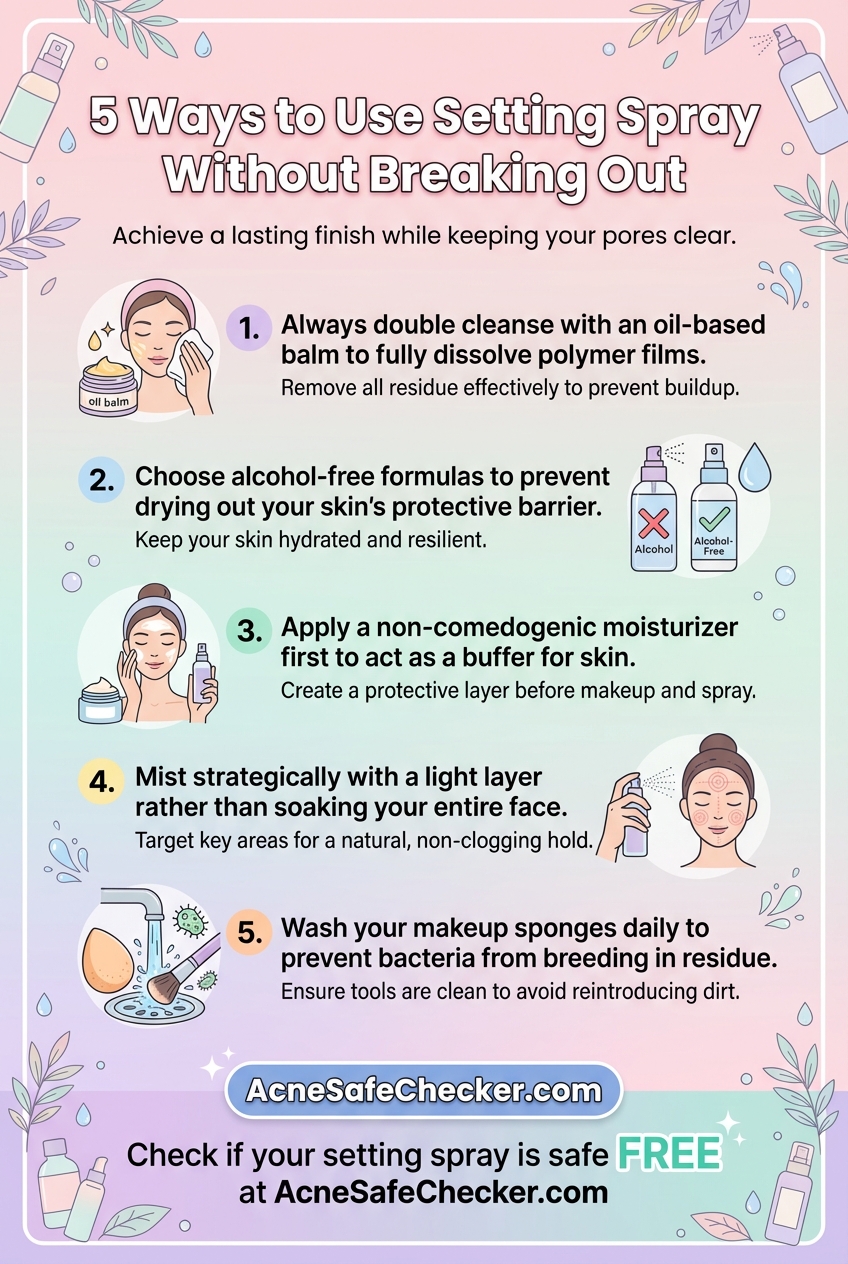
- Prioritize Alcohol-Free Formulas: Many modern brands now offer water-based setting sprays that use gentler film-formers. These are less likely to irritate the skin barrier.
- Check for Soothing Ingredients: Look for sprays containing niacinamide (to regulate oil), aloe vera, or green tea extract to soothe potential inflammation.
- Avoid Heavy Fragrance: If you have sensitive skin, opt for a fragrance-free version to minimize the risk of irritation-induced breakouts.
Practical Tips for Clear Skin
If you love the finish of a setting spray but want to protect your skin, follow these dermatologist-recommended steps:
- Prep Properly: Always apply setting spray over a clean, moisturized base. A lightweight, non-comedogenic moisturizer acts as a buffer between your skin and the setting film.
- The Double Cleanse is Mandatory: At the end of the day, use an oil-based cleanser or micellar water first to dissolve the setting spray and makeup. Follow this with a traditional water-based cleanser to deep-clean the pores.
- Clean Your Tools: If you spray your makeup sponge or brushes with setting spray to intensify pigment, make sure you wash them after every use. The polymer residue can turn your tools into a breeding ground for bacteria.
- Mist Strategically: You don't always need five pumps of spray. A light misting is often sufficient to hold makeup in place without creating an impenetrable seal.
The Bottom Line
Setting spray does not directly "cause" acne in the same way that hormones or genetics do, but it can certainly act as a catalyst. By trapping oils and bacteria or irritating the skin barrier with harsh alcohols, it creates the perfect environment for blemishes to form.
If you have active inflammatory acne, it may be best to skip the setting spray until your skin barrier has healed. For those with stable, acne-prone skin, choosing the right formula and commitment to a rigorous double-cleansing routine are the keys to enjoying a long-lasting look without the post-makeup breakout.