
Double cleansing has skyrocketed in popularity, praised by skincare enthusiasts and dermatologists alike for its ability to dissolve stubborn SPF, heavy makeup, and accumulated pollutants. The theory is sound: use an oil-based cleanser to melt away sebum and oil-soluble debris, followed by a water-based cleanser to sweep away the rest.
Is Your Routine Acne-Safe?
Do not guess. Instantly check your products for pore-clogging ingredients with our AI-powered tool.
Check Ingredients NowHowever, for a significant number of people—especially those with acne-prone or sensitive skin—this two-step process leads to a frustrating irony: more breakouts. If you started double cleansing to achieve a glowing complexion but ended up with a flare-up of whiteheads or cystic acne, you aren’t alone. Understanding the science behind why this happens is the first step toward reclaiming your skin health.
Why Double Cleansing Can Sometimes Backfire
While the goal of double cleansing is a deeper clean, several factors can turn this beneficial habit into a recipe for congestion. Here are the most common scientific reasons your skin might be reacting negatively.
1. The Use of Comedogenic Ingredients
Not all oils are created equal. Many oil-based cleansers and balms use base oils that are highly comedogenic, meaning they have a high probability of clogging pores. Common culprits include coconut oil, cocoa butter, or certain synthetic esters like isopropyl myristate. For individuals with oily or acne-prone skin, these ingredients can settle into the follicle and become trapped, leading to closed comedones (whiteheads) and inflammatory acne.
2. Incomplete Emulsification
A high-quality oil cleanser should contain "emulsifiers"—ingredients that allow oil to mix with water. When you apply water to your oil-cleansed face, it should turn milky and rinse away easily. If the product lacks effective emulsifiers, or if you don’t spend enough time rinsing, a thin film of "dirty" oil and dissolved debris remains on the skin. Your second cleanser may not be powerful enough to cut through this residue, leaving your pores blocked.
3. Skin Barrier Disruption and Over-Cleansing
Skin health is a delicate balance of moisture and oil. Over-cleansing—the act of stripping too many natural lipids from the stratum corneum—can damage the skin barrier. When the barrier is compromised, it triggers a state of "reactive seborrhea," where the skin overproduces oil to compensate for the dryness. Furthermore, a damaged barrier is more susceptible to Cutibacterium acnes (the bacteria responsible for acne) and environmental irritants.
Is It a "Purge" or a Breakout?
In the skincare world, "purging" occurs when an active ingredient (like a retinoid or an acid) speeds up cell turnover, bringing existing clogs to the surface. Oil cleansers do not cause purging. Because they do not contain active ingredients that increase cell turnover, any new bumps or cysts you experience after starting a double cleanse are likely a standard breakout caused by irritation or pore-clogging residues.
How to Double Cleanse Without Breaking Out
If you want the benefits of a deep clean without the risk of acne, you don’t necessarily have to abandon the method. Instead, you need to refine your technique and product selection.
Choose Non-Comedogenic Oils
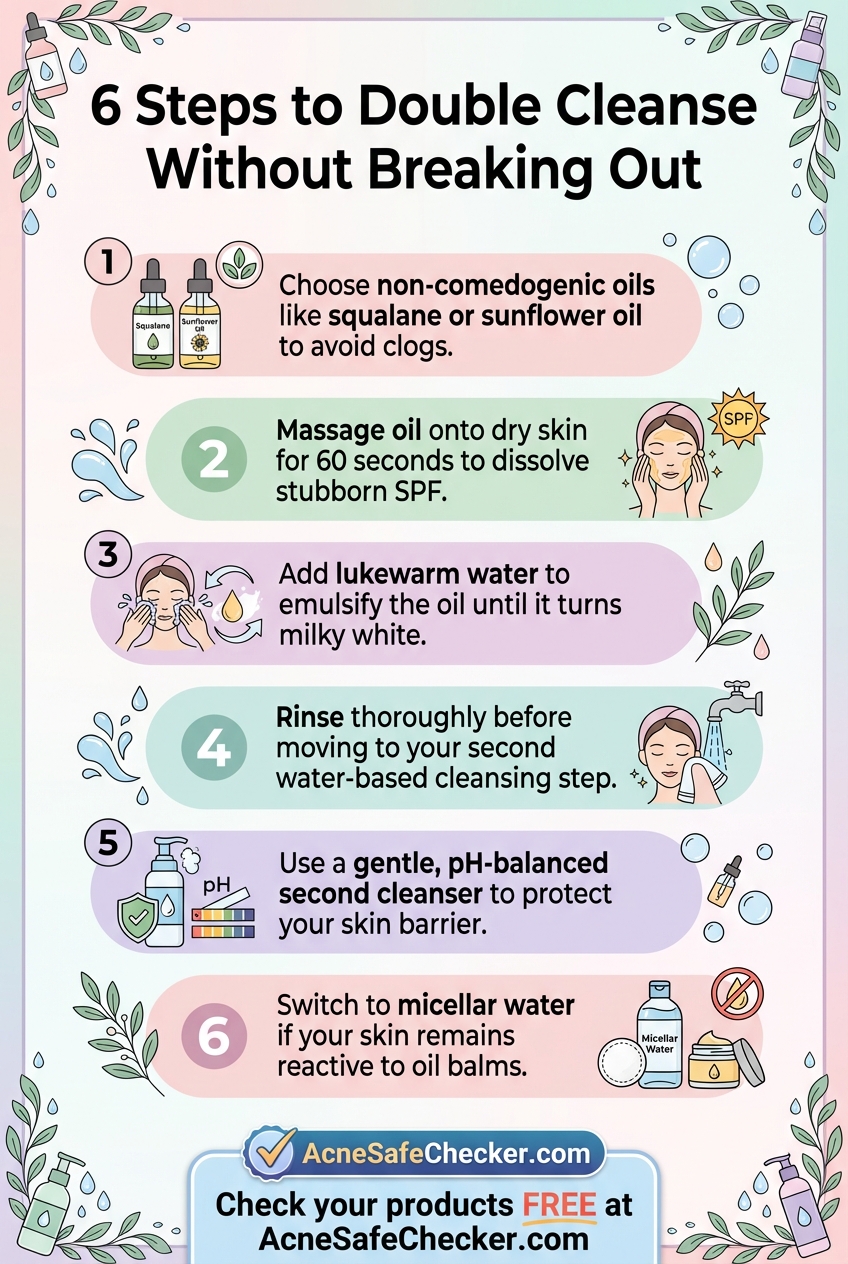
Look for oil cleansers specifically formulated for acne-prone skin. Ingredients like sunflower seed oil, grapeseed oil, safflower oil, and squalane are generally safer for those prone to congestion. Avoid heavy, DIY kitchen oils like olive or coconut oil, which are too thick to be properly rinsed from the pores.
The "60-Second Rule"
To ensure the oil cleanser effectively dissolves debris, massage it onto dry skin for about 45 to 60 seconds. This gives the formula enough time to break down stubborn sunscreens. Then, add a small amount of lukewarm water to emulsify the product until it turns white before rinsing it off completely. Only then should you move to your water-based cleanser.
Focus on the Second Cleanse
Your second cleanser should be a gentle, pH-balanced formula that effectively removes any lingering oil without stripping the skin. Look for ingredients like glycerin or ceramides to support the skin barrier while you cleanse.
Consider Micellar Water as an Alternative
If oil-based balms and cleansers consistently cause issues regardless of the formula, consider using micellar water as your first step. Micellar water uses tiny oil molecules (micelles) suspended in soft water to attract and lift away makeup and oil. It is often less heavy and easier to rinse away than traditional cleansing oils, making it an excellent choice for highly reactive or oily skin types.
Conclusion: Listen to Your Skin
Double cleansing is a tool, not a requirement. While it is highly effective for removing heavy makeup and mineral sunscreens, it isn't a "one size fits all" solution. If you have adjusted your technique and chosen non-comedogenic formulas but are still experiencing breakouts, your skin may simply prefer a single, thorough cleanse or a gentler micellar water routine.
Skincare is deeply personal. By understanding the ingredients in your products and the mechanics of how they interact with your skin barrier, you can build a routine that supports clarity rather than causing congestion. If your breakouts persist, it is always best to consult with a board-certified dermatologist to rule out other underlying causes of acne.