
If you have ever dealt with persistent, itchy, uniform bumps on your forehead, chest, or back that simply refuse to respond to traditional acne treatments like salicylic acid or benzoyl peroxide, you might not be dealing with acne at all. Instead, you could be experiencing Malassezia folliculitis, more commonly known as fungal acne.
Is Your Routine Acne-Safe?
Do not guess. Instantly check your products for pore-clogging ingredients with our AI-powered tool.
Check Ingredients NowAs a dermatologist, I see patients daily who are frustrated by the "clear skin" paradox: they know they need sunscreen to prevent aging and skin cancer, yet most sunscreens on the market seem to make their fungal acne flare up almost instantly. This guide will explain the science behind fungal acne and help you navigate the complex world of SPF ingredients to find a truly safe solution.
What is Fungal Acne (Malassezia Folliculitis)?
To understand why your sunscreen might be causing problems, we first need to define the condition. Fungal acne isn't actually acne. While traditional acne (acne vulgaris) is caused by bacteria (C. acnes) and trapped sebum, fungal acne is an infection of the hair follicles caused by an overgrowth of Malassezia yeast.
This yeast is a normal part of the skin's microbiome, but it becomes problematic when it multiplies uncontrollably. It thrives in warm, humid environments and—most importantly—it feeds on specific types of fats and oils found in skincare products.
The Science: Why Traditional Sunscreens Trigger Flares
Most sunscreens are formulated with a variety of emollients, esters, and fatty acids to give them a spreadable, moisturizing texture. Unfortunately, the Malassezia yeast is highly picky about its food source. Research shows that this yeast consumes fatty acids with carbon chain lengths between 11 and 24.
When you apply a sunscreen containing these specific lipids, you are essentially providing a buffet for the yeast, allowing it to proliferate and cause the characteristic itchy, red bumps.
Ingredients to Avoid
If you have fungal acne, you must become a label detective. Avoid sunscreens containing:
- Fatty Acids: Lauric, Myristic, Palmitic, Stearic, Oleic, and Linoleic acids.
- Oils: Most natural oils (coconut, rosehip, almond) are high in the carbon chains that feed yeast. (Exceptions include squalane oil and MCT oil).
- Esters: Look for ingredients ending in "-ate" (e.g., Isopropyl Palmitate, Glyceryl Stearate).
- Polysorbates: Often used as emulsifiers (e.g., Polysorbate 20, 80).
- Fermented Ingredients: Some fermented extracts can inadvertently encourage yeast growth in sensitive individuals.
How to Choose a Fungal Acne Safe Sunscreen
Finding a "safe" sunscreen requires looking for formulations that use synthetic polymers, silicones, or specific esters that fall outside the yeast’s preferred feeding range.
1. Mineral vs. Chemical Filters
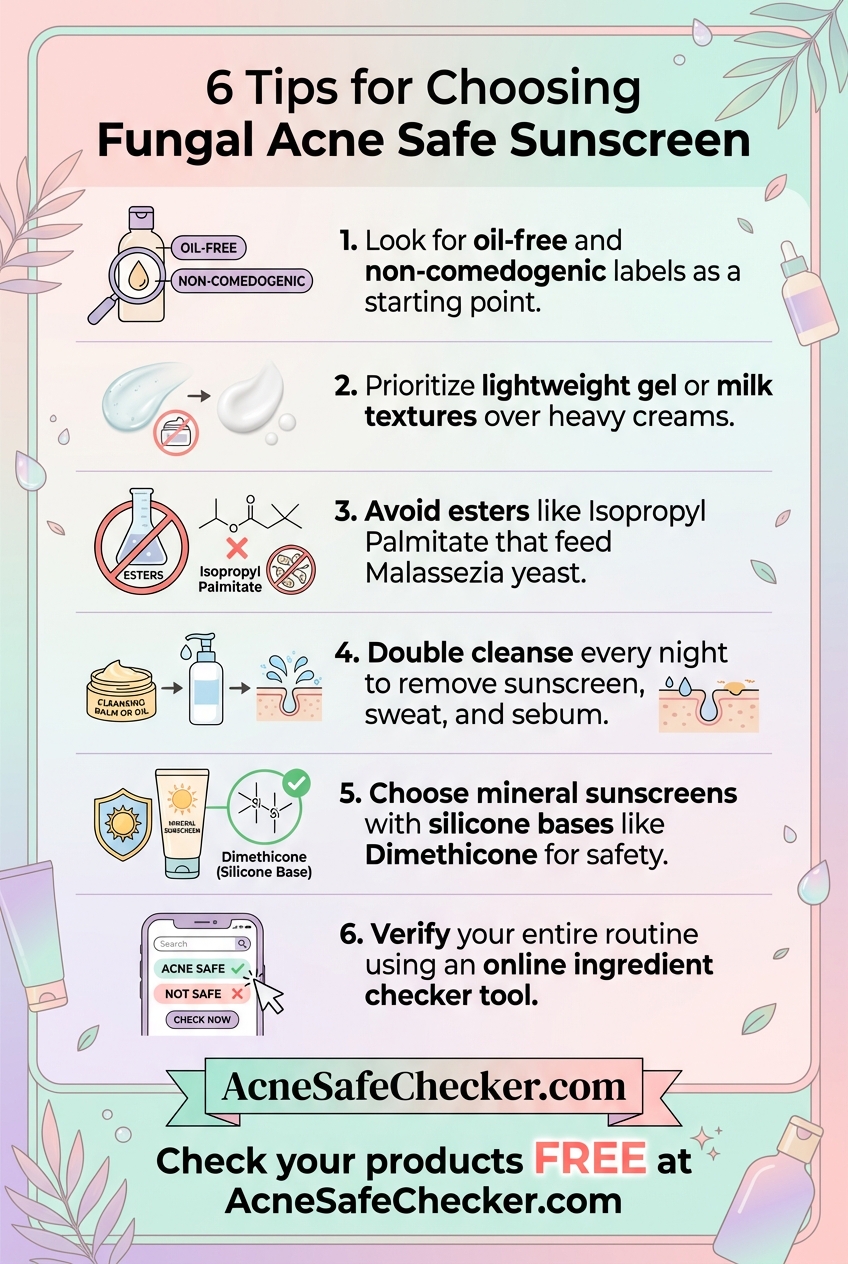
Neither mineral (Zinc Oxide, Titanium Dioxide) nor chemical (Avobenzone, Octocrylene) filters inherently cause fungal acne. However, the base of mineral sunscreens is often safer because they frequently use silicones (like Dimethicone) for spreadability, which are not metabolized by yeast. Conversely, chemical sunscreens often require heavy oils to dissolve the filters.
2. Look for Oil-Free, Non-Comedogenic Labels
While these labels aren't a guarantee of fungal acne safety, they are a good starting point. They indicate the product is less likely to contain heavy oils that contribute to follicle congestion.
3. Check for Malassezia-Safe Esters
Some esters, like Propanediol Dicaprylate or Caprylic/Capric Triglyceride (MCT oil), are generally considered safe because their carbon chains are shorter than the C11-C24 range that the yeast prefers.
Practical Tips for Sun Protection with Sensitive Skin
Finding the right product is only half the battle. How you use it matters just as much when managing a fungal-prone complexion.
- Double Cleanse: Even if your sunscreen is FA-safe, any product left on the skin overnight can mix with sweat and sebum, creating a breeding ground for yeast. Use a gentle, FA-safe cleanser at night to ensure your pores are clear.
- Check Your Entire Routine: A safe sunscreen won't help if your moisturizer or foundation contains triggers. Use online ingredient checkers to verify your entire regimen.
- Prioritize Light Textures: Gels and milk-type sunscreens are generally safer bets than heavy creams, as they contain fewer lipid-based thickeners.
- Monitor Your Environment: Heat and sweat are the biggest catalysts for fungal growth. If you’ve been sweating under your sunscreen, rinse your face with plain water and reapply to keep the skin environment fresh.
Conclusion
Living with fungal acne requires a disciplined approach to skincare, but it doesn't mean you have to sacrifice sun protection. By understanding that Malassezia is an opportunistic yeast that feeds on specific lipids, you can make informed choices about your SPF.
Look for oil-free, silicone-based, or specifically formulated "fungal acne safe" sunscreens. With the right ingredients, you can protect your skin from UV damage while keeping those stubborn bumps at bay. If your condition persists despite changing your routine, consult a board-certified dermatologist for a formal diagnosis and potential antifungal treatments.