
Finding the right moisturizer or foundation when you have acne-prone skin can feel like navigating a minefield. You scrutinize every label, searching for the word "non-comedogenic," only to find a long list of scientific-sounding ingredients that leave you more confused than when you started.
Is Your Routine Acne-Safe?
Do not guess. Instantly check your products for pore-clogging ingredients with our AI-powered tool.
Check Ingredients NowOne ingredient that frequently appears in both luxury and drugstore skincare is Caprylic/Capric Triglyceride. Because it is derived from coconut oil—a notorious pore-clogger—many acne sufferers immediately put it on their "do not use" list. But is that fear justified? As a dermatologist, I’m here to break down the science of this ingredient and determine once and for all if it’s truly safe for your skin.
What is Caprylic/Capric Triglyceride?
Despite its complex name, caprylic/capric triglyceride is a relatively simple compound. It is a specialized emollient derived from combining coconut oil with glycerin. Through a process called fractionation, the long-chain fatty acids are removed from the coconut oil, leaving behind only the medium-chain triglycerides (MCTs).
The resulting liquid is a clear, odorless, and highly stable oil that feels "dry" or lightweight on the skin. In the skincare world, it is prized for its ability to improve the spreadability of products, provide a silky finish, and act as a carrier for active ingredients like retinol or vitamins.
The Big Question: Is It Acne-Safe?
To answer this, we have to look at the Comedogenic Scale, which ranks ingredients from 0 to 5 based on their likelihood of clogging pores (0 being unlikely, 5 being highly likely).
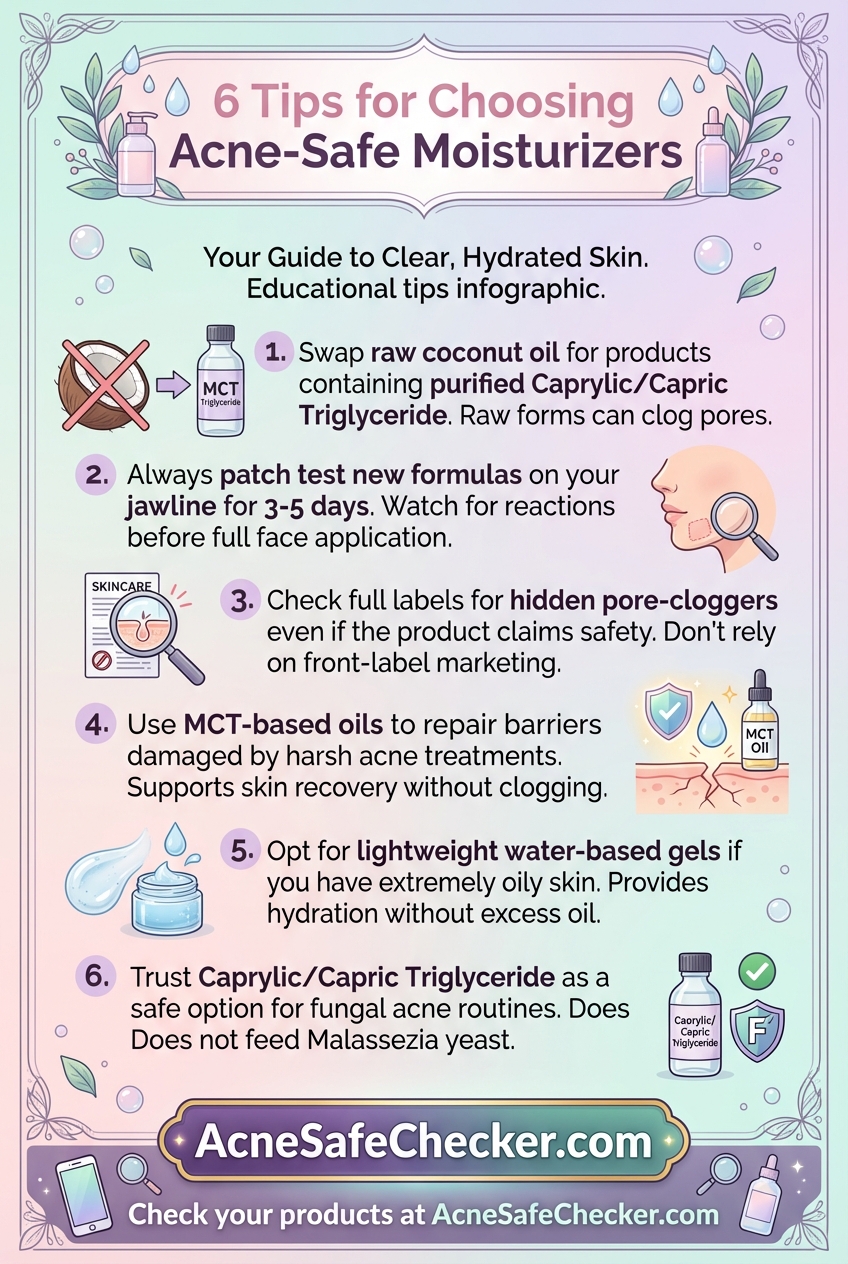
While raw coconut oil typically scores a 4 or 5 on this scale, Caprylic/Capric Triglyceride usually scores between a 0 and 1.
Why the difference?
Raw coconut oil contains lauric acid and other long-chain fatty acids that are thick and occlusive. These molecules can easily get trapped in the sebum within your pores, leading to comedones (blackheads and whiteheads). Caprylic/capric triglyceride, however, is a purified ester. Its molecular structure is smaller and its consistency is much thinner, allowing it to provide moisture without creating the "plug" that leads to a breakout.
For the vast majority of people with oily or acne-prone skin, caprylic/capric triglyceride is considered acne-safe.
The Science: Why Your Skin Might Love It
Beyond just being "safe," this ingredient offers several therapeutic benefits for skin that is currently battling acne or recovering from harsh treatments:
1. Barrier Repair
Acne treatments like benzoyl peroxide, salicylic acid, and retinoids can strip the skin of its natural lipids, leading to a compromised skin barrier. Caprylic/capric triglyceride acts as an emollient, filling in the gaps between skin cells to prevent moisture loss (Transepidermal Water Loss) and help the skin heal.
2. Antioxidant Properties
Medium-chain triglycerides possess mild antioxidant properties. This is crucial for acne patients because the oxidation of sebum is one of the primary triggers for inflammation within the pore. By reducing oxidative stress, you may indirectly help soothe inflamed skin.
3. Stability and Purity
Unlike many natural plant oils that can go rancid quickly, caprylic/capric triglyceride is incredibly stable. It doesn't oxidize easily on the shelf or on your skin, which means it’s less likely to irritate sensitive skin types.
A Special Note: Fungal Acne (Malassezia Folliculitis)
If you suffer from "fungal acne"—which isn't actually acne but an overgrowth of yeast in the hair follicles—the rules change slightly. Most oils and fatty acids (especially those with carbon chain lengths of 11–24) act as "fuel" for the Malassezia yeast.
Caprylic/capric triglyceride is unique because it consists of C8 (caprylic) and C10 (capric) chains. Most research suggests that these specific medium-chain fatty acids do not feed the yeast that causes fungal acne. In fact, many "fungal-acne safe" routines specifically recommend products containing MCT oil (caprylic/capric triglyceride) as one of the only safe ways to moisturize.
Practical Advice for Your Skincare Routine
While science says this ingredient is safe, every individual's skin is a unique ecosystem. Here is how you should approach it:
- Check the Formulation: If you see caprylic/capric triglyceride high on the ingredient list of a heavy cream, the other ingredients in that cream (like thick waxes or isopropyl myristate) might be the actual culprits for your breakouts.
- The Patch Test: If you are particularly prone to cystic acne, always patch test a new product on a small area of your jawline for 3–5 days before applying it to your entire face.
- Balance is Key: If you have extremely oily skin, you might prefer a water-based gel moisturizer where caprylic/capric triglyceride is lower on the list, providing just enough slip without added shine.
Conclusion
Is caprylic/capric triglyceride acne safe? The answer is a resounding yes. It provides the skin-replenishing benefits of coconut oil without the pore-clogging baggage. It is non-irritating, stable, and one of the few oils that even those with fungal acne can typically tolerate.
If you’ve been avoiding a product because you saw this ingredient on the label, you can likely rest easy. It is a workhorse ingredient that helps maintain a healthy skin barrier—which is the ultimate goal in any clear-skin journey.