
If you’ve spent any time researching “fungal acne,” you’ve likely encountered a long list of ingredients to avoid. From fatty acids to oils and esters, the list of potential triggers for Malassezia folliculitis (the medical term for fungal acne) can feel overwhelming. Among these ingredients, glycerin often sits in a gray area, leaving many skincare enthusiasts confused.
Is Your Routine Acne-Safe?
Do not guess. Instantly check your products for pore-clogging ingredients with our AI-powered tool.
Check Ingredients NowAs a dermatologist, I see patients daily who are frustrated by stubborn, itchy bumps that don't respond to traditional acne treatments. Understanding which ingredients are truly problematic and which are beneficial is the first step toward clearing your complexion. Today, we are diving deep into the science of glycerin and its relationship with fungal acne.
What Exactly is Fungal Acne?
Before we address glycerin, we must clarify what fungal acne is. Despite its name, it isn't actually acne. True acne (acne vulgaris) is caused by trapped sebum and the bacteria C. acnes. Fungal acne, however, is an overgrowth of Malassezia yeast within the hair follicles.
This yeast is a normal part of the skin’s microbiome, but when it overpopulates, it causes inflammation and small, uniform, itchy bumps. This overgrowth is typically fueled by specific environmental factors (heat and humidity) and, most importantly, the “food” we provide it through our skincare products.
The Science: Does Glycerin Feed Malassezia?
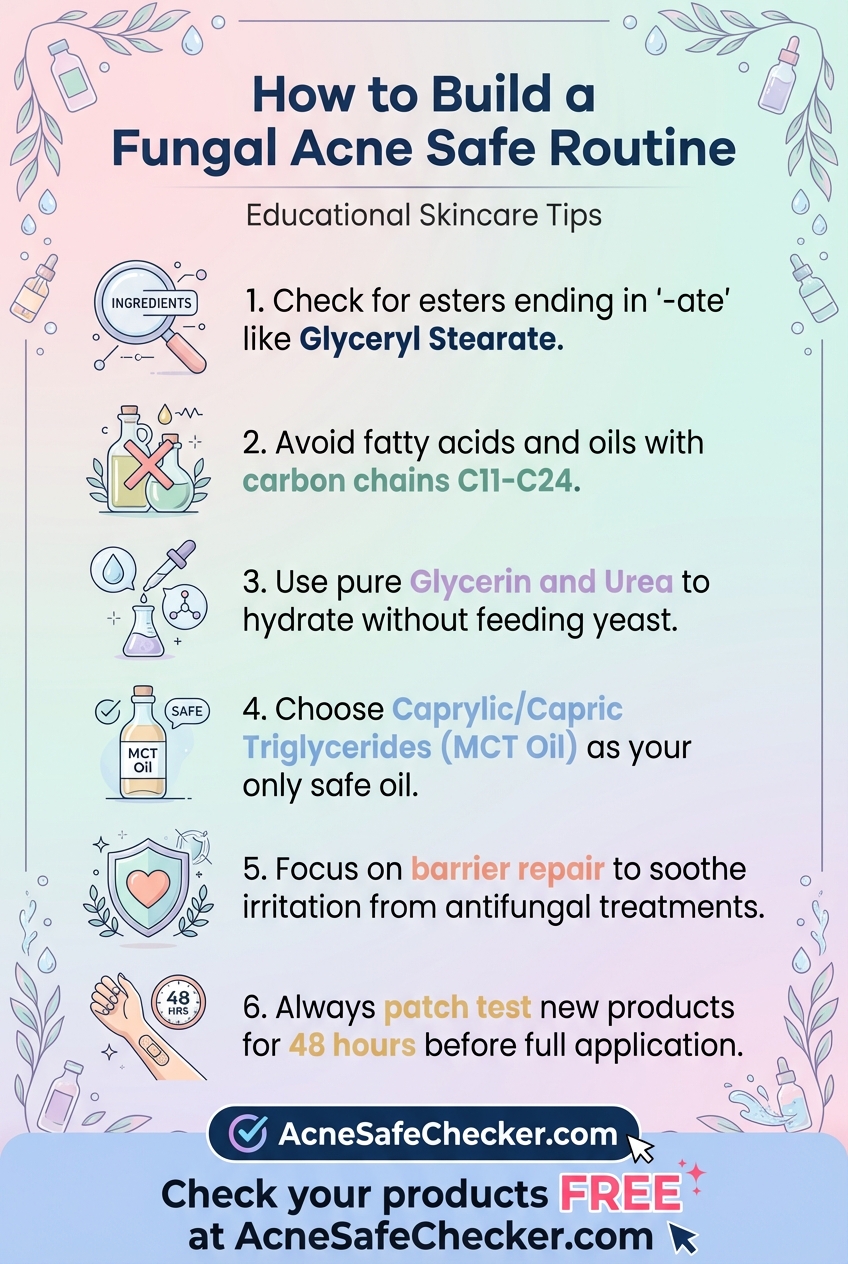
To understand if glycerin is safe, we have to look at what Malassezia eats. This yeast species is lipid-dependent, meaning it thrives on fatty acids with carbon chain lengths between 11 and 24. This is why oils like coconut oil, almond oil, and many common fatty acids (like stearic acid or palmitic acid) are strictly avoided in fungal acne-safe routines.
Glycerin (Glycerol), however, is a sugar alcohol (a polyol). Chemically, it has a 3-carbon chain. Because it lacks the long carbon chains that the yeast requires for metabolism, pure glycerin does not feed Malassezia yeast.
In a clinical setting, glycerin is considered one of the most effective and safe humectants available. It works by drawing moisture into the skin, helping to repair the skin barrier—a critical component of managing any skin condition, including fungal acne.
Why the Confusion? Glycerin and Its Derivatives
If the science shows that glycerin is safe, why is it often debated in fungal acne communities? The confusion usually stems from two areas:
1. Ingredient Interactions
While pure glycerin is safe, it is rarely the only ingredient in a product. Many moisturizers that contain glycerin also contain fatty acids or esters (which are triggers). For example, a product might contain glycerin mixed with glyceryl stearate. While the glycerin part is fine, the stearate part (a fatty acid derivative) is a feast for the yeast.
2. Purity Concerns
In very rare, low-grade formulations, glycerin might contain impurities from its manufacturing process (especially if derived from animal fats) that could theoretically contain trace amounts of lipids. However, in modern, cosmetic-grade skincare, this is virtually a non-issue.
The Role of Glycerin in Healing the Skin Barrier
When treating fungal acne, many people use harsh anti-fungal treatments like ketoconazole (Nizoral) or sulfur. These treatments can be incredibly drying, leading to a compromised skin barrier. When your barrier is damaged, your skin becomes more susceptible to further irritation and infection.
This is where glycerin becomes an ally. By incorporating a glycerin-based, oil-free moisturizer, you can:
- Hydrate the skin without providing fuel for the yeast.
- Reduce TEWL (Transepidermal Water Loss), which speeds up healing.
- Soothe irritation caused by active treatments.
Practical Advice: How to Vet Your Skincare
If you are dealing with a Malassezia flare-up, follow these steps to ensure your routine is safe:
- Check for Esters: Look for ingredients ending in "-ate" (e.g., Isopropyl Palmitate, Glyceryl Stearate). These are the most common triggers often found alongside glycerin.
- Avoid Most Oils: Except for Caprylic/Capric Triglycerides (MCT oil without C12), most oils will exacerbate fungal acne.
- Focus on Humectants: Look for Glycerin, Hyaluronic Acid, and Urea. These provide hydration without feeding the yeast.
- Patch Test: Even if an ingredient is "safe" on paper, everyone's skin is unique. Always patch-test new products on a small area for 48 hours.
Conclusion: The Verdict on Glycerin
Is glycerin safe for fungal acne? The answer is a resounding yes.
In my professional experience, glycerin is not only safe but often necessary for maintaining a healthy skin barrier while battling fungal overgrowth. It is a non-comedogenic, non-irritating humectant that provides the hydration your skin needs to recover.
The key to success isn't avoiding glycerin; it's being vigilant about the other ingredients in your bottles. By choosing formulas that are free from long-chain fatty acids and oils, you can enjoy the hydrating benefits of glycerin while keeping your skin clear and Malassezia-free.