
Introduction: The Hidden Culprits in Your Makeup Bag
Is Your Routine Acne-Safe?
Do not guess. Instantly check your products for pore-clogging ingredients with our AI-powered tool.
Check Ingredients NowIf you have ever spent hours perfecting a skincare routine only to wake up with a fresh breakout, you know the frustration of trying to pinpoint the cause. While we often scrutinize our foundations and moisturizers, we frequently overlook our color cosmetics. Specifically, eyeshadow.
A common ingredient found in many palettes—talc—has sparked significant debate in the beauty community. Is it safe for the skin? More importantly for those with sensitive or oily complexions: Is talc in eyeshadow bad for acne?
As a dermatologist, I see many patients who struggle with "acne cosmetica," a form of acne caused or exacerbated by topical products. In this guide, we will dive into the science of talc, its impact on your pores, and whether you should be reaching for talc-free alternatives to maintain a clear complexion.
What is Talc and Why is it in Your Eyeshadow?
Talc is a naturally occurring mineral composed of magnesium, silicon, and oxygen. In its powdered form, it is known for its ability to absorb moisture and provide a soft, silky texture. For cosmetic formulators, talc is a "hero" ingredient because it serves several purposes:
- Opacifier: It helps the pigment in your eyeshadow look more solid and vibrant.
- Texture Enhancer: It gives the powder a "slip," making it easier to blend across the delicate skin of the eyelid.
- Anti-Caking Agent: It prevents the powder from clumping together in the pan or on the skin.
Because it is inexpensive and effective, talc remains a staple in both drugstore and luxury makeup brands.
Does Talc Cause Acne? The Science of Comedogenicity
To determine if an ingredient is "bad" for acne, dermatologists look at its comedogenicity rating—a scale from 0 to 5 that measures how likely an ingredient is to clog pores. A rating of 0 means it is non-comedogenic, while a 5 means it is highly likely to cause blockages.
The Comedogenicity of Talc
Pure talc typically carries a comedogenicity rating of 1 out of 5. Scientifically speaking, this means it is unlikely to cause acne for the majority of people. However, this number doesn't tell the whole story.
Acne is a complex inflammatory condition. While talc itself may not physically "plug" the pore in the same way that heavy oils or waxes do, it can contribute to breakouts through other mechanisms:
- Trapping Sebum: Talc is highly absorbent. While this sounds good for oily skin, it can sometimes mix with natural skin oils (sebum) and dead skin cells to create a thick paste that sits atop the follicle, indirectly leading to a clog.
- Irritation and Inflammation: If you have sensitive skin, the fine particles of talc can cause micro-irritation. In the world of dermatology, we know that inflammation often precedes the formation of a comedone (a pimple).
- Product Purity: There have been historical concerns regarding the purity of talc and its potential contamination with asbestos (which occurs naturally near talc deposits). While modern cosmetic-grade talc is highly regulated and tested, any impurity can trigger a reactive inflammatory response in compromised skin.
Eyeshadow and "Periorbital Acne"
You might wonder: "Why does it matter if my eyeshadow has talc if I only put it on my eyelids?"
While we don't typically see traditional acne on the eyelids (due to the lack of sebaceous glands), the skin around the eyes is the thinnest on the body. Talc-heavy powders can migrate. During the day, eyeshadow can fallout onto the tops of the cheekbones—a common area for hormonal and cosmetic acne. Furthermore, some individuals experience milia—tiny, hard white bumps—around the eye area which can be exacerbated by heavy, mineral-based powders that interfere with natural skin shedding.
Practical Advice: Should You Go Talc-Free?
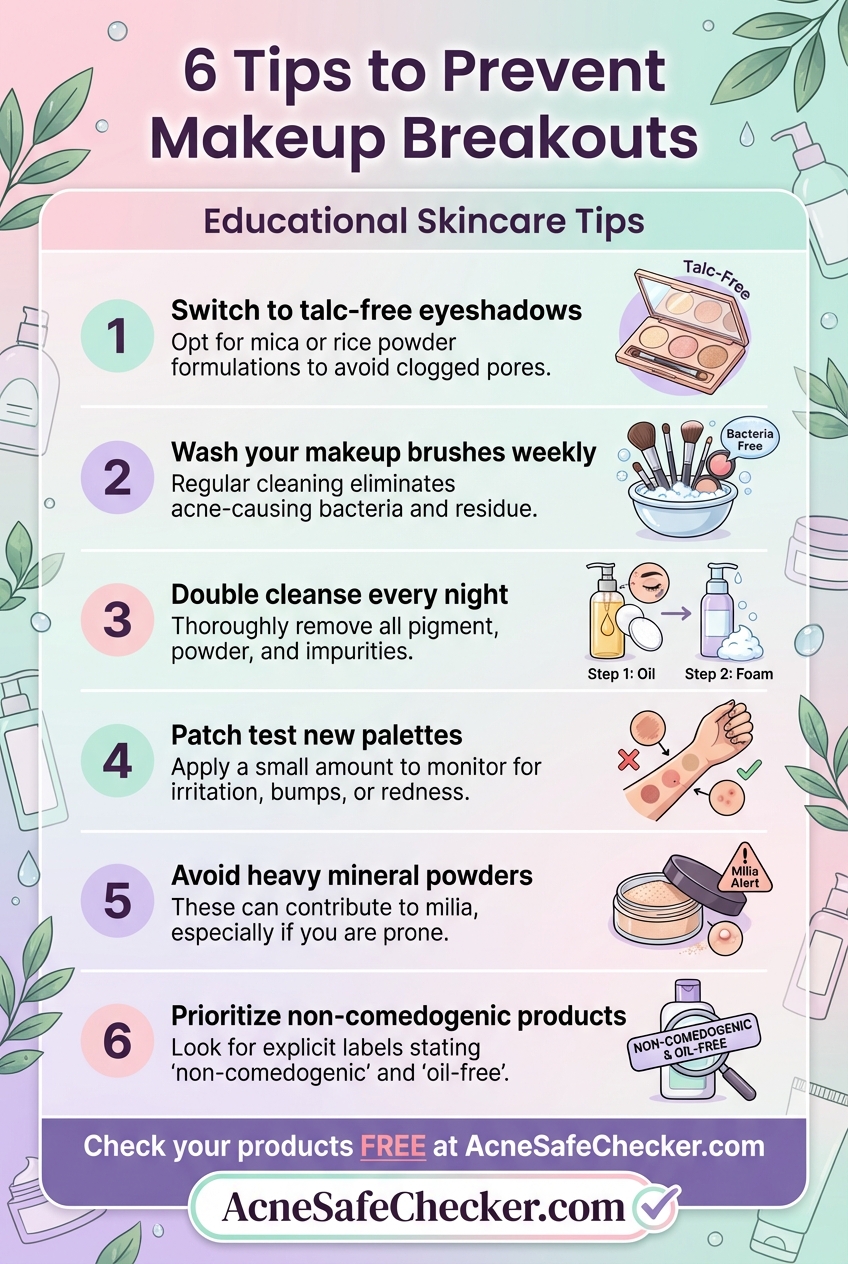
If you are currently battling persistent breakouts, making the switch to talc-free makeup is a low-risk, high-reward strategy. Here is how to navigate your options:
1. Check the Label
If you want to avoid talc, look for these ingredients which are often used as safer, non-comedogenic alternatives:
- Mica: A mineral that provides shimmer and slip without the same absorbent properties as talc.
- Cornstarch or Rice Powder: These organic powders absorb oil without being as heavy as minerals.
- Silica: Provides a blurring effect and smooth application.
2. Observe Your Skin's Patterns
Perform a "patch test" with your favorite eyeshadow. If you notice small bumps or increased redness on the skin where the shadow frequently falls (like the outer corners of the eyes or upper cheeks), the talc or the binders in the shadow may be the culprit.
3. Focus on Hygiene
Often, it isn't the talc itself that causes the acne, but the bacteria living on your makeup brushes. If you use a talc-based shadow and apply it with a brush that hasn't been washed in weeks, you are pressing bacteria and old oils directly into your skin. Wash your brushes at least once a week with a gentle cleanser.
The Dermatologist's Verdict
Is talc in eyeshadow "bad" for acne? Not necessarily, but it isn't doing your skin any favors either.
For the average person, talc in a powder eyeshadow is unlikely to be the primary cause of a breakout. However, if you have acne-prone, highly sensitive, or reactive skin, talc can act as a secondary irritant. It can trap heat, oils, and bacteria against the skin, creating an environment where acne thrives.
Conclusion: Choosing What’s Best for You
When it comes to managing acne, every ingredient matters. While talc is generally considered safe by regulatory bodies, the "clean beauty" movement has made talc-free eyeshadows more accessible than ever.
If you find that your skin is constantly congested, try eliminating talc-based products for 30 days. You may find that your skin becomes calmer and clearer. Remember, the best makeup is the kind that makes you feel confident without compromising your skin's health. When in doubt, look for labels marked "non-comedogenic" and always double-cleanse at the end of the day to ensure every trace of pigment and powder is removed.