
In the world of natural skincare, few ingredients are as polarizing as wheat germ oil. On one hand, it is lauded as a nutritional powerhouse, packed with skin-loving vitamins and antioxidants. On the other, it is often blacklisted by dermatologists and estheticians for its reputation as a major trigger for breakouts. If you have ever scanned an ingredient list while worrying about acne, you have likely asked: Is wheat germ oil comedogenic?
Is Your Routine Acne-Safe?
Do not guess. Instantly check your products for pore-clogging ingredients with our AI-powered tool.
Check Ingredients NowThe short answer is a resounding yes. In fact, wheat germ oil sits at the very top of the comedogenic scale. In this guide, we will dive deep into the science of why this oil behaves the way it does, who should avoid it, and how to choose safer alternatives for your unique skin type.
Understanding the Comedogenic Scale
To understand the risk wheat germ oil poses, we first need to define the comedogenic scale. This is a system used by dermatologists and cosmetic chemists to rank how likely an ingredient is to clog pores. The scale ranges from 0 to 5:
- 0: Will not clog pores
- 1: Very low probability of clogging pores
- 2: Moderately low probability
- 3: Moderate probability
- 4: Fairly high probability
- 5: High probability of clogging pores
Wheat germ oil is rated a 5. This means it is among the most comedogenic ingredients used in the beauty industry. For individuals with acne-prone or oily skin, applying products containing a high concentration of wheat germ oil is often a direct path to inflammatory acne and comedones (blackheads and whiteheads).
Why is Wheat Germ Oil So Likely to Clog Pores?
Wheat germ oil is extracted from the "germ" or the embryo of the wheat kernel. It is incredibly dense and viscous. While these qualities make it an excellent emollient for extremely dry skin, they are also what make it problematic for pore health.
1. High Molecular Weight and Density
Wheat germ oil has a heavy molecular structure. Unlike "dry" oils like rosehip or squalane, which sink into the skin quickly, wheat germ oil tends to sit on the surface. It creates an occlusive barrier that can trap dead skin cells, sebum (your skin’s natural oil), and bacteria inside the follicle. When these elements are trapped, they form a plug, leading to a breakout.
2. Fatty Acid Composition
While wheat germ oil is rich in linoleic acid (which is generally good for acne-prone skin), it also contains high levels of palmitic and stearic acids. This specific balance of fatty acids, combined with its high Vitamin E content, contributes to its thick, pore-clogging consistency.
The Benefits: Why Is It Used at All?
If the oil is so comedogenic, you might wonder why it appears in skincare products at all. From a nutritional standpoint, wheat germ oil is actually quite impressive. It contains the highest levels of Vitamin E of any natural vegetable oil. It is also rich in Vitamin A, Vitamin D, and various B vitamins.
For someone with severely dry, cracked, or mature skin, wheat germ oil can be a miracle worker. It helps to:
- Repair the skin barrier.
- Deeply moisturize dehydrated patches.
- Provide antioxidant protection against environmental stressors.
- Improve the appearance of scars or stretch marks on the body.
However, these benefits are rarely worth the risk for anyone whose skin is even remotely prone to congestion.
Who Should Avoid Wheat Germ Oil?
As a dermatologist, I typically advise the following groups to steer clear of wheat germ oil in their facial skincare routines:
- Acne-Prone Individuals: If you experience regular breakouts, wheat germ oil is almost guaranteed to exacerbate the issue.
- Oily Skin Types: If your skin already produces excess sebum, adding a heavy oil with a rating of 5 can cause a "sebum backup" in your pores.
- Combination Skin: While it might feel good on dry cheeks, it will likely cause blackheads on the T-zone (forehead, nose, and chin).
Practical Advice: How to Check Your Products
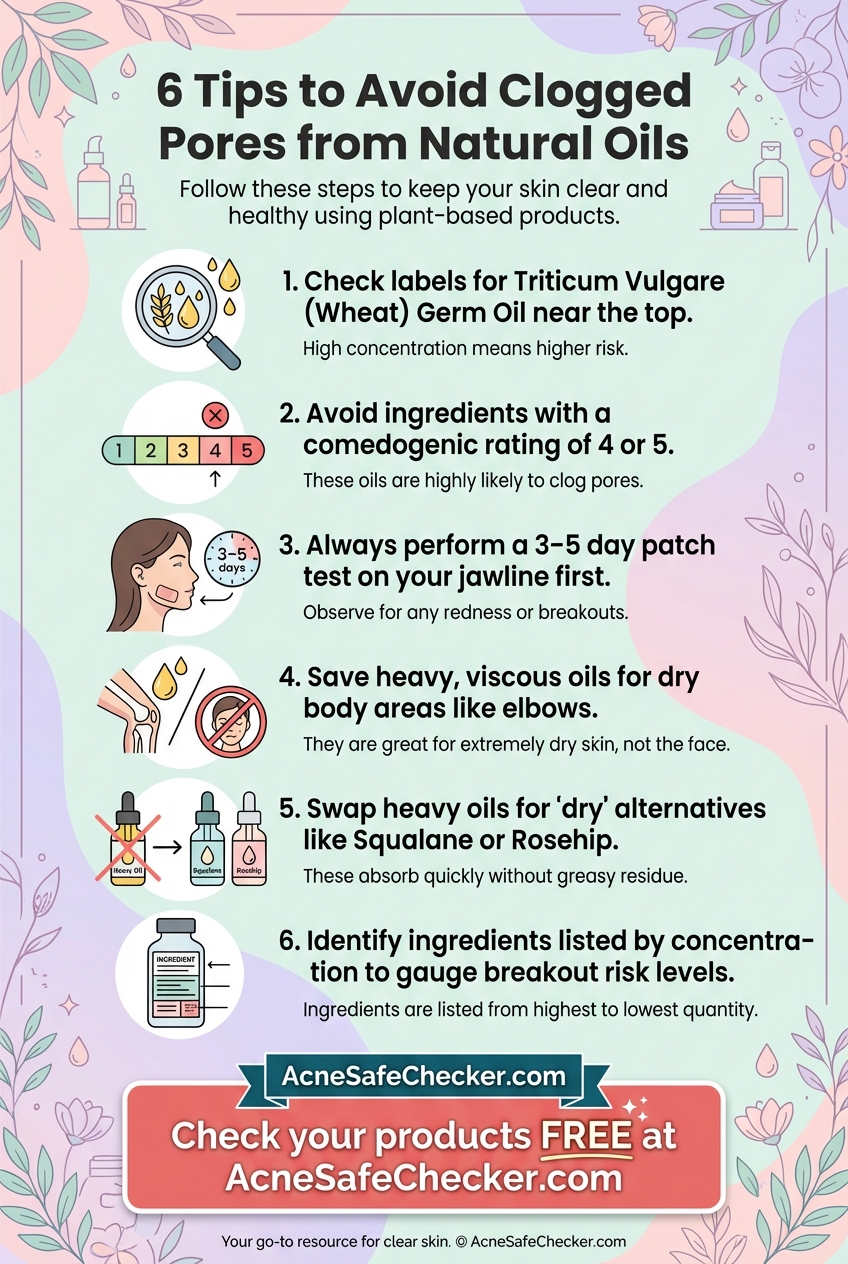
When shopping for skincare or makeup, the label is your best friend. Look for "Triticum Vulgare (Wheat) Germ Oil" in the ingredient list. Because ingredients are listed in order of concentration, its placement matters:
- At the top of the list: The product contains a high percentage; avoid it if you are acne-prone.
- At the very bottom: It may be used in such a small amount that it won't cause issues for everyone, but sensitive individuals should still exercise caution.
The Patch Test Rule
If you find a product you love that contains wheat germ oil, perform a patch test. Apply a small amount to a specific area of your face (like the jawline) for 3–5 days. If you see tiny bumps or increased redness, the oil is likely too heavy for your skin.
Better Alternatives for Acne-Prone Skin
If you are looking for the moisturizing and antioxidant benefits of an oil without the risk of breakouts, consider these low-comedogenic alternatives:
- Squalane Oil (Rating: 0-1): Mimics the skin’s natural sebum; highly moisturizing but very light.
- Hemp Seed Oil (Rating: 0): Excellent for calming inflammation and balancing oil production.
- Argan Oil (Rating: 0): Rich in Vitamin E but significantly less likely to clog pores than wheat germ oil.
- Rosehip Seed Oil (Rating: 1): High in Vitamin A (retinol-like benefits) and great for scarring without the heavy density.
Conclusion
Wheat germ oil is a prime example of why "natural" does not always mean "safe for everyone." While it is a nutrient-dense ingredient that can offer relief to those with extremely dry skin, its comedogenic rating of 5 makes it a high-risk choice for the average person struggling with acne.
If you are prone to clogged pores, it is best to leave wheat germ oil for body treatments (like elbows and heels) and opt for lighter, non-comedogenic oils for your face. By understanding how ingredients interact with your specific skin type, you can build a routine that nourishes your skin without the unwanted side effect of breakouts.