
Finding the perfect Vitamin C serum can feel like a high-stakes gamble for those with acne-prone or sensitive skin. You want the legendary brightening benefits and the protection against environmental stressors, but you live in fear of waking up to a fresh crop of blackheads or inflammatory breakouts.
Is Your Routine Acne-Safe?
Do not guess. Instantly check your products for pore-clogging ingredients with our AI-powered tool.
Check Ingredients NowThe good news? You don’t have to choose between a radiant complexion and clear pores. As a dermatologist, I frequently see patients who have written off Vitamin C entirely because of a bad experience with a heavy, oil-based formula. The key is understanding the science of comedogenicity and selecting a formulation specifically designed for congestion-prone skin.
Why Vitamin C is a Must-Have (Even for Acne-Prone Skin)
Vitamin C, or L-ascorbic acid, is the gold standard of antioxidants in dermatology. For someone struggling with acne, it offers three critical benefits:
- Fading Post-Inflammatory Hyperpigmentation (PIH): Those stubborn red or brown marks left behind after a pimple heals are the result of melanin overproduction. Vitamin C inhibits the enzyme tyrosinase, helping these marks fade faster.
- Reducing Inflammation: Acne is fundamentally an inflammatory condition. Vitamin C helps soothe the skin and reduce the redness associated with active breakouts.
- Neutralizing Free Radicals: By protecting the skin from UV damage and pollution, Vitamin C prevents the oxidation of sebum—a process that is a known precursor to clogged pores.
The Culprits: Why Some Serums Clog Pores
It is rarely the Vitamin C itself that causes breakouts; rather, it is the "vehicle" or the other ingredients in the bottle. Many high-end Vitamin C serums use a base of Vitamin E (Tocopherol) or certain oils to stabilize the L-ascorbic acid. While Vitamin E is an excellent antioxidant, in high concentrations or specific oily bases, it can be comedogenic for certain skin types.
Common "red flag" ingredients to look for in your serum include:
- Isopropyl Palmitate or Myristate: Common fatty acid esters that are highly comedogenic.
- Coconut Oil or Cocoa Butter: Often found in "natural" serums but notorious for blocking pores.
- Heavy Silicones: While not inherently comedogenic, some heavy silicones can trap sweat and bacteria against the skin in humid environments.
The Science of Non-Comedogenic Vitamin C
When searching for a vitamin c serum that doesn't clog pores, you should look for specific derivatives and formulations that are "acne-safe."
Sodium Ascorbyl Phosphate (SAP)
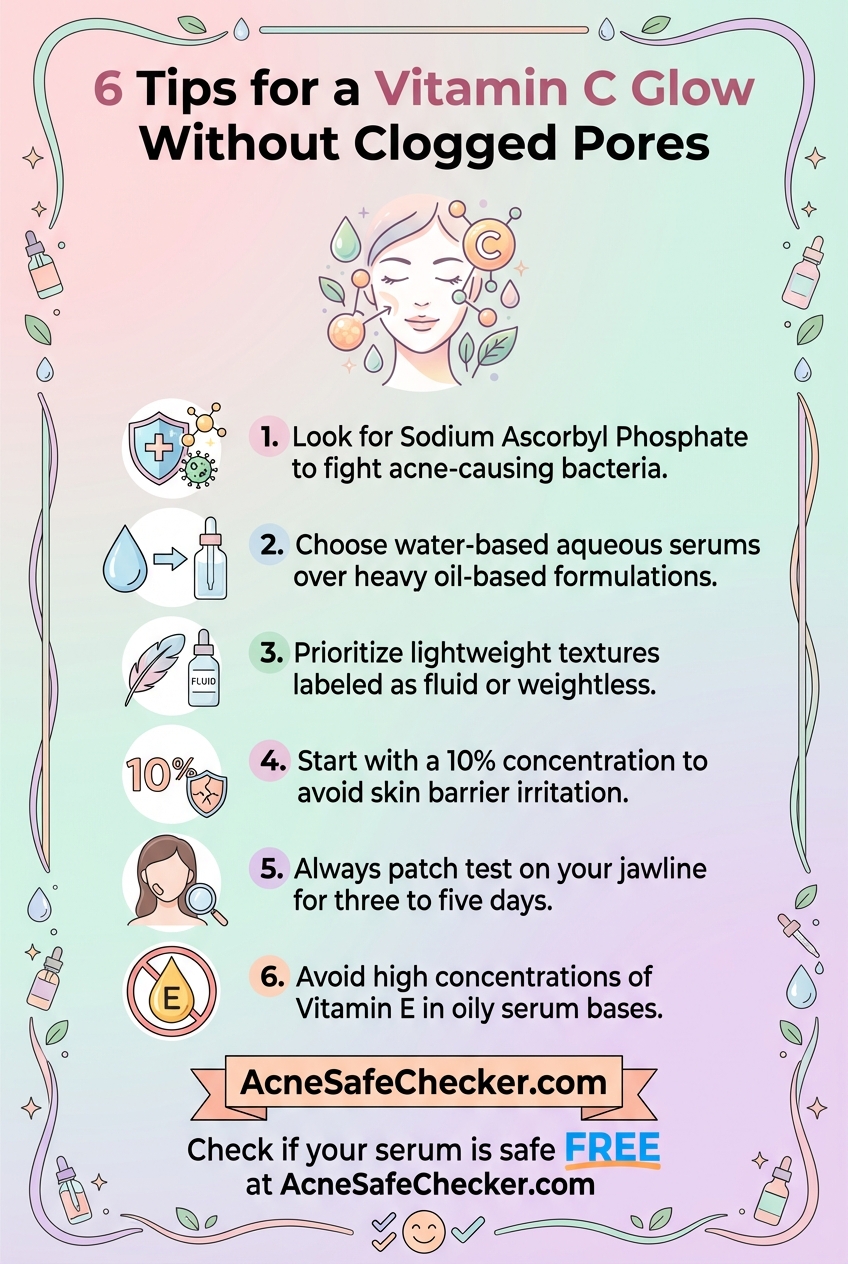
This is a salt-based derivative of Vitamin C. Unlike L-ascorbic acid, which can be irritating at low pH levels, SAP is stable at a neutral pH (around 7). Most importantly, clinical studies have suggested that SAP has antimicrobial effects against Cutibacterium acnes, the bacteria primarily responsible for acne. This makes it the premier choice for anyone prone to breakouts.
Magnesium Ascorbyl Phosphate (MAP)
MAP is another water-soluble derivative. It is less potent than pure L-ascorbic acid but significantly more stable and less likely to cause the irritation that sometimes triggers "purging" or inflammatory responses in sensitive skin.
Water-Based vs. Anhydrous Formulations
For pore clarity, water-based (aqueous) serums are generally superior to anhydrous (water-free) or oil-based ones. They absorb quickly without leaving a heavy film that can trap sebum inside the follicle.
How to Choose and Use Your Serum
To ensure your glow doesn't come at the cost of your clarity, follow these practical steps:
1. Check for the "Non-Comedogenic" Label
While not a government-regulated guarantee, a "non-comedogenic" label indicates that the brand has formulated the product specifically to avoid pore-clogging ingredients.
2. Prioritize Lightweight Textures
Look for words like "fluid," "aqueous," or "weightless." If a serum feels tacky or greasy on the back of your hand, it is likely too heavy for your facial pores.
3. The Patch Test is Non-Negotiable
Apply a small amount of the serum to a localized area (like the side of your jaw) for three to five days. This allows you to monitor for both allergic contact dermatitis and "acne cosmetica" (breakouts caused by cosmetics) before committing to full-face application.
4. Watch the Concentration
If you have sensitive, acne-prone skin, don't jump straight to a 20% L-ascorbic acid serum. High concentrations have a low pH that can disrupt the skin barrier, leading to irritation and "stress breakouts." Start with 10% or a derivative like Sodium Ascorbyl Phosphate.
The Bottom Line
You do not have to sacrifice the brightening and anti-aging benefits of Vitamin C to keep your skin clear. By shifting your focus toward water-based formulas and acne-friendly derivatives like Sodium Ascorbyl Phosphate, you can protect your skin from the environment while keeping your pores refined and breathable.
Remember, skincare is a long game. A serum that respects your skin's pore structure will always deliver better results than a "miracle" product that causes more problems than it solves. Look for transparency in ingredient lists, prioritize lightweight textures, and enjoy the glow that comes with truly healthy skin.