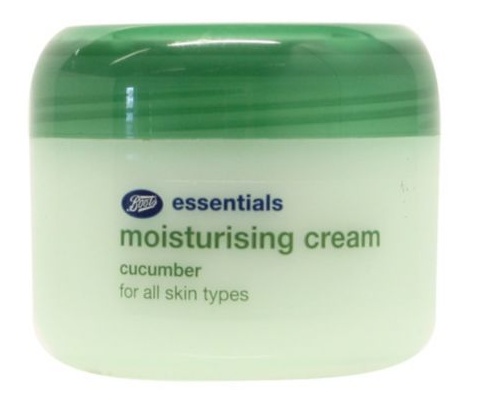
Boots Essentials Moisturising Cream Cucumber
Boots Essentials Moisturising Cream Cucumber is a budget-friendly staple designed to hydrate and refresh the skin with a lightweight, cooling touch. Formulated with soothing cucumber extract and high-performing humectants like Glycerin, this cream aims to lock in moisture and leave the skin feeling supple. The formula relies on Paraffinum Liquidum (mineral oil) as a primary emollient, which acts as an occlusive barrier to prevent trans-epidermal water loss throughout the day. Its texture is smooth and easily absorbed, providing a quick boost of hydration without a heavily greasy finish. While it is an accessible option for basic skincare needs, the ingredient list contains several components that require a closer look for those with specific skin sensitivities. The combination of Glyceryl Stearate and fatty alcohols ensures a stable, creamy consistency that feels comfortable on the skin, but individuals prone to congestion should evaluate how these emollients interact with their unique pore structure.
Our Analysis
Our analysis of the Boots Essentials Moisturising Cream Cucumber indicates a Moderate comedogenic risk level. The formula contains Cetearyl Alcohol and Cetyl Alcohol, both rated 2/5 on the comedogenicity scale. While these fatty alcohols are excellent for softening the skin, they can occasionally trigger breakouts in highly reactive individuals. Additionally, the inclusion of Tocopherol (Vitamin E) provides antioxidant benefits but can be thick and potentially pore-clogging for some. It is important to note that while Mineral Oil itself is non-comedogenic, its occlusive nature can sometimes trap other potentially clogging ingredients against the skin, increasing the risk of congestion.
Skin Type Recommendations
This cream is best suited for individuals with dry or normal skin types who require an occlusive barrier to retain moisture. It is not recommended for those with oily or acne-prone skin due to the moderate risk of pore-clogging ingredients like fatty alcohols and the heavy nature of the formulation.
Flagged Ingredients
Fatty alcohol emollient with low-moderate comedogenicity on its own. However, when combined with Ceteareth-20, the synergistic effect can significantly increase pore-clogging potential (combined rating of 4).
A fatty alcohol (emollient) that is generally safe, but can be problematic for very sensitive individuals.
Pure Vitamin E is thick and sticky; safe in small amounts as an antioxidant, but potentially clogging in pure oil form.
Want Deeper Analysis?
Run our MACR (Multi-Axis Comedogenic Risk) analysis to get a comprehensive 5-axis risk assessment. This AI-powered analysis evaluates ingredients for Plugging Risk, Barrier Damage, Fungal Acne Risk, Oxidation Risk, and real-world User Reports — giving you personalized scores for your skin type.