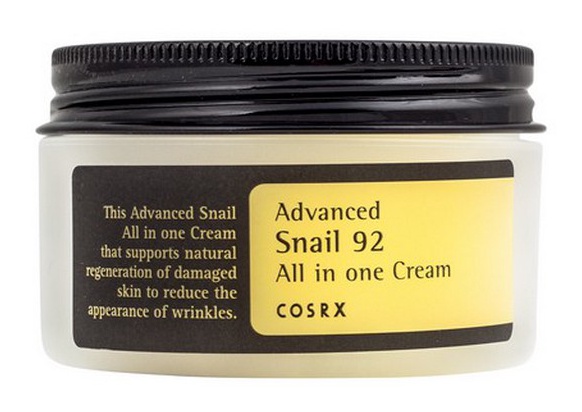
COSRX Advanced Snail 92 All In One Cream
COSRX Advanced Snail 92 All In One Cream is a widely celebrated moisturizer designed to provide intense hydration and skin repair. Featuring a remarkable 92% Snail Secretion Filtrate, this cream is engineered to soothe irritated skin, improve elasticity, and promote a healthy, glowing complexion. The unique gel-like texture—often described as slightly stringy but surprisingly lightweight—absorbs quickly into the skin without leaving a greasy residue. Beyond snail mucin, the formula includes Betaine and Caprylic/Capric Triglyceride to enhance the skin's moisture barrier and prevent trans-epidermal water loss. While it is a powerhouse for those seeking to heal post-acne marks or dehydration, the ingredient list contains several components that require caution for certain skin types. This product aims to simplify routines by acting as both a soothing essence and a nourishing moisturizer. However, despite its soothing reputation, our deep dive into the formulation reveals potential triggers for those prone to congestion. Understanding how these emollient fatty acids behave on your skin is essential for maintaining clear pores while seeking the reparative benefits of snail secretion.
Our Analysis
Our analysis flags the COSRX Advanced Snail 92 All In One Cream as a High Comedogenic Risk. While snail mucin itself is non-clogging, the supporting formula contains multiple saturated fatty acids, including Myristic Acid (3/5), Palmitic Acid (2/5), and Stearic Acid (2/5). These ingredients are effective emollients but can be highly occlusive, potentially trapping sebum in oily skin. Additionally, the presence of Cetearyl Alcohol, while often safe, can increase pore-clogging potential when interacting with other lipids in a formula. This combination makes the cream a risky choice for individuals prone to closed comedones or persistent breakouts.
Skin Type Recommendations
This cream is best suited for dry, dehydrated, or mature skin types that benefit from its rich, barrier-forming fatty acids. We do not recommend this product for oily or acne-prone skin, as the high concentration of comedogenic ingredients like Myristic Acid may lead to increased congestion and breakouts.
Flagged Ingredients
Saturated fatty acid that can be problematic for oily skin.
Fractionated coconut oil; removed most clogging long-chain acids but can still affect some.
Fatty alcohol emollient with low-moderate comedogenicity on its own. However, when combined with Ceteareth-20, the synergistic effect can significantly increase pore-clogging potential (combined rating of 4).
Saturated fatty acid; provides barrier but can be occlusive.
Found in many butters; thickening agent with low-moderate risk.
MACR Analysis
5-Axis AI-Powered Risk Assessment
The MACR score is lower than the basic analysis because it considers ingredient concentrations, product format, and whether concerning ingredients are actually at levels that cause issues.
Recommendations
This serum is best avoided by individuals highly prone to fungal acne or those with very sensitive, reactive skin, while others may find it beneficial with moderate caution.
Skin types that tolerate a moderate level of emollience and penetration enhancement., Users seeking the benefits of snail mucin and hyaluronic acid who do not have specific fungal acne concerns.
Acne-prone skin (both bacterial and fungal)., Sensitive skin., Individuals with known sensitivities to oleic acid derivatives or fatty alcohols.
Individuals with active fungal acne breakouts., Those with a history of severe breakouts triggered by cosmetic oils or esters., Extremely sensitive skin.
- •Patch test on a small area of skin before full face application.
- •Use sparingly, especially if you have oily or acne-prone skin.
- •Monitor skin for any signs of congestion or fungal acne flare-ups.
Overall Risk Score
Lower is better
Score by Skin Type
Lower is better
Same product, different risks based on your skin type
This leave-on serum presents a moderate risk of pore-clogging and potential fungal acne exacerbation, primarily due to ester-based emulsifiers and penetration enhancers in the upper half of the ingredient list. While generally formulated with beneficial actives, the combination of ingredients warrants caution for acne-prone and sensitive skin types.
Risk Breakdown
Ingredient Interactions
These ingredients may interact to increase risk beyond their individual scores.
Combination of oleic acid-derived esters increases the likelihood of supporting Malassezia growth.
Both Cetearyl Olivate and Sorbitan Olivate contain oleic acid (C18:1), a preferred carbon source for Malassezia yeast. Their presence together in the formulation at significant concentrations raises the overall fungal risk.
Butylene Glycol enhances penetration of emollient ingredients like Cetearyl Alcohol and Caprylic/Capric Triglyceride, potentially leading to increased pore-clogging.
Butylene Glycol is a known penetration enhancer. When combined with emollient ingredients like Cetearyl Alcohol and Caprylic/Capric Triglyceride, it can facilitate their deeper entry into the pore lining, increasing the risk of comedogenesis.
Why This Score?
The overall score is a weighted sum of individual axis scores. High concentrations of Butylene Glycol (BR modifier +1) and oleic acid-derived esters (FR) are the primary drivers. The user-reported concerns (UR) also contribute significantly, particularly for the fatty acids and Cetearyl Alcohol listed in the latter half of the INCI.
Main factors:
- •Penetration enhancement from Butylene Glycol
- •Fungal food source from oleic acid esters
- •User-reported concerns for fatty acids and Cetearyl Alcohol
Reducing factors:
- •Leave-on product format means ingredients are not rinsed off, allowing for full contact time, but no rinse-off reduction is applied.
- •Many beneficial actives are present at potentially safe concentrations.
- •Lower concentration of potentially problematic fatty acids in the latter third of the list.
Skin Type Considerations
This analysis uses the Multi-Axis Comedogenic Risk (MACR) system. Results are AI-estimated and cannot account for actual ingredient concentrations. Individual reactions may vary. Consult a dermatologist for personalized advice.