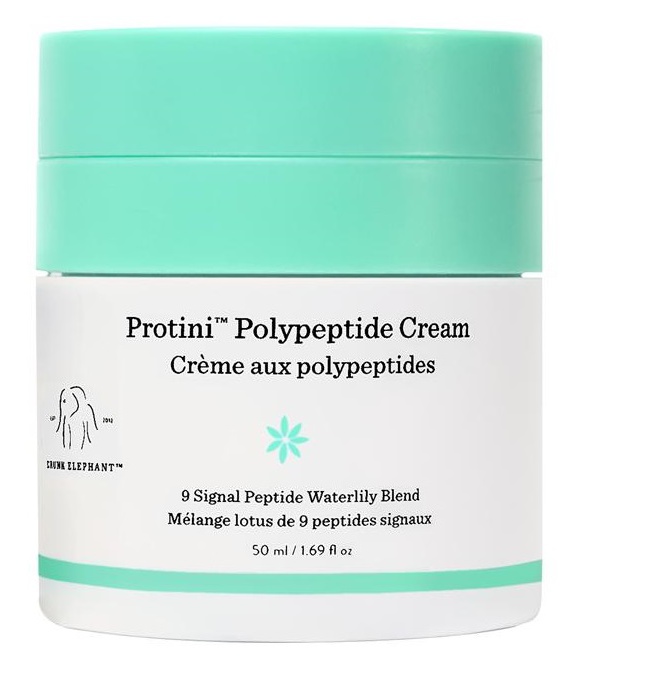
Drunk Elephant Protini™ Polypeptide Cream (Discontinued)
Drunk Elephant Protini™ Polypeptide Cream was a cult-favorite moisturizer designed to restore the skin’s youthful appearance through a potent blend of signal peptides, growth factors, and amino acids. Marketed as a "protein shake" for your skin, this cream aimed to improve the look of skin tone, texture, and firmness. Formulated at an ideal pH of 4.0, the product features a lightweight, silky gel-cream texture that absorbs quickly without feeling greasy, thanks to emollients like Dicaprylyl Carbonate. While the formula is packed with beneficial nutrients like pygmy waterlily stem cell extract and soybean folic acid ferment extract, its ingredient profile reveals hidden triggers for those with reactive skin. Despite its reputation in the "clean beauty" space, the inclusion of specific fatty acids and coconut derivatives makes it a complex choice for those balancing anti-aging goals with acne concerns. This discontinued version remains a benchmark for peptide-rich skincare, but its formulation requires a closer look at potential pore-clogging risks.
Our Analysis
Our analysis of Drunk Elephant Protini™ Polypeptide Cream reveals a HIGH comedogenic risk level, making it potentially problematic for congestion-prone individuals. The primary concerns are Coconut Alkanes and Oleic Acid, both of which carry a high comedogenic rating of 4/5. Coconut alkanes can act as occlusives that trap bacteria, while Oleic Acid is known to disrupt barrier function and induce blockages. Furthermore, the combination of Cetearyl Alcohol and other emulsifiers like Sorbitan Isostearate increases the likelihood of follicular clogging. While the peptides are excellent for aging, these specific lipids pose a significant breakout risk.
Skin Type Recommendations
This cream is best suited for dry or mature skin types that do not struggle with frequent breakouts. Due to the high concentration of comedogenic ingredients like coconut alkanes and oleic acid, it is strongly discouraged for oily, combination, or acne-prone skin, as it may lead to significant pore congestion.
Flagged Ingredients
Derived from coconut fatty acids. While lighter than pure oil, it retains occlusive properties that can trap bacteria.
Disrupts skin barrier function and induces pore blockage.
Fatty alcohol emollient with low-moderate comedogenicity on its own. However, when combined with Ceteareth-20, the synergistic effect can significantly increase pore-clogging potential (combined rating of 4).
Emulsifier with lower clog potential than Oleate.
Pure Vitamin E is thick and sticky; safe in small amounts as an antioxidant, but potentially clogging in pure oil form.
Want Deeper Analysis?
Run our MACR (Multi-Axis Comedogenic Risk) analysis to get a comprehensive 5-axis risk assessment. This AI-powered analysis evaluates ingredients for Plugging Risk, Barrier Damage, Fungal Acne Risk, Oxidation Risk, and real-world User Reports — giving you personalized scores for your skin type.