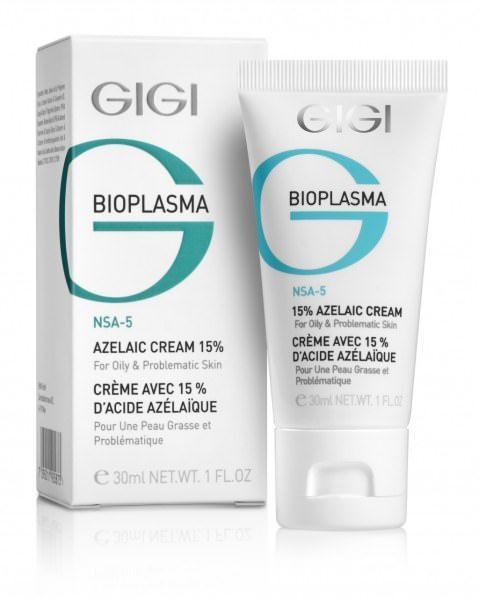
Gigi Bioplasma Azelaic Cream 15% For Oily Skin
Gigi Bioplasma Azelaic Cream 15% For Oily Skin is a targeted treatment designed to address the specific needs of congested and blemish-prone complexions. At its core, the formula features a powerful 15% concentration of Azelaic Acid, a versatile ingredient celebrated for its ability to neutralize acne-causing bacteria, reduce inflammation, and fade post-breakout hyperpigmentation. This cream serves as an intensive solution for those seeking to refine skin texture and tone while managing oil production. The texture is a smooth, emollient-based cream that utilizes Propylene Glycol to maintain hydration levels without the heavy feel of traditional balms. While the high percentage of Azelaic Acid is excellent for resurfacing and calming redness, the formula also relies on fatty alcohols to provide a stable delivery system. This makes it an effective option for individuals with oily skin who require active intervention for redness or surface irregularities, though it requires a careful look at its base ingredients for those with high pore sensitivity.
Our Analysis
Our analysis of the Gigi Bioplasma Azelaic Cream 15% indicates a Moderate comedogenic risk. The most significant concern is the presence of Ceteareth-20, which has a high rating of 5/5. While Cetearyl Alcohol is relatively low-risk on its own, its combination with Ceteareth-20 creates a synergistic effect that increases the pore-clogging potential to a rating of 4. Furthermore, Capric/Caprylic Triglyceride (a coconut derivative) adds a slight risk for certain users. While the Azelaic Acid is highly beneficial for treating acne, the surrounding cream base may trigger congestion in users with highly reactive or sensitive pores.
Skin Type Recommendations
This product is best suited for oily or combination skin types that are not highly sensitive to fatty alcohols. It is particularly effective for those dealing with redness or pigmentation. However, it is not recommended for individuals with highly acne-prone skin or those prone to closed comedones due to the Ceteareth-20 synergy.
Flagged Ingredients
Highly comedogenic penetration enhancer. Opens the skin barrier to drag other ingredients deeper, causing congestion.
Fatty alcohol emollient with low-moderate comedogenicity on its own. However, when combined with Ceteareth-20, the synergistic effect can significantly increase pore-clogging potential (combined rating of 4).
Fractionated coconut oil; removed most clogging long-chain acids but can still affect some.
Want Deeper Analysis?
Run our MACR (Multi-Axis Comedogenic Risk) analysis to get a comprehensive 5-axis risk assessment. This AI-powered analysis evaluates ingredients for Plugging Risk, Barrier Damage, Fungal Acne Risk, Oxidation Risk, and real-world User Reports — giving you personalized scores for your skin type.