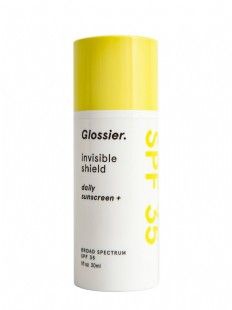
Glossier Invisible Shield Spf 35
Glossier Invisible Shield SPF 35 is a cult-favorite chemical sunscreen designed to provide broad-spectrum protection without the dreaded white cast or heavy feel of traditional sunblocks. Unlike mineral formulas, this product features a unique, clear water-gel texture that feels more like a lightweight serum than a sunscreen. The active ingredients—Avobenzone, Homosalate, and Octisalate—work effectively to absorb UV rays, while Butyloctyl Salicylate acts as a skin-conditioning agent to ensure a smooth, non-greasy application. This formula is specifically engineered to be breathable, making it an excellent choice for those who typically avoid sunscreen due to concerns about oiliness or heaviness. It absorbs instantly into the skin, leaving a skin-like finish that works perfectly as a primer under makeup or as the final step in your morning skincare routine. By focusing on a minimalist, non-comedogenic ingredient list, Glossier has created a daily SPF that prioritizes skin health and clarity, ensuring you stay protected from environmental damage without the risk of unwanted congestion.
Our Analysis
Our analysis of Glossier Invisible Shield SPF 35 confirms a Low Comedogenic Risk level, making it a standout choice for those with reactive skin. We found no flagged ingredients known to clog pores or trigger acne flares in this formulation. The product utilizes a blend of chemical UV filters and lightweight synthetic emollients that provide sun protection without the thick, occlusive waxes often found in traditional sunscreens. Because it is free from common pore-clogging triggers, it is a safe and reliable option for users who are prone to blackheads or whiteheads from SPF use.
Skin Type Recommendations
This sunscreen is best for oily, combination, and acne-prone skin types that require a lightweight, breathable formula. It is particularly effective for those who dislike the texture of traditional sunscreens. While generally safe for sensitive skin, those with chemical filter sensitivities should patch test. Dry skin types may require an additional moisturizer first.
Flagged Ingredients
This product does not contain known high-risk comedogenic ingredients.
Want Deeper Analysis?
Run our MACR (Multi-Axis Comedogenic Risk) analysis to get a comprehensive 5-axis risk assessment. This AI-powered analysis evaluates ingredients for Plugging Risk, Barrier Damage, Fungal Acne Risk, Oxidation Risk, and real-world User Reports — giving you personalized scores for your skin type.