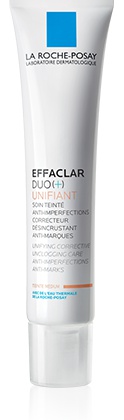
La Roche-Posay Effaclar Duo(+) Unifiant (Discontinued)
La Roche-Posay Effaclar Duo(+) Unifiant was designed as a multi-tasking tinted treatment to target blemishes while providing immediate color correction. Combining the core technology of the classic Effaclar Duo(+) with mineral pigments, this product aimed to even out the complexion and reduce the appearance of post-inflammatory hyperpigmentation. The formula features beneficial ingredients like Niacinamide, which is excellent for soothing redness and strengthening the skin barrier, and Glycerin to provide essential hydration. Based on the first few ingredients, including Dimethicone, the texture is likely a smooth, lightweight cream-gel that offers a blurred, matte finish. While this specific 'Unifiant' version has been discontinued, it remains a point of interest for those seeking to understand how tinted acne treatments affect skin clarity. Despite its skin-soothing claims, a deep dive into the ingredient list reveals several heavy components that may be counterproductive for those actively struggling with persistent congestion or cystic acne.
Our Analysis
Our analysis of La Roche-Posay Effaclar Duo(+) Unifiant reveals a high comedogenic risk level. The formula contains Myristyl Myristate, a waxy ester with a maximum 5/5 rating on the comedogenic scale, known for being highly occlusive. Furthermore, it includes Isocetyl Stearate (4/5) and Oleic Acid (4/5), the latter of which can disrupt barrier function and actively induce pore blockages. Other flagged ingredients like Sorbitan Oleate and Glyceryl Stearate SE further increase the likelihood of breakouts. While Niacinamide provides anti-inflammatory benefits, the presence of these heavy esters makes the overall formulation risky for acne-prone individuals.
Skin Type Recommendations
This product is best avoided by those with oily, congested, or acne-prone skin due to its high concentration of pore-clogging waxes and acids. While dry skin types might appreciate the occlusive properties of the esters, individuals prone to blackheads or whiteheads should seek non-comedogenic tinted alternatives to ensure skin remains clear.
Flagged Ingredients
Waxy ester that is highly occlusive and difficult for skin to break down.
Heavy ester that is difficult for the skin to excrete.
Disrupts skin barrier function and induces pore blockage.
Emulsifier derived from oleic acid; retains moderate clogging properties.
Self-emulsifying version contains stearates that can clog pores.
Want Deeper Analysis?
Run our MACR (Multi-Axis Comedogenic Risk) analysis to get a comprehensive 5-axis risk assessment. This AI-powered analysis evaluates ingredients for Plugging Risk, Barrier Damage, Fungal Acne Risk, Oxidation Risk, and real-world User Reports — giving you personalized scores for your skin type.