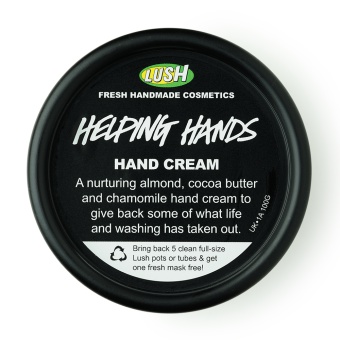
Lush Helping Hands
Lush Helping Hands is a deeply restorative hand cream specifically formulated for skin that has been pushed to the limit. Designed for those who work with their hands—from gardeners to healthcare professionals—this thick, soothing cream uses a base of chamomile water and linseed mucilage to calm inflammation and soften rough patches. The formula is enriched with honey and marigold to provide antiseptic benefits, while lavender oil offers a relaxing scent and additional skin-soothing properties. Its texture is rich and highly emollient, sinking into the skin to create a protective barrier against the elements. While it is a powerhouse for repairing chapped skin, its heavy use of traditional butters and oils makes it a very dense product. For users who prioritize natural, herbal-based relief for dry, hardworking extremities, Helping Hands offers a traditional remedy that focuses on intense moisture and skin recovery.
Our Analysis
Our analysis of Lush Helping Hands indicates a high comedogenic risk level, primarily due to the inclusion of cocoa butter, which carries a 4/5 rating. Cocoa butter is a highly occlusive fat that is excellent for moisture retention but notorious for trapping sebum and clogging pores. The formula also contains sweet almond oil and stearic acid, which provide additional emollient benefits but increase the overall lipid load. While these ingredients are beneficial for the thick skin on the hands, they pose a significant breakout risk if transferred to the face, making this product a concern for acne-prone users.
Skin Type Recommendations
Lush Helping Hands is best suited for extremely dry, cracked, or sensitive skin on the hands and body. It is not recommended for oily or acne-prone skin types. Those prone to facial breakouts should wash their hands after application to prevent the comedogenic butters from transferring to the face.
Flagged Ingredients
Highly occlusive fat rich in Oleic/Stearic acids; traps sebum.
Rich in Oleic acid; nourishing for dry skin but potentially occlusive for oily skin.
Found in many butters; thickening agent with low-moderate risk.
Fatty alcohol emollient with low-moderate comedogenicity on its own. However, when combined with Ceteareth-20, the synergistic effect can significantly increase pore-clogging potential (combined rating of 4).
Want Deeper Analysis?
Run our MACR (Multi-Axis Comedogenic Risk) analysis to get a comprehensive 5-axis risk assessment. This AI-powered analysis evaluates ingredients for Plugging Risk, Barrier Damage, Fungal Acne Risk, Oxidation Risk, and real-world User Reports — giving you personalized scores for your skin type.