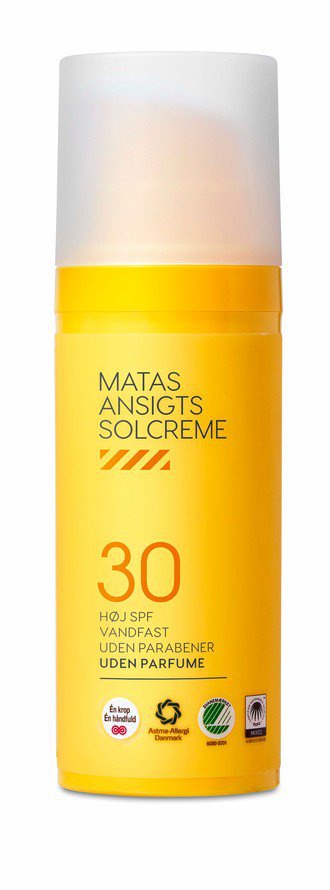
Matas Ansigtssolcreme Spf 30
Matas Ansigtssolcreme Spf 30 is a popular Danish facial sunscreen designed to provide broad-spectrum protection against UVA and UVB rays. Formulated by the trusted brand Matas, this sunscreen features a blend of modern chemical filters like Diethylamino Hydroxybenzoyl Hexyl Benzoate and Diethylhexyl Butamido Triazone, which offer reliable sun defense without a heavy white cast. The base includes C12-15 Alkyl Benzoate and Octyldodecanol, giving the cream a smooth, emollient texture that helps the skin stay hydrated throughout the day. While it provides essential protection for the delicate skin on your face, those with specific skin concerns should look closely at the formulation. It is designed to be fragrance-free and easy to integrate into a daily morning routine. However, for users focusing on clear pores, the inclusion of certain emulsifiers and fatty alcohols shifts the profile of this product from a simple daily staple to a moderate risk for those prone to congestion. It offers a comfortable feel for many, but its impact on acne-prone skin requires a deeper look into its ingredient synergy.
Our Analysis
Our analysis of Matas Ansigtssolcreme Spf 30 reveals a Moderate Comedogenic Risk. The primary concern is the presence of Ceteareth-20, which carries a high rating of 5/5. This ingredient acts as a penetration enhancer, potentially dragging other substances deeper into the pores. Furthermore, when Ceteareth-20 is combined with Cetearyl Alcohol, they create a synergistic effect with a significantly higher pore-clogging potential (rated 4/5). This combination is known for causing congestion and breakouts in acne-prone individuals, despite the sunscreen's otherwise effective UV-filtering properties.
Skin Type Recommendations
This sunscreen is best suited for individuals with dry or very dry skin who are not prone to breakouts. The emollient base provides lasting comfort. However, we advise caution for oily, combination, or acne-prone skin types, as the combination of Ceteareth-20 and Cetearyl Alcohol is likely to cause congestion.
Flagged Ingredients
Highly comedogenic penetration enhancer. Opens the skin barrier to drag other ingredients deeper, causing congestion.
Fatty alcohol emollient with low-moderate comedogenicity on its own. However, when combined with Ceteareth-20, the synergistic effect can significantly increase pore-clogging potential (combined rating of 4).
Want Deeper Analysis?
Run our MACR (Multi-Axis Comedogenic Risk) analysis to get a comprehensive 5-axis risk assessment. This AI-powered analysis evaluates ingredients for Plugging Risk, Barrier Damage, Fungal Acne Risk, Oxidation Risk, and real-world User Reports — giving you personalized scores for your skin type.