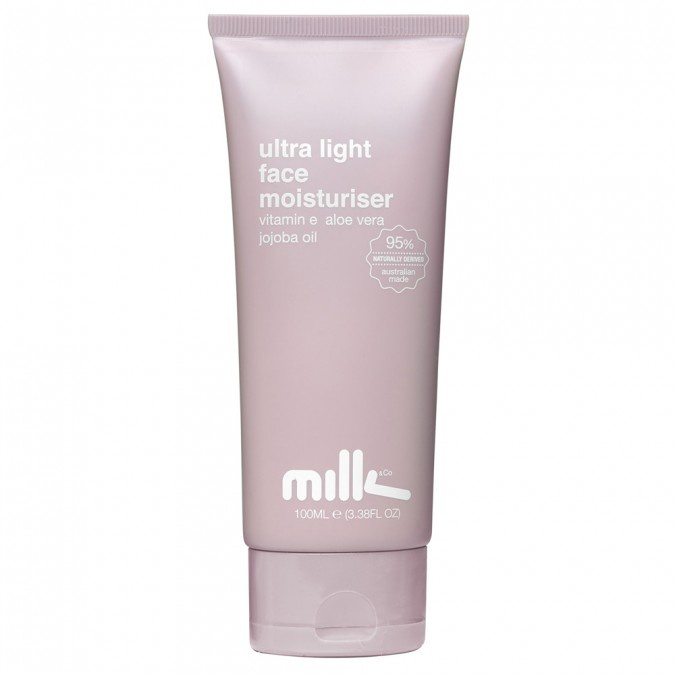
Milk Ultra Light Face Moisturiser
The Milk Ultra Light Face Moisturiser is marketed as a weightless daily hydrator designed to soften the skin without leaving a heavy or greasy residue. As its name suggests, this skincare staple aims for a fast-absorbing, airy texture that appeals to those who prefer a breathable feel. The formula relies on a base of water and emollient fatty alcohols like Cetyl Alcohol and Stearic Acid to smooth the skin's surface and lock in moisture. It also features Potassium Cetyl Phosphate and Cetyl Behenate to help stabilize the emulsion and support the skin's natural barrier. Capric/Caprylic Triglyceride, a derivative of coconut oil, is included to provide a silky glide during application. While the brand emphasizes a lightweight experience, the ingredient profile reveals a rich combination of esters and emollients. This product is intended to provide essential hydration for a soft, supple complexion, but the 'Ultra Light' label may be misleading for those with specific skin sensitivities or concerns regarding pore congestion.
Our Analysis
Our analysis of the Milk Ultra Light Face Moisturiser reveals a High Comedogenic Risk level, making it a risky choice for clear-skin enthusiasts. The formula contains Isopropyl Myristate, which carries a maximum rating of 5/5; this penetration enhancer is notorious for diving deep into pores and hardening, leading to stubborn blockages. Additionally, Isostearyl Isostearate (4/5) is a rich ester that can cause significant congestion despite its moisturizing properties. While ingredients like Stearic Acid and Cetearyl Alcohol have lower individual ratings, their cumulative effect in this specific formulation creates a high probability of triggering breakouts and closed comedones.
Skin Type Recommendations
This moisturizer is best suited for individuals with very dry skin that is not prone to acne. Due to high-risk ingredients like Isopropyl Myristate, it is strongly discouraged for oily, combination, and acne-prone skin types. Those with sensitive skin should also be cautious of potential congestion and irritation.
Flagged Ingredients
Penetration enhancer that dives deep into pores and hardens, causing blockages.
Rich ester that mimics skin lipids but often leads to congestion.
A fatty alcohol (emollient) that is generally safe, but can be problematic for very sensitive individuals.
Fractionated coconut oil; removed most clogging long-chain acids but can still affect some.
Fatty alcohol emollient with low-moderate comedogenicity on its own. However, when combined with Ceteareth-20, the synergistic effect can significantly increase pore-clogging potential (combined rating of 4).
Found in many butters; thickening agent with low-moderate risk.
Want Deeper Analysis?
Run our MACR (Multi-Axis Comedogenic Risk) analysis to get a comprehensive 5-axis risk assessment. This AI-powered analysis evaluates ingredients for Plugging Risk, Barrier Damage, Fungal Acne Risk, Oxidation Risk, and real-world User Reports — giving you personalized scores for your skin type.