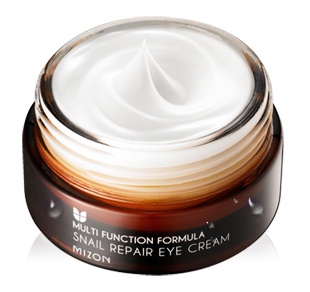
Mizon Snail Repair Eye Cream (Discontinued)
The Mizon Snail Repair Eye Cream was a long-standing favorite in the K-beauty community, known for its high concentration of snail secretion filtrate. This key ingredient is celebrated for its remarkable ability to repair skin, boost elasticity, and provide deep hydration to the delicate eye area. Alongside snail mucin, the formula incorporates glycerin and butylene glycol to attract moisture, while cetearyl and sorbitan olivate help to strengthen the skin's natural moisture barrier. Despite its discontinued status, many users still seek out its ingredient profile to understand its performance. The texture is notably rich and creamy, providing a thick, occlusive layer that aims to smooth fine lines and prevent dehydration. While it offers significant benefits for those looking to combat signs of aging, the inclusion of several thickening agents and fatty acids gives it a heavy feel that may not suit everyone. Understanding the balance between its reparative snail mucin and its occlusive base is essential for anyone looking for similar alternatives in the current market.
Our Analysis
Our analysis of the Mizon Snail Repair Eye Cream indicates a HIGH comedogenic risk level. While snail mucin itself is generally safe, the supporting formula contains several ingredients that can trigger breakouts or milia. Specifically, Myristic Acid (rated 3/5) is a saturated fatty acid known to be problematic for those with oily skin. The formula also contains Cetyl Alcohol, Stearyl Alcohol, Beeswax, and Palmitic Acid. This combination of waxes and fatty acids creates a highly occlusive environment that can trap sebum and clog pores, making it a risky choice for acne-prone individuals.
Skin Type Recommendations
This cream is best suited for individuals with very dry or mature skin who need intense moisture. However, it is poorly suited for oily, combination, or acne-prone skin types. Those prone to milia around the eyes should avoid this formula due to its high concentration of pore-clogging fatty acids and waxes.
Flagged Ingredients
Saturated fatty acid that can be problematic for oily skin.
A fatty alcohol (emollient) that is generally safe, but can be problematic for very sensitive individuals.
Waxy fatty alcohol; low risk but can add heaviness.
Forms a breathable barrier; rarely clogs pores directly but can trap other comedogenic ingredients underneath it.
Saturated fatty acid; provides barrier but can be occlusive.
Found in many butters; thickening agent with low-moderate risk.
Want Deeper Analysis?
Run our MACR (Multi-Axis Comedogenic Risk) analysis to get a comprehensive 5-axis risk assessment. This AI-powered analysis evaluates ingredients for Plugging Risk, Barrier Damage, Fungal Acne Risk, Oxidation Risk, and real-world User Reports — giving you personalized scores for your skin type.