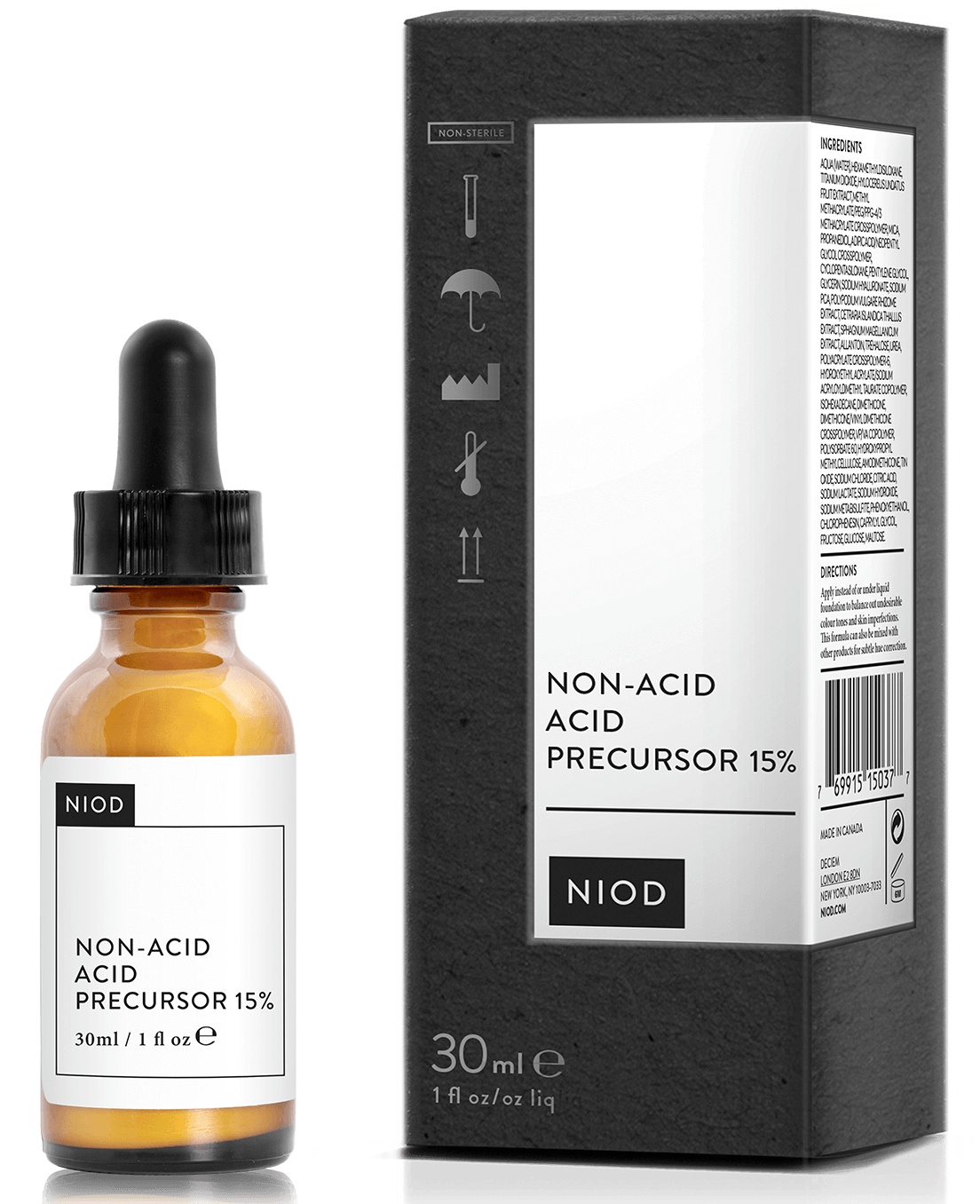
NIOD Non-Acid Acid Precursor 15%
NIOD Non-Acid Acid Precursor 15% (NAAP) is a sophisticated resurfacing treatment designed for those who want the benefits of chemical exfoliation without the irritation typically associated with direct acids like AHAs or BHAs. Rather than using low-pH acids, NIOD utilizes fermentation technologies and amino isolates to encourage visible radiance and skin renewal. The formula is anchored by Lactococcus Ferment Lysate, a probiotic ingredient that supports the skin’s natural barrier, and Ethyl Linoleate, a precursor to linoleic acid that helps balance the appearance of oily skin. The texture is a lightweight, milky suspension that feels silky upon application and absorbs efficiently without a greasy finish. By targeting surface regularity and signs of aging through precursors rather than direct acids, NAAP respects the skin's moisture barrier while delivering a smoother, more refined complexion. It is an ideal choice for users seeking a high-tech approach to skin texture and clarity while maintaining a healthy skin pH.
Our Analysis
Our analysis of NIOD Non-Acid Acid Precursor 15% reveals a low comedogenic risk profile, making it a relatively safe choice for those prone to congestion. The primary ingredient of concern is sorbitan isostearate, which carries a low comedogenic rating of 2/5. As an emulsifier, it is generally less likely to cause issues than heavier oils or waxes. Notably, the inclusion of Ethyl Linoleate is a positive for acne-prone skin, as it helps supplement essential fatty acids that are often deficient in blemish-prone individuals. Overall, the formula avoids major pore-clogging triggers while delivering advanced resurfacing benefits.
Skin Type Recommendations
This product is excellent for sensitive and acne-prone skin types that cannot tolerate traditional chemical peels. Its low-clog potential makes it suitable for oily and combination skin, while the hydrating glycerin and probiotic lysate support dry skin types. It is a versatile, non-irritating resurfacer for all skin concerns.
Flagged Ingredients
Emulsifier with lower clog potential than Oleate.
MACR Analysis
5-Axis AI-Powered Risk Assessment
Recommendations
This serum is best suited for individuals not prone to fungal acne or severe sensitivity, offering benefits from peptides and yeast extracts.
Individuals with normal to combination skin seeking peptide benefits, Those looking for skin hydration and renewal, provided they are not sensitive to the listed actives.
Individuals prone to fungal acne (Malassezia folliculitis), Those with sensitive skin who may react to Sodium Salicylate or Ethoxydiglycol, Acne-prone skin that is reactive to fungal triggers or mild pore congestion.
Individuals with diagnosed Malassezia folliculitis, Those with a history of severe reactions to Polysorbates or specific fatty acids.
- •Patch test on a small, inconspicuous area before applying to the entire face.
- •Monitor skin for any signs of increased breakouts, redness, or irritation.
- •Use in conjunction with a gentle cleanser and moisturizer to support overall skin barrier health.
Overall Risk Score
Lower is better
Score by Skin Type
Lower is better
Same product, different risks based on your skin type
This leave-on serum presents a moderate overall comedogenic risk, with key concerns revolving around ingredients that may support Malassezia yeast growth and potential barrier disruption. While containing beneficial peptides and extracts, the inclusion of Ethyl Linoleate and Polysorbate 60 warrants caution for fungal acne-prone individuals. The presence of penetration enhancers like Ethoxydiglycol can amplify these risks.
Risk Breakdown
Ingredient Interactions
These ingredients may interact to increase risk beyond their individual scores.
Ethoxydiglycol enhances penetration, which can drive Polysorbate 60 (and its potential to feed Malassezia) deeper into the skin and increase its overall impact on the fungal microbiome.
Ethoxydiglycol acts as a solvent and penetration enhancer, potentially increasing the absorption of Polysorbate 60. This synergistic effect could lead to a more pronounced impact on Malassezia yeast and potentially exacerbate fungal acne or lead to increased skin irritation.
Why This Score?
The overall score of 38 is calculated from the weighted sum of the individual axis scores (PR*7 + BR*5 + FR*3 + OR*2 + UR*3). The moderate PR score is due to ingredients like Ethyl Linoleate and Polysorbate 60. The BR score is influenced by Sodium Salicylate and Ethoxydiglycol. FR is the most significant contributor due to Ethyl Linoleate, Polysorbate 60, and Yeast Extract. OR is low as no highly oxidizable ingredients are present. UR reflects the mixed user reports for Polysorbate 60 and the moderate risk associated with Ethyl Linoleate.
Main factors:
- •Fungal Risk (FR) due to Ethyl Linoleate and Polysorbate 60
- •Plugging Risk (PR) due to Ethyl Linoleate and Polysorbate 60
- •Barrier Risk (BR) due to Sodium Salicylate and Ethoxydiglycol
Reducing factors:
- •Leave-on format with moderate concentrations of flagged ingredients (except top 5)
- •Low OR and UR scores for most ingredients
- •Presence of barrier-supporting ingredients like Glycerin and Lecithin
Skin Type Considerations
This analysis uses the Multi-Axis Comedogenic Risk (MACR) system. Results are AI-estimated and cannot account for actual ingredient concentrations. Individual reactions may vary. Consult a dermatologist for personalized advice.