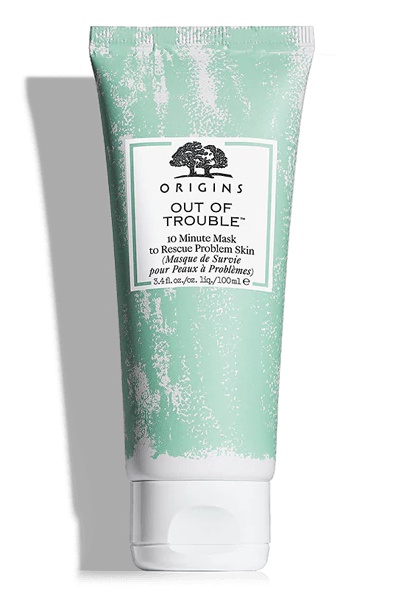
Origins Out Of Trouble 10 Minute Mask To Rescue Problem Skin
The Origins Out Of Trouble 10 Minute Mask To Rescue Problem Skin is marketed as a rapid-response solution for complexions in distress. This clay-based mask features Zinc Oxide and Titanium Dioxide, which help absorb surface oils and provide a matte finish. Designed to tackle shine and refine skin texture, it also incorporates camphor for a cooling, medicinal sensation and colloidal sulfur, an ingredient traditionally used to address active blemishes. The formula has a thick, creamy texture that spreads easily, intended to soothe and calm the skin during a short ten-minute treatment. While the immediate effect is often a refreshed and oil-free appearance, the formula contains several heavy emollients and surfactants that may be counterproductive for those specifically seeking to clear their pores. Understanding the balance between its oil-absorbing properties and its potential for irritation is key for anyone incorporating this treatment into a routine focused on long-term skin clarity and health.
Our Analysis
Our analysis assigns a HIGH comedogenic risk to this product, primarily due to the presence of Ceteareth-20. With a rating of 5/5, Ceteareth-20 is a potent penetration enhancer that can drag other ingredients deeper into the pores, leading to significant congestion. When paired with Cetearyl Alcohol, its pore-clogging potential is further amplified. Additionally, while colloidal sulfur and camphor provide a 'rescue' sensation, they are known irritants that can dry out the skin and stimulate inflammation, potentially triggering reactive breakouts rather than resolving them. This formulation may be too aggressive for those with a compromised skin barrier.
Skin Type Recommendations
This mask is best avoided by those with acne-prone, sensitive, or dry skin types. The combination of high-rated comedogenic ingredients and potential irritants like camphor makes it risky for reactive complexions. It may provide temporary oil control for very oily, non-sensitive skin, but the risk of long-term pore congestion remains high.
Flagged Ingredients
Highly comedogenic penetration enhancer. Opens the skin barrier to drag other ingredients deeper, causing congestion.
Can cause high irritation and drying, leading to reactive breakouts.
A fatty alcohol (emollient) that is generally safe, but can be problematic for very sensitive individuals.
Fatty alcohol emollient with low-moderate comedogenicity on its own. However, when combined with Ceteareth-20, the synergistic effect can significantly increase pore-clogging potential (combined rating of 4).
Counter-irritant that can stimulate blood flow/inflammation.
Want Deeper Analysis?
Run our MACR (Multi-Axis Comedogenic Risk) analysis to get a comprehensive 5-axis risk assessment. This AI-powered analysis evaluates ingredients for Plugging Risk, Barrier Damage, Fungal Acne Risk, Oxidation Risk, and real-world User Reports — giving you personalized scores for your skin type.