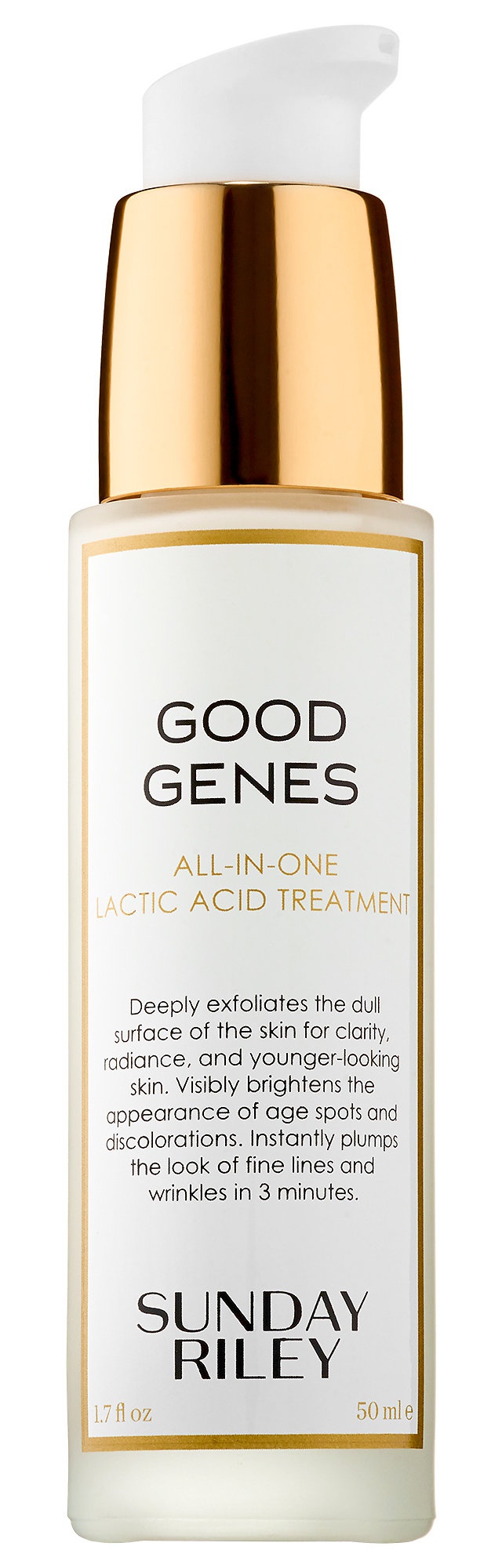
Sunday Riley Good Genes Treatment
Sunday Riley Good Genes Treatment is a cult-favorite lactic acid treatment designed to provide immediate radiance and deep exfoliation. Formulated with a unique blend of botanical extracts, including Prickly Pear, Blue Agave, and Lady’s Slipper Orchid, this treatment aims to soothe the skin while the active AHAs work to dissolve dulling dead skin cells. The product features a distinctive creamy, milky texture that feels luxurious upon application, promising to reduce the appearance of fine lines, dark spots, and uneven texture. While the botanical base of cactus and agave provides antioxidant benefits and hydration, the formula is also built with several emollient and thickening agents to give it its signature silkiness and slip. For those looking for an instant 'lit-from-within' glow, Good Genes is often a top recommendation in the beauty world. However, beneath the surface of these high-performance actives lies a complex ingredient profile that requires closer inspection for those struggling with persistent congestion. Understanding how these specific emollients interact with your skin's natural sebum is crucial for maintaining clear pores while achieving your desired resurfacing results.
Our Analysis
Our analysis reveals that Sunday Riley Good Genes carries a HIGH comedogenic risk level. The most concerning ingredient is Ceteareth-20, which carries a maximum 5/5 rating; it acts as a potent penetration enhancer that can drag other ingredients deeper into the follicles, potentially causing deep-seated congestion. Furthermore, the formula contains Cetearyl Alcohol; when combined with Ceteareth-20, these two create a synergistic effect that significantly increases the likelihood of clogged pores. Other ingredients like Stearic Acid and Capric/Caprylic Triglyceride add to the cumulative risk, making this formula potentially problematic for those with active acne.
Skin Type Recommendations
This treatment is best suited for dry, dehydrated, or mature skin types that do not struggle with frequent breakouts. If you have oily or acne-prone skin, use caution; the high comedogenic rating of ingredients like Ceteareth-20 and the fatty alcohol blend may trigger closed comedones despite the exfoliating benefits.
Flagged Ingredients
Highly comedogenic penetration enhancer. Opens the skin barrier to drag other ingredients deeper, causing congestion.
Fractionated coconut oil; removed most clogging long-chain acids but can still affect some.
Found in many butters; thickening agent with low-moderate risk.
Fatty alcohol emollient with low-moderate comedogenicity on its own. However, when combined with Ceteareth-20, the synergistic effect can significantly increase pore-clogging potential (combined rating of 4).
Want Deeper Analysis?
Run our MACR (Multi-Axis Comedogenic Risk) analysis to get a comprehensive 5-axis risk assessment. This AI-powered analysis evaluates ingredients for Plugging Risk, Barrier Damage, Fungal Acne Risk, Oxidation Risk, and real-world User Reports — giving you personalized scores for your skin type.