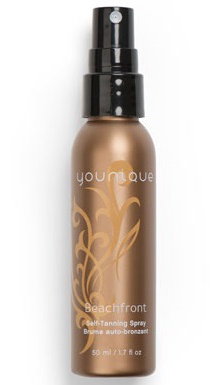
Younique Beachfront Self-Tanning Spray
The Younique Beachfront Self-Tanning Spray is designed to provide a natural-looking, sun-kissed glow without the harmful effects of UV exposure. This self-tanning mist features Dihydroxyacetone (DHA) as its primary active ingredient to darken the skin, while Caramel provides an immediate bronze tint upon application. To balance the formula, Younique includes Glycerin, a humectant that helps skin retain moisture, and Cocos Nucifera (Coconut) Oil for a boost of fatty acid-rich hydration. The product utilizes Alcohol Denat to ensure the spray dries quickly on the skin, preventing a tacky residue. While the texture is lightweight and easy to distribute, the inclusion of botanical extracts and oils aims to soften the skin during the tanning process. It is primarily used for the body to achieve a streak-free, golden radiance that develops over several hours. However, those with specific skin sensitivities or acne concerns should look closely at the ingredient profile, as the formula contains several heavy hitters that may affect pore health.
Our Analysis
Our analysis of the Younique Beachfront Self-Tanning Spray reveals a Moderate comedogenic risk level, making it a cautious choice for those prone to breakouts. The formula contains two highly problematic ingredients: Algae Extract and Coconut Oil. Algae extract is rated 5/5 on the comedogenic scale due to its high iodide content, which can irritate the pore lining and trigger micro-comedones. Additionally, Coconut Oil (rated 4/5) is rich in Lauric Acid, which is known to solidify within the pore. For users with acne-prone skin, these ingredients pose a significant risk of causing congestion and inflammatory acne.
Skin Type Recommendations
This tanning spray is best suited for individuals with very dry or normal skin on the body who do not experience body acne. We strongly advise against using this product on the face or chest if you have oily, combination, or acne-prone skin, as the algae and coconut oil are likely to clog pores.
Flagged Ingredients
Rich in iodides which irritate the pore lining, triggering inflammation and micro-comedones.
High Lauric Acid content solidifies inside the pore.
Want Deeper Analysis?
Run our MACR (Multi-Axis Comedogenic Risk) analysis to get a comprehensive 5-axis risk assessment. This AI-powered analysis evaluates ingredients for Plugging Risk, Barrier Damage, Fungal Acne Risk, Oxidation Risk, and real-world User Reports — giving you personalized scores for your skin type.