
Introduction: The Challenge of Covering Cystic Acne
Is Your Routine Acne-Safe?
Do not guess. Instantly check your products for pore-clogging ingredients with our AI-powered tool.
Check Ingredients NowDealing with cystic acne is more than just a cosmetic concern; it is a painful, often frustrating dermatological condition. Unlike surface-level whiteheads, cystic acne forms deep within the dermis, resulting in large, tender, and often inflamed nodules. For many, the instinct is to reach for the heaviest concealer available to mask the redness and swelling.
However, as a dermatologist, I frequently see patients trapped in a vicious cycle: using heavy, pore-clogging makeup to hide a breakout, only for that very makeup to trigger new “cosmetic acne” (acne cosmetica). Finding an acne-safe concealer for cystic acne requires a delicate balance of high-pigment coverage and skin-respecting chemistry. This guide will walk you through the science of non-comedogenic ingredients and the best practices for concealing deep breakouts without making them worse.
Understanding the Science: Why Cystic Acne is Different
Cystic acne is characterized by deep-seated inflammation. Because the infection is so far below the surface, the skin on top is often stretched, shiny, and highly sensitive. Standard concealers often fail for two reasons:
- Adhesion and Texture: The surface of a cyst is often smooth and taut, making it difficult for traditional formulas to "grip" the skin.
- Occlusion: Heavy waxes and oils used to create high-coverage formulas can create an occlusive seal over the pore. This traps sebum and Cutibacterium acnes (the bacteria responsible for breakouts), potentially leading to secondary infections or prolonging the life of the cyst.
What Does "Acne-Safe" Actually Mean?
In the beauty industry, terms like "non-comedogenic" and "acne-safe" are not strictly regulated by the FDA. A product labeled non-comedogenic may still contain ingredients that cause issues for sensitive, acne-prone individuals. To find a truly safe concealer, we must look past the marketing and examine the ingredient list for specific triggers.
Ingredients to Look For—and Those to Avoid
When selecting a concealer for cystic breakouts, your goal is to minimize irritation while providing effective camouflage.
The "No-Go" List (Pore Cloggers)
If you are prone to cystic acne, avoid these common ingredients often found in heavy-duty concealers:
- Isopropyl Myristate and its derivatives: Known to be highly comedogenic.
- Sodium Lauryl Sulfate: Can strip the skin barrier, leading to more inflammation.
- Coconut Oil (and its derivatives): While natural, it is notoriously pore-clogging for most acne sufferers.
- Bismuth Oxychloride: Often found in mineral makeup, this can cause a “prickly” itching sensation and irritation in inflamed cystic skin.
The Acne-Safe Champions
Look for formulas that incorporate skin-beneficial ingredients:
- Salicylic Acid (BHA): Some concealers contain a small percentage of BHA to help keep the pore clear while you wear it.
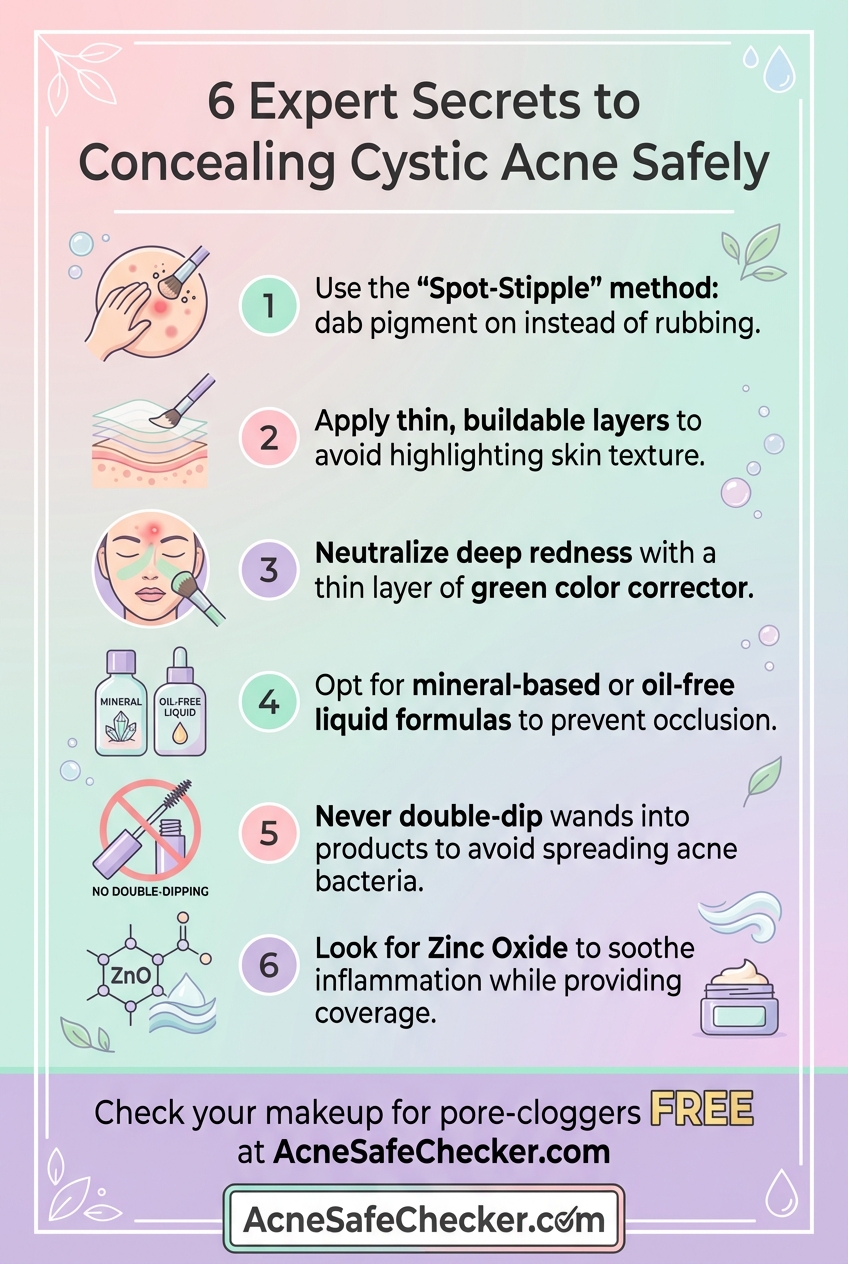
- Zinc Oxide: Provides a physical barrier and has natural anti-inflammatory properties that can soothe the redness of a cyst.
- Niacinamide: Helps to regulate oil production and calm the skin barrier.
- Silicone (with a caveat): While some people avoid silicones, high-quality dimethicone can provide a smooth “blurring” effect over the texture of a cyst without clogging the pore, as it is a breathable molecule.
How to Choose the Right Formula for Cystic Coverage
Cystic acne requires more pigment than a standard dark-circle concealer. However, the delivery method matters:
1. The Power of Mineral Pigments
Mineral-based concealers (specifically those that are loose or pressed powder) are often the safest for acne. They contain fewer binders and waxes. However, they can sometimes struggle to cover the intense redness of a cyst. In these cases, a "cream-to-powder" mineral formula is often the best middle ground.
2. Oil-Free Liquid Concealers
For those with dry or flaky skin (often a side effect of using Retin-A or Benzoyl Peroxide), a liquid, oil-free concealer is ideal. Look for "water-based" formulas that utilize high-tech polymers to stay in place rather than heavy oils.
Dermatologist-Approved Application Techniques
How you apply your makeup is just as important as what you apply. When dealing with cystic acne, the goal is to minimize bacterial transfer and avoid further irritating the lump.
- The "Spot-Stipple" Method: Instead of rubbing the concealer in—which can irritate the cyst and cause more redness—use a clean, synthetic brush or a clean finger to gently dab (stipple) the product onto the center of the cyst.
- Thin Layers are Key: Do not try to hide the cyst with one thick glob of makeup. This will inevitably look “cakey” and highlight the texture. Apply one thin layer, let it set for 30 seconds, and then apply a second thin layer if needed.
- Color Correcting: Since cysts are typically deep red or purple, use a very thin layer of green color corrector first. This neutralizes the redness, allowing you to use less concealer overall.
- Hygiene is Non-Negotiable: Never double-dip a wand directly from the bottle onto an active cyst. This transfers bacteria back into your makeup. Dispense a small amount onto a clean palette or the back of your hand first.
Conclusion: Skin Health First
While the right acne-safe concealer can provide a much-needed confidence boost, remember that makeup is a temporary mask. Cystic acne is a medical condition that often requires professional intervention, such as prescription topical retinoids, oral antibiotics, or hormonal treatments.
By choosing products free of common comedogens and employing gentle application techniques, you can navigate your skin journey with less inflammation and more confidence. Always patch-test new products and, when in doubt, consult with your dermatologist to ensure your makeup routine is supporting, not hindering, your path to clear skin.