
For years, the standard advice for anyone struggling with acne was simple: avoid oil at all costs. We were told to use foaming detergents, alcohol-based toners, and 'oil-free' everything. However, as a dermatologist, I have seen many patients strip their skin’s natural barrier so thin that it overcompensates by producing even more sebum, leading to a vicious cycle of breakouts and irritation.
Is Your Routine Acne-Safe?
Do not guess. Instantly check your products for pore-clogging ingredients with our AI-powered tool.
Check Ingredients NowEnter the Oil Cleansing Method (OCM). While it may seem counterintuitive to apply oil to a breakout-prone face, the use of castor oil for oil cleansing is a scientifically-backed approach that can balance oil production and deep-clean pores without the harsh side effects of traditional soaps.
The Science of 'Like Dissolves Like'
To understand why oil cleansing works, we must look at basic chemistry. Sebum (the natural oil your skin produces) and the oils found in makeup and sunscreens are non-polar substances. Water, on the other hand, is a polar solvent. This is why water alone cannot wash away oily grime.
The principle of "like dissolves like" suggests that the most effective way to dissolve hardened sebum and stubborn debris trapped inside your pores is by using another oil. When you massage a high-quality oil into your skin, it binds to the impurities on the surface and inside the follicular lining. When you rinse it away properly, the 'bad' oils are removed, while the 'good' lipids in your skin barrier remain intact.
Why Castor Oil for Acne-Prone Skin?
Castor oil, derived from the seeds of the Ricinus communis plant, is unique in the world of skincare. It contains a high concentration of ricinoleic acid, a fatty acid that possesses significant anti-inflammatory and antimicrobial properties.
The Benefits of Ricinoleic Acid
For those with acne-prone skin, ricinoleic acid is the star of the show. Studies suggest it can inhibit the growth of certain bacteria, including those that contribute to acne flares. Furthermore, castor oil acts as a natural humectant, drawing moisture into the skin, but it also has an 'astringent' quality. This means it helps pull impurities out of the pores, making it an excellent deep-cleanser.
The Astringency Factor
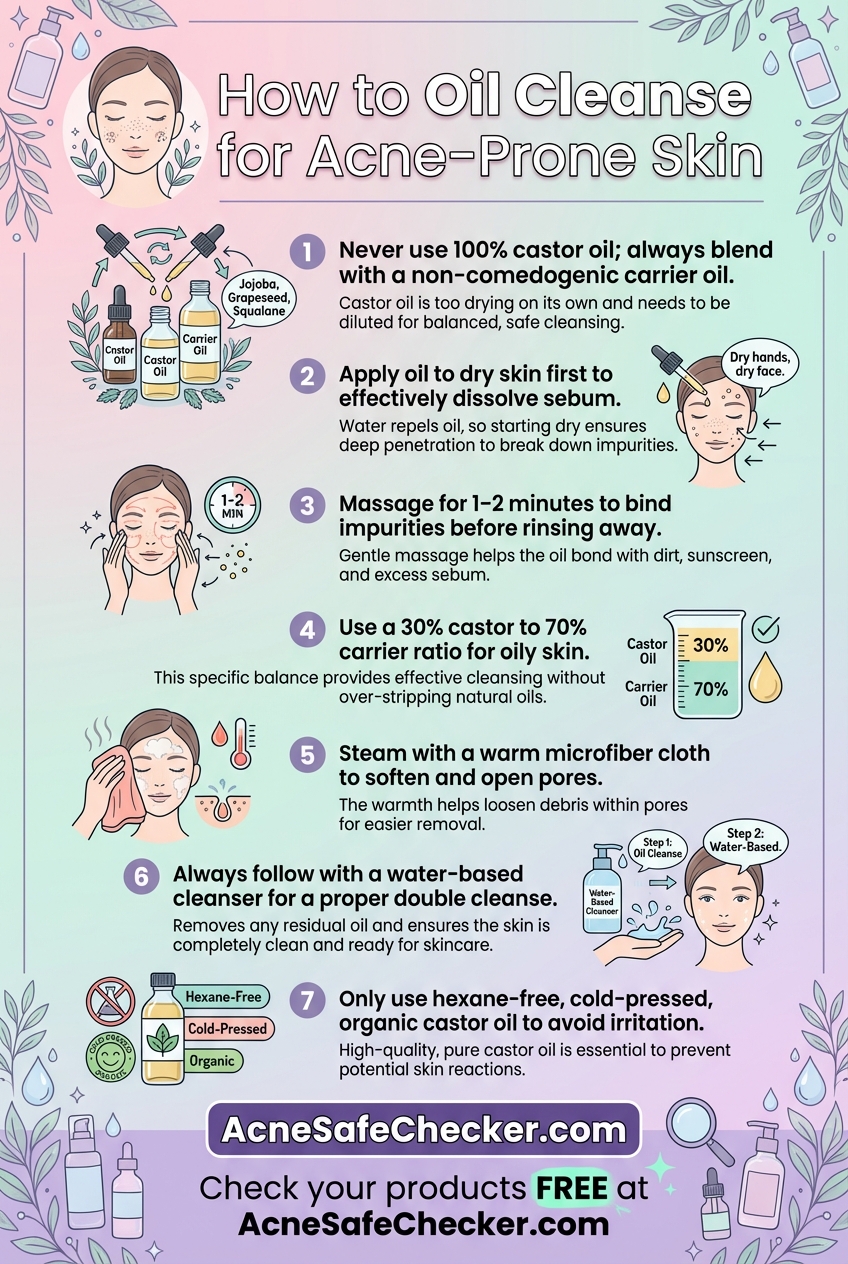
Unlike many other oils (like coconut oil, which is highly comedogenic and should be avoided by acne sufferers), castor oil is very thick and concentrated. It can be quite drying if used alone. This is why we never recommend using 100% castor oil for cleansing; it must be blended with a 'carrier' oil to achieve the perfect balance.
How to Create the Perfect Oil Blend
Because castor oil is potent, the ratio you use depends heavily on your skin type. For acne-prone and oily skin, we want enough castor oil to deep-clean, but enough carrier oil to prevent dehydration.
Choosing a Carrier Oil
Select a non-comedogenic carrier oil (rated 0 or 1 on the comedogenic scale):
- Jojoba Oil: Closely mimics human sebum; excellent for balancing oil.
- Hemp Seed Oil: High in linoleic acid, which is often deficient in the sebum of acne sufferers.
- Argan Oil: Rich in Vitamin E and soothing for inflamed breakouts.
The Recommended Ratios
- Oily/Acne-Prone Skin: 30% Castor Oil to 70% Carrier Oil.
- Combination Skin: 20% Castor Oil to 80% Carrier Oil.
- Dry/Sensitive Skin: 10% Castor Oil to 90% Carrier Oil.
Step-by-Step: The Dermatologist-Approved Method
To get the most out of your castor oil cleansing routine without causing a 'purge' or further breakouts, follow these steps:
- Start with Dry Skin: Do not wet your face first. Pour a quarter-sized amount of your oil blend into your palms and rub them together to warm the oil.
- The Massage: Gently massage the oil into your face using circular motions for 1–2 minutes. Focus on areas where you have congestion or blackheads. This is where the "like dissolves like" magic happens.
- The Steam (Optional but Effective): Soak a clean microfiber washcloth in warm (not hot) water. Wring it out and lay it over your face for 30 seconds. This helps soften the plugs in your pores.
- The Gentle Wipe: Use the washcloth to gently wipe away the oil. Avoid scrubbing, which can cause micro-tears in the skin.
- The Double Cleanse (Crucial for Acne): In clinical practice, I recommend a 'Double Cleanse.' After removing the oil, follow up with a gentle, water-based pH-balanced cleanser. This ensures that any dissolved debris and excess oil are completely removed from the skin surface.
Potential Side Effects and Precautions
While castor oil is generally safe, there are a few things to keep in mind:
- The Purge: Some people experience a short period of 'purging' where deep-seated impurities come to the surface. If this lasts longer than two weeks, or if you develop deep, painful cystic acne, stop immediately.
- Patch Testing: Always perform a patch test on your jawline for 24 hours before applying a new oil blend to your entire face.
- Quality Matters: Only use hexane-free, cold-pressed, organic castor oil. Impurities in low-grade oils can aggravate acne.
Conclusion
Using castor oil for oil cleansing acne-prone skin is a journey in rebalancing your skin’s biology. By moving away from harsh detergents and embracing the chemistry of oils, you can effectively clear your pores while maintaining a healthy, resilient skin barrier. Remember, consistency is key—and when in doubt, consult with a board-certified dermatologist to tailor a routine specifically for your skin's unique needs.