
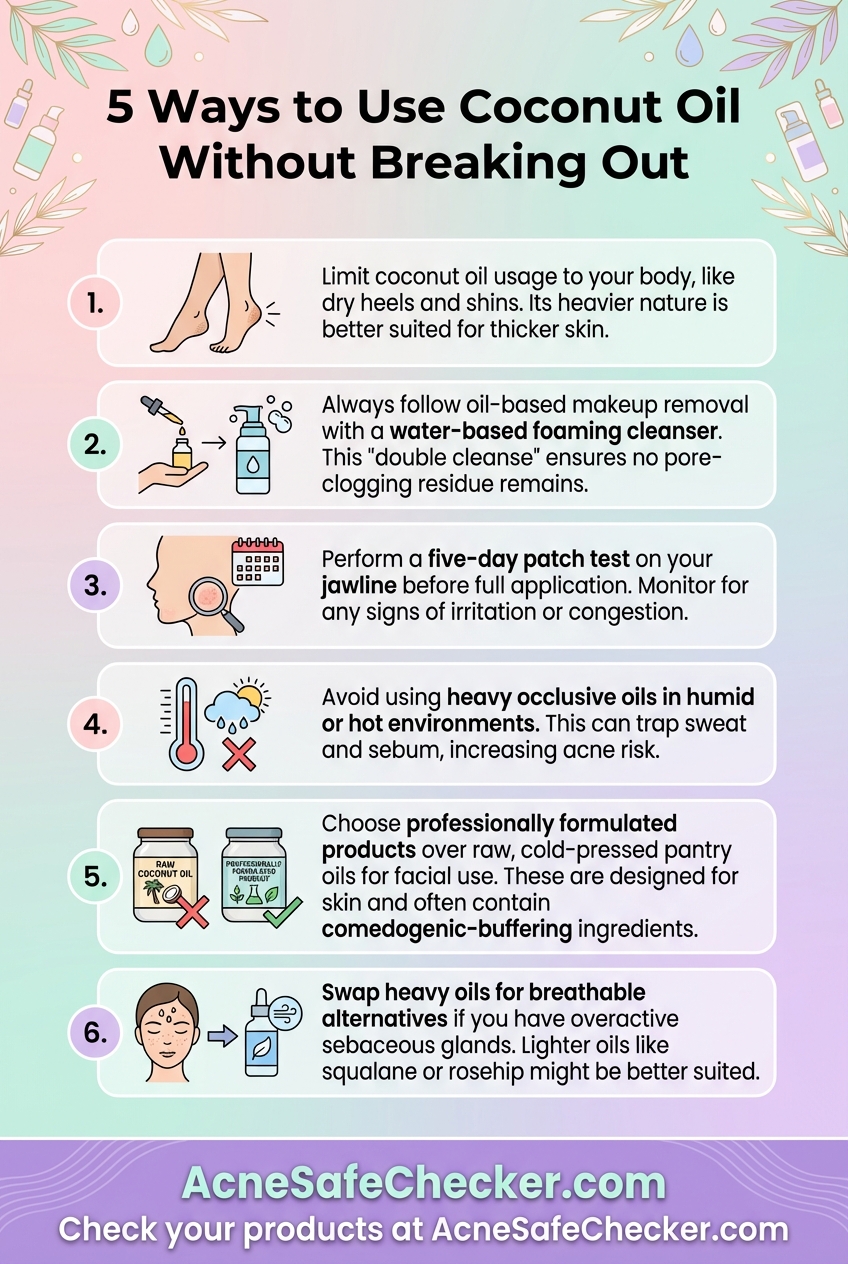
In the world of natural beauty, few ingredients have achieved the cult-like status of coconut oil. From hair masks to makeup removers, it is often hailed as a 'miracle' cure-all. However, as a dermatologist, I frequently see patients who transitioned to a natural skincare routine only to find themselves battling a sudden onset of inflammatory acne and stubborn blackheads.
Is Your Routine Acne-Safe?
Do not guess. Instantly check your products for pore-clogging ingredients with our AI-powered tool.
Check Ingredients NowIf you have been using coconut oil on your face and noticed your skin texture changing, you aren’t imagining things. The short answer to the question 'does coconut oil clog pores?' is a definitive yes—for most people. In this guide, we will explore the science of comedogenicity, why coconut oil reacts poorly with certain skin types, and what you should use instead.
Understanding the Comedogenic Scale
To understand why coconut oil is problematic, we first need to discuss the comedogenic scale. This is a scientific ranking system used in dermatology to determine how likely a specific ingredient is to clog pores. The scale ranges from 0 to 5:
- 0: Will not clog pores
- 1: Very low probability of clogging pores
- 2: Moderately low probability
- 3: Moderate probability
- 4: High probability
- 5: Very high probability
Coconut oil typically sits at a 4 on this scale. This means it has a high propensity for causing comedones (the technical term for clogged pores). While it offers excellent moisturizing properties for the body, the skin on your face is biologically different, with a higher concentration of sebaceous glands that are more susceptible to blockage.
The Chemistry: Why Coconut Oil Is a Pore-Clogging Powerhouse
Coconut oil is primarily composed of saturated fats, specifically lauric acid. While lauric acid has some antimicrobial properties, the molecular structure of coconut oil is the issue. It is a thick, occlusive oil.
The Occlusive Trap
Occlusives work by forming a physical barrier on top of the skin to prevent transepidermal water loss. For someone with extremely dry skin on their legs or elbows, this is beneficial. However, on the face, this heavy film doesn't just keep moisture in; it traps dead skin cells, natural sebum (oil), and environmental pollutants inside the pore.
Molecular Size
The molecules in coconut oil are relatively large and 'sticky.' Instead of being easily absorbed into the deeper layers of the dermis, they tend to sit in the opening of the hair follicle. When combined with your skin’s natural oils, this creates a 'plug' that provides the perfect anaerobic environment for P. acnes bacteria to thrive, leading to painful cysts and whiteheads.
Does Everyone React the Same Way?
Skin chemistry is individual, and you may know someone who uses coconut oil and has 'perfect' skin. This usually comes down to three factors:
- Genetics and Pore Size: People with naturally smaller pores and lower sebum production may be able to tolerate heavier oils better than those with overactive sebaceous glands.
- Climate: In very cold, dry climates, the occlusive nature of the oil might be offset by the extreme environmental lack of moisture. In humid environments, coconut oil is almost guaranteed to cause breakouts.
- Formulation: There is a difference between raw, cold-pressed coconut oil and a derivative used in a professionally formulated moisturizer. In a lab, chemists can alter the structure or concentration to reduce its comedogenic potential.
Practical Advice: How to Use Coconut Oil Safely
If you love the benefits of coconut oil but want to avoid the 'breakout trap,' follow these dermatological recommendations:
1. Limit it to the 'Neck Down'
The skin on your body is thicker and less prone to acne. Coconut oil is an excellent remedy for cracked heels, dry cuticles, and parched shins.
2. The 'Double Cleanse' Rule
If you use coconut oil to remove heavy waterproof makeup, you must follow up with a water-based, foaming cleanser. This process, known as double cleansing, ensures that the oily residue—and the debris it has lifted—is completely washed away rather than being left to sink into your pores.
3. Conduct a Patch Test
Before applying any new oil to your entire face, apply a small amount to the side of your jawline for five consecutive nights. If you don't see small bumps (closed comedones) or redness after a week, your skin may be part of the small percentage that can tolerate it.
Safer Alternatives for Acne-Prone Skin
If you are looking for the 'glow' of an oil without the risk of acne, consider these low-comedogenic alternatives:
- Squalane (Scale: 0-1): Mimics the skin’s natural lipids and provides intense hydration without any 'greasy' feel.
- Hemp Seed Oil (Scale: 0): Excellent for oily skin as it helps regulate sebum production and is non-comedogenic.
- Rosehip Seed Oil (Scale: 1): Rich in Vitamin A and C, it helps with skin regeneration and won't clog pores.
- Jojoba Oil (Scale: 2): Technically a liquid wax, it is structurally very similar to human sebum and can trick the skin into producing less oil.
Conclusion
While coconut oil is a gift from nature for many beauty needs, its high comedogenic rating makes it a risky choice for facial skincare, particularly for those prone to acne or congestion. As a dermatologist, my advice is to keep the coconut oil in the kitchen or reserved for your body. Your facial pores will thrive much better with lighter, more breathable oils that nourish the skin barrier without causing the very problems you’re trying to solve.