
Finding the perfect moisturizer often feels like an endless quest, especially when you are navigating the treacherous waters of acne-prone skin. You want hydration, but you fear the breakout. One ingredient that consistently sparks debate in the skincare community is shea butter.
Is Your Routine Acne-Safe?
Do not guess. Instantly check your products for pore-clogging ingredients with our AI-powered tool.
Check Ingredients NowDerived from the nuts of the karite tree, shea butter is celebrated for its rich, buttery texture and intense moisturizing properties. But the million-dollar question remains: Is shea butter comedogenic for your face? As a dermatologist, I see patients daily who are terrified of anything that might clog their pores. Let’s dive into the science behind shea butter and whether it belongs in your skincare routine.
Understanding the Comedogenic Scale
To understand if shea butter is right for you, we must first look at the comedogenic scale. This is a scientific ranking from 0 to 5 that determines how likely an ingredient is to clog pores (form comedones).
- 0: Will not clog pores
- 1: Very low chance of clogging pores
- 2: Low chance
- 3: Moderate chance
- 4: Fairly high chance
- 5: High probability of clogging pores
Shea butter typically ranks at a 0 to 2 on the comedogenic scale.
This means that for the vast majority of people, pure shea butter is unlikely to cause breakouts. However, "unlikely" is not the same as "never." Skincare is deeply personal, and a low rating doesn't provide a 100% guarantee for every skin type.
The Science of Shea Butter: Why It (Usually) Doesn't Clog Pores
Unlike many other heavy plant butters or oils (like coconut oil, which ranks high on the scale), shea butter has a unique fatty acid profile. It is primarily composed of stearic acid and oleic acid.
The Role of Fatty Acids
While oleic acid is highly moisturizing, it can sometimes be problematic for those with naturally oily skin if not balanced. However, shea butter also contains significant amounts of linoleic acid. Research suggests that the sebum (skin oil) of acne-prone individuals is often deficient in linoleic acid. By providing this essential fatty acid, shea butter may actually help balance your skin's natural oil production and soothe the inflammatory response associated with acne.
Furthermore, shea butter contains triterpene alcohols, which have been shown to have anti-inflammatory properties. This is why many people find that shea butter helps reduce the redness and swelling of existing pimples rather than causing new ones.
Benefits of Shea Butter for Your Face
If your skin tolerates it, shea butter offers a wealth of benefits that few other natural ingredients can match:
- Barrier Repair: It mimics the skin's natural lipid barrier, preventing transepidermal water loss (TEWL).
- Anti-Inflammatory: It contains lupeol cinnamate, which helps reduce skin inflammation.
- Healing Properties: It is rich in Vitamins A and E, which promote cellular turnover and repair.
- Non-Greasy Finish: Despite its thickness, high-quality shea butter absorbs relatively well into the skin without leaving a suffocating film.
When Should You Be Cautious?
While shea butter is generally safe, there are specific scenarios where it might contribute to congestion:
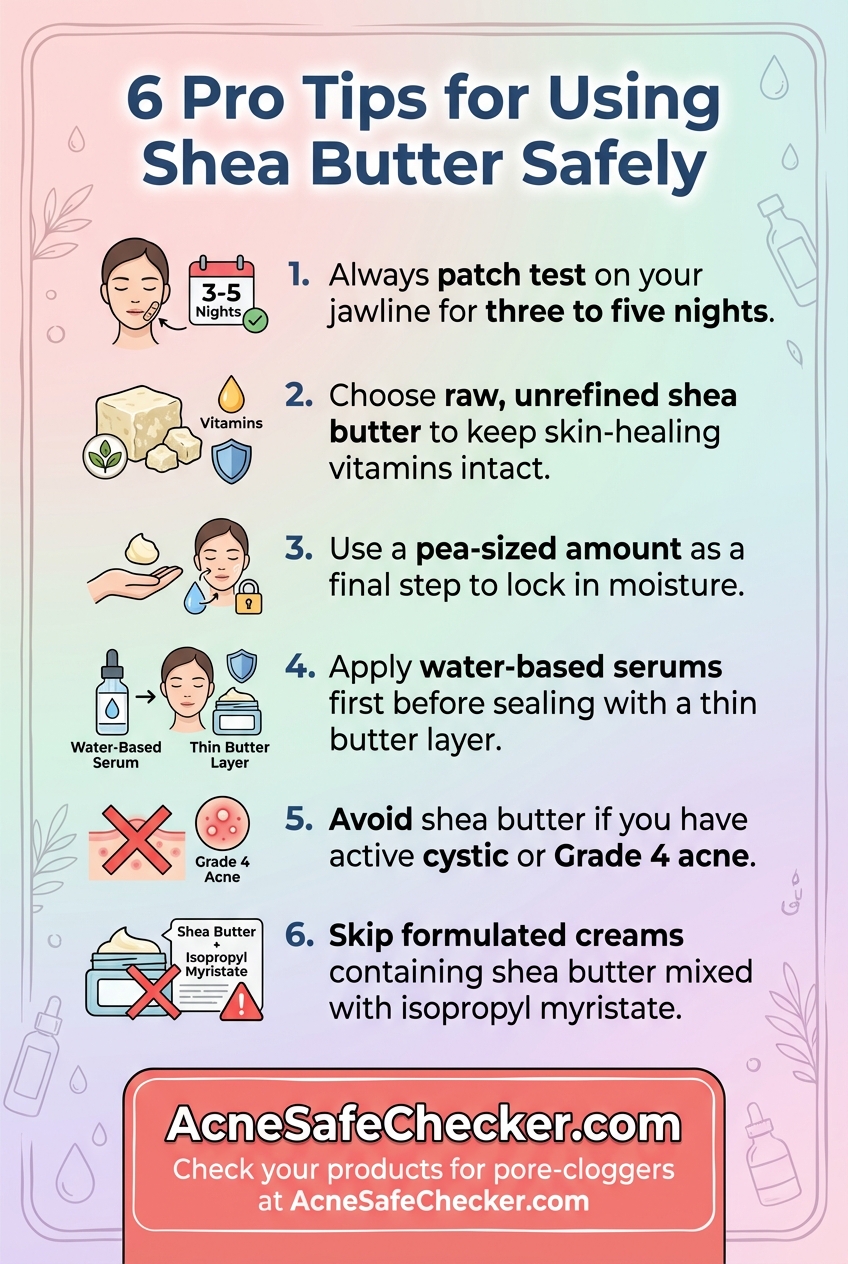
1. Extremely Oily or Grade 3-4 Acne
If you have very active, cystic acne or excessively oily skin, even a low-comedogenic ingredient can act as an occlusive. This means it can trap sweat, bacteria, and dead skin cells underneath the surface, potentially leading to "acne cosmetica."
2. Formulated Products vs. Pure Shea Butter
Often, it isn't the shea butter itself that causes the breakout, but the other ingredients in a cream. If your moisturizer contains shea butter alongside isopropyl myristate or certain algae extracts (high comedogenic ingredients), you may blame the butter when the culprit is actually a filler.
3. Refined vs. Raw Shea Butter
Raw, unrefined shea butter retains all its vitamins and minerals but can be heavier. Refined shea butter is processed to remove the natural scent and color, which some find more "cosmetically elegant," but the processing can sometimes strip the very fatty acids that make it beneficial for acne-prone skin.
Practical Steps: How to Test Shea Butter for Your Skin
If you want to incorporate shea butter into your routine, follow these dermatological best practices:
- The Patch Test: Apply a small amount of the product to a specific area of your face (like the jawline) for three to five consecutive nights. If no clusters of whiteheads or redness appear, it is likely safe for full-face application.
- Use it as a "Sealer": Instead of a thick layer, apply your water-based serums first and use a tiny, pea-sized amount of shea butter to "lock in" moisture as the final step of your nighttime routine.
- Look for "Non-Comedogenic" Labels: If you are buying a formulated moisturizer, ensure the brand has specifically tested the final product for comedogenicity.
Conclusion
So, is shea butter comedogenic for the face? For most people, the answer is no. Its low rating on the comedogenic scale and its anti-inflammatory fatty acid profile make it a powerhouse for dry, sensitive, and even mildly acne-prone skin.
However, if you struggle with chronic, severe congestion, you may want to opt for even lighter humectants like hyaluronic acid or squalane. As with any skincare change, listen to your skin. If it feels soothed and hydrated, you’ve found a winner. If you notice an increase in small bumps, it may be time to pivot to a lighter alternative.