
If you have ever spent time scanning the ingredient lists of your favorite primers, moisturizers, or foundations, you have undoubtedly encountered dimethicone. As one of the most common ingredients in the beauty industry, this silicone-based polymer is prized for its ability to create a silky, weightless finish. However, for those of us battling breakouts, the word 'silicone' often triggers an immediate red flag.
Is Your Routine Acne-Safe?
Do not guess. Instantly check your products for pore-clogging ingredients with our AI-powered tool.
Check Ingredients NowThere is a persistent debate in the skincare community: Does dimethicone cause acne? While some claim it is a 'pore-clogging' culprit, others swear by its protective benefits. As a dermatologist, I want to bridge the gap between anecdotal experience and clinical science to help you make an informed choice for your skin.
What Exactly is Dimethicone?
Dimethicone is a type of silicone (specifically a polydimethylsiloxane) that acts as both an emollient and an occlusive. Unlike plant oils that may sink into the skin, dimethicone is a large molecule that sits on the surface. Its unique molecular structure allows it to spread easily, filling in fine lines and uneven textures to create that 'blurring' effect we love in makeup primers.
How Silicones Function on the Skin
In dermatological formulations, dimethicone serves three primary purposes:
- Texture Enhancement: It provides a 'slip' that makes products easier to apply.
- Barrier Protection: It forms a breathable, protective film that prevents transepidermal water loss (TEWL).
- Scar Smoothing: It is frequently used in medical-grade scar gels to flatten and soften raised tissue.
The Science: Does Dimethicone Clog Pores?
To understand if dimethicone causes acne, we must look at its comedogenicity rating. Comedogenicity refers to the likelihood of a substance to cause 'comedones' (clogged pores). On a scale of 0 to 5, where 0 is non-comedogenic and 5 is highly comedogenic, dimethicone consistently scores a 0 to 1.
Molecule Size and Comedogenicity
From a scientific standpoint, dimethicone molecules are too large to actually enter the pore. Because they cannot penetrate the pore's opening, they cannot physically 'clog' it in the same way that heavy waxes or certain oils (like coconut oil) can. Furthermore, dimethicone is non-reactive and chemically inert, meaning it is unlikely to cause the inflammatory response often associated with allergic acne.
If It’s Not Pore-Clogging, Why Do I Break Out?
If the science says dimethicone is safe, why do so many people with acne-prone skin report breakouts after using silicone-heavy products? The answer lies not in the ingredient itself, but in how it interacts with your skin's environment.
The Occlusive Trap
While dimethicone is 'breathable' (allowing oxygen and water vapor to pass through), it is still an occlusive. This means it creates a seal. If you apply a dimethicone-heavy product over skin that hasn't been properly cleansed, it can trap sebum, dead skin cells, and bacteria underneath that seal. This creates a localized 'greenhouse effect' where P. acnes bacteria can thrive, leading to a breakout.
Improper Cleansing Habits
Silicones are designed to stay put—this is why your 'long-wear' foundation lasts all day. Because dimethicone is water-resistant, a simple splash of water or a gentle cream cleanser might not be enough to remove it entirely. If residual silicone remains on the skin day after day, it can lead to congestion and dullness.
Cross-Contamination in Formulations
Often, dimethicone isn't the problem; it’s the company it keeps. Many products containing silicones also contain isopropyl myristate, certain alcohols, or synthetic fragrances that are known irritants or have higher comedogenicity ratings. The dimethicone may simply be the most recognizable name on the label, taking the blame for a poorly formulated product.
Benefits of Dimethicone for Acne-Prone Skin
It might surprise you to learn that dimethicone can actually be beneficial for certain types of acne.
- Post-Inflammatory Hyperpigmentation (PIH): By protecting the skin barrier, dimethicone helps the skin heal faster, potentially reducing the duration of red or dark spots left behind by pimples.
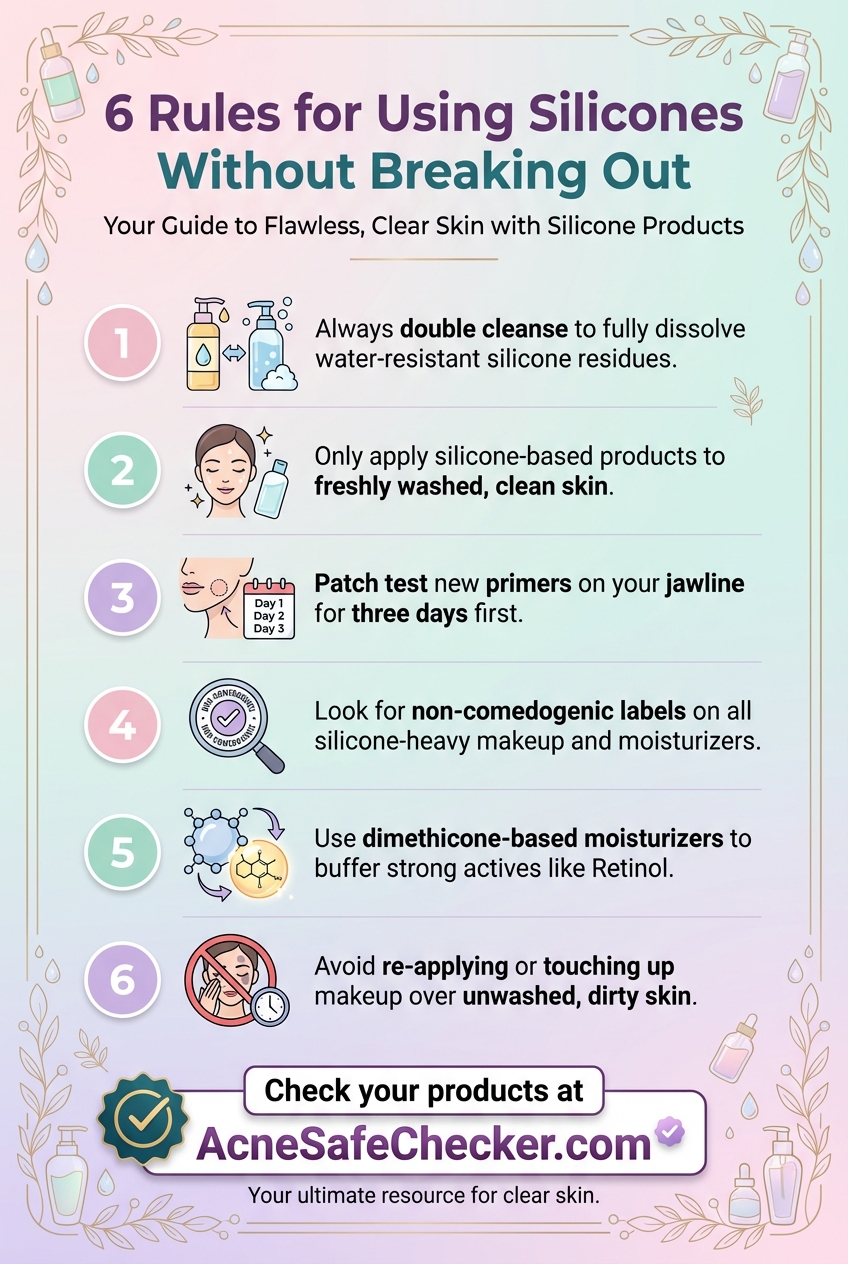
- Irritation Buffering: If you are using strong actives like Retin-A (Tretinoin) or Benzoyl Peroxide, a dimethicone-based moisturizer can act as a buffer, reducing the dryness and peeling that often lead to 'reactive' acne.
- Oil Control: Many oil-free moisturizers use dimethicone to provide hydration without adding actual oil, which can help mattify an oily complexion.
Practical Advice: How to Use Silicones Without Breaking Out
If you have acne-prone skin, you don't necessarily need to purge your vanity of all silicones. Instead, follow these professional guidelines:
- The Double Cleanse is Mandatory: If you use a silicone-based primer or foundation, use an oil-based cleanser or micellar water first to break down the silicone, followed by a water-based gel cleanser to deep-clean the pores.
- Apply to Clean Skin: Never 'touch up' makeup with a silicone product on top of dirty skin. Ensure your canvas is fresh before applying occlusive layers.
- Patch Test New Products: Apply a small amount of the product to your jawline for 3-5 days. If you notice small, itchy bumps (milia) or whiteheads, your skin may be sensitive to that specific formulation.
- Look for 'Non-Comedogenic' Labels: While not a guarantee, products labeled non-comedogenic have generally been tested to ensure they don't promote acne.
Conclusion: The Bottom Line
Is dimethicone the enemy? For the vast majority of people, the answer is no. In the world of dermatology, dimethicone is considered one of the safest, most stable ingredients available. It does not technically clog pores, nor does it cause acne through chemical irritation.
However, skincare is personal. If you find that your skin consistently clears up when you remove silicones, listen to your body. But for most, the key to a clear complexion isn't avoiding dimethicone—it's ensuring that the skin underneath is clean, and the products on top are thoroughly removed at the end of the day.