
The Frustration of the "Non-Comedogenic" Label
Is Your Routine Acne-Safe?
Do not guess. Instantly check your products for pore-clogging ingredients with our AI-powered tool.
Check Ingredients NowYou’ve likely been there: you spend hours researching the perfect moisturizer or foundation, specifically looking for the words "non-comedogenic" or "oil-free" on the packaging. You apply it with hope, only to wake up three days later with a cluster of new breakouts.
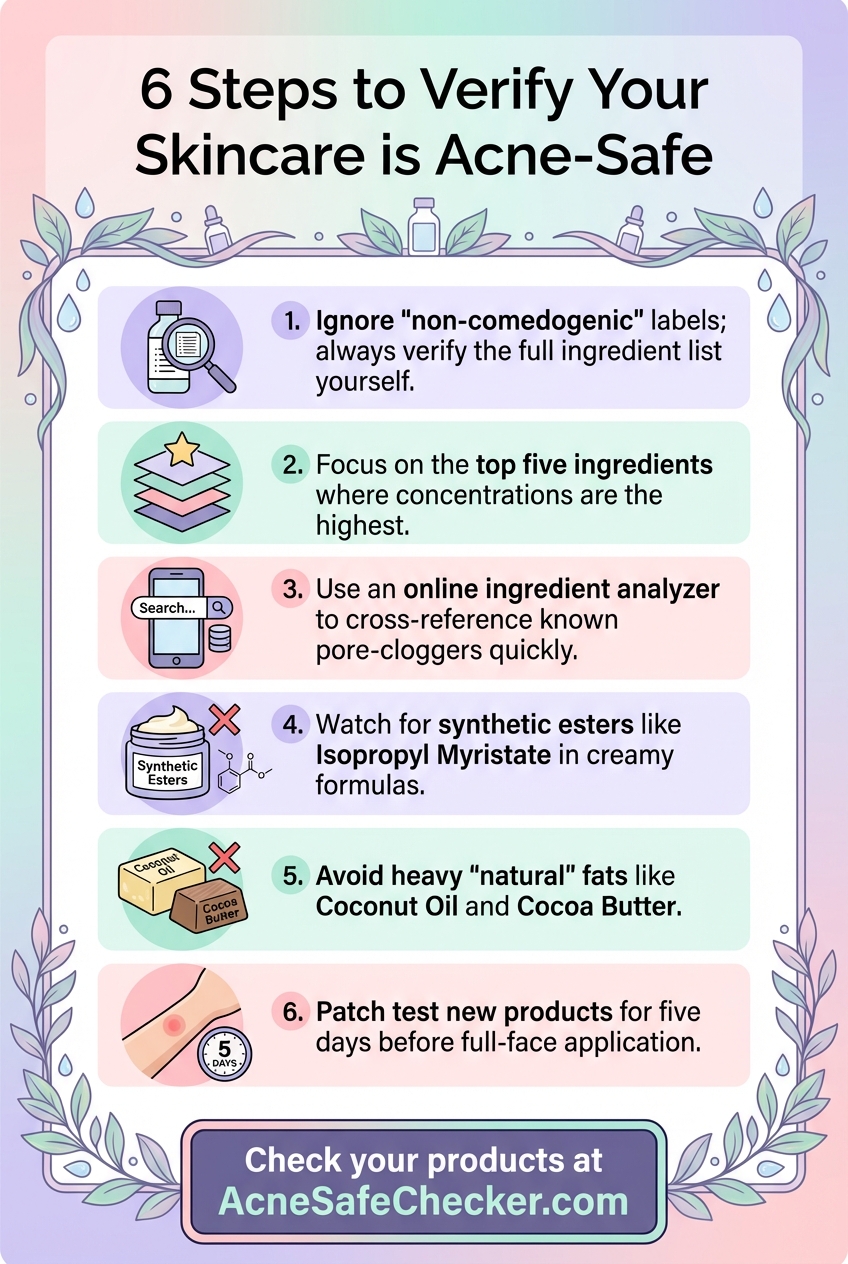
As a dermatologist, I see this daily. The reality is that the term "non-comedogenic" is not strictly regulated by the FDA. This means a brand can claim a product is acne-safe even if it contains ingredients known to trigger blemish formation. To truly protect your skin, you must learn how to perform an acne safe product verify check yourself.
Understanding the Science: What is Comedogenicity?
Before we dive into the verification process, it is essential to understand what happens beneath the surface. Acne begins when a pore becomes clogged with a combination of sebum (oil) and dead skin cells. This initial plug is called a microcomedone.
Ingredients that are "comedogenic" have a molecular structure that makes them more likely to get trapped in the follicular opening or to irritate the lining of the pore, accelerating the formation of these plugs. Some ingredients are mildly comedogenic, while others are highly "acnegenic," meaning they trigger an inflammatory response almost immediately.
The Myth of One-Size-Fits-All Skincare
It is important to note that comedogenicity is not an exact science. The original testing for these ingredients was often performed on rabbit ears, which are more sensitive than human skin. Furthermore, the concentration of an ingredient matters. A product containing a tiny amount of a problematic oil might be fine, whereas a product where that oil is the second ingredient listed will likely cause issues.
However, for those with acne-prone or "cloggable" skin, the safest route is a policy of avoidance.
Key Ingredients to Scrutinize
When performing an acne-safe product verification, you need to look past the marketing and head straight to the INCI (International Nomenclature Cosmetic Ingredient) list. Here are the primary categories of ingredients to watch out for:
1. Synthetic Esters and Fatty Acids
These are often added to give products a smooth, silky feel. However, they are notorious for clogging pores. Keep an eye out for:
- Isopropyl Myristate and Isopropyl Palmitate: These are highly comedogenic and can penetrate the pore deeply.
- Butyl Stearate
- Decyl Oleate
2. Natural Butters and Oils
While "natural" sounds healthy, many plant-based fats are too heavy for acne-prone skin.
- Coconut Oil (Cocos Nucifera): Widely used but highly comedogenic.
- Cocoa Butter: Excellent for the body, but usually a disaster for acne-prone faces.
- Wheat Germ Oil: One of the highest-rated ingredients on the comedogenic scale.
3. Algae and Seaweed Extracts
Commonly found in "anti-aging" or "hydrating" luxury serums, algae extracts are high in iodides. Iodides can irritate the pore lining and trigger "acne cosmetica."
- Laminaria Digitata
- Chlorella
- Plankton Extract
4. Salts and Detergents
- Sodium Laureth Sulfate (SLS): While primarily a surfactant, it can be irritating and contributes to the breakdown of the skin barrier, leading to more breakouts.
- Sodium Chloride: Basic table salt is often used as a thickener in shampoos and cleansers; if it sits on the skin (like in a moisturizer), it can clog pores.
How to Perform an Acne Safe Product Verify Step-by-Step
If you aren't a chemist, memorizing hundreds of ingredients is impossible. Follow this practical workflow to ensure your routine is safe:
Step 1: Copy the Full Ingredient List Go to the brand's website and find the full list of ingredients. Do not rely on "Key Ingredients" summaries, as these often omit the functional fillers that cause clogs.
Step 2: Use an Online Ingredient Analyzer There are several reputable, free databases where you can paste an ingredient list. These tools cross-reference the components against known comedogenic scales. Look for tools specifically designed for acne-prone skin rather than general "clean beauty" apps, which focus on toxicity rather than pore-clogging potential.
Step 3: Check the Top Five Ingredients are listed in order of concentration. If a potentially comedogenic ingredient is in the first five slots, the risk is high. If it is the very last ingredient on a list of thirty, it may not cause an issue for everyone, but proceed with caution.
Step 4: The Patch Test Even if a product passes the verification check, your skin's unique chemistry is the final judge. Apply a small amount to a specific area (like the side of your chin) for 3–5 days before applying it to your entire face.
The Importance of Routine Simplification
One of the biggest mistakes patients make is using too many products. When you use a ten-step routine, and you start breaking out, it is impossible to identify the culprit. If you are struggling with persistent acne, I recommend stripping your routine back to a verified acne-safe cleanser, moisturizer, and SPF. Once your skin stabilizes, you can introduce new products one at a time.
Conclusion
Achieving clear skin requires a transition from being a consumer to being a researcher. By taking the time to verify if your products are truly acne-safe, you remove one of the most common obstacles to a clear complexion. Remember: labels are for marketing; ingredient lists are for the truth. Empower yourself with knowledge, use the tools available to you, and your skin will thank you.