
In the world of luxury skincare, few ingredients carry as much prestige as algae extract. Marketed as a 'miracle from the sea,' it is lauded for its hydrating, anti-aging, and mineral-rich properties. You will find it in everything from high-end moisturizers to soothing serums. However, if you are someone who struggles with persistent breakouts, congestion, or cystic acne, this 'miracle' ingredient might be the hidden culprit behind your skin frustrations.
Is Your Routine Acne-Safe?
Do not guess. Instantly check your products for pore-clogging ingredients with our AI-powered tool.
Check Ingredients NowAs a dermatologist, I often see patients who have curated a 10-step routine filled with expensive, 'clean' products, yet their acne refuses to clear. Frequently, the missing piece of the puzzle is a misunderstanding of comedogenic (pore-clogging) ingredients—and algae extract is one of the most notorious offenders.
Understanding the Algae Paradox
Algae extract is a broad umbrella term that encompasses thousands of species, including seaweed, kelp, spirulina, and various types of plankton. On paper, algae is a nutritional powerhouse. It is packed with antioxidants, peptides, and humectants that draw moisture into the skin.
For someone with dry, non-acne-prone skin, algae can be transformative. But for those with a genetic predisposition to acne (a condition called retention hyperkeratosis), algae acts as a trigger rather than a cure.
Why Algae Extract is Highly Comedogenic
The primary reason algae extract is problematic for acne-prone skin boils down to two factors: its high iodine content and its mineral salts.
1. The Iodine Connection
Many species of algae, particularly brown seaweed and kelp, are rich in iodine. When applied topically, iodine can penetrate the pore and irritate the follicle lining. For those prone to acne, this irritation accelerates the shedding of dead skin cells within the pore. These cells then clump together with sebum, forming a plug—the literal beginning of a pimple. This process can happen quickly, leading to what many call 'cosmetic acne.'
2. Mineral Salts and Irritation
Algae is naturally high in sodium and other minerals. While minerals are essential for skin health, in high concentrations, they can act as an irritant to the delicate lining of the sebaceous gland. This irritation triggers an inflammatory response, turning a small clog into a red, painful blemish.
The Comedogenic Scale: Where Algae Ranks
In dermatology, we use the Comedogenic Scale (ranging from 0 to 5) to determine how likely an ingredient is to clog pores. A '0' means it is unlikely to cause a breakout, while a '5' means it is almost guaranteed to cause a plug in most people.
Most forms of algae extract, especially Laminaria Digitata, Laminaria Saccharina, and various types of Red Algae, rank as a 4 or 5 on the scale. To put that in perspective, this makes them more likely to cause acne than many oils that are traditionally feared, such as coconut oil.
Are All Algae Extracts Created Equal?
It is important to note that the skincare industry is evolving. Some manufacturers have begun to isolate specific molecules from algae, such as certain polysaccharides or antioxidants, while stripping away the pore-clogging minerals and lipids.
However, for the average consumer, it is nearly impossible to tell from an ingredient label how an extract was processed. In the absence of clear data, the safest move for acne-prone individuals is to avoid ingredients listed as:
- Algae Extract
- Kelp / Seaweed
- Laminaria Digitata
- Carrageenan
- Plankton Extract
- Spirulina
- Chlorella
How to Audit Your Skincare Routine
If you suspect your products are contributing to your breakouts, follow these practical steps to clear your routine:
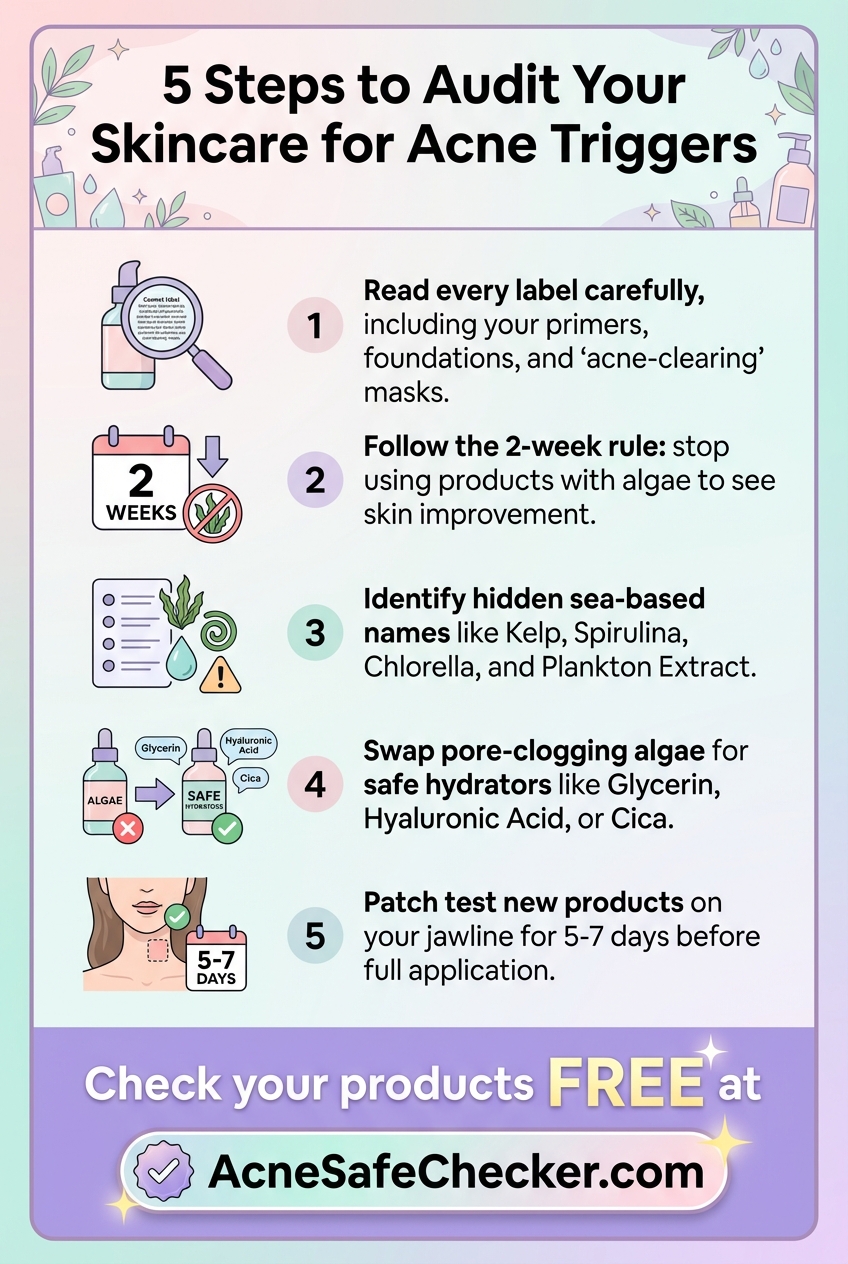
- Read Every Label: Don't just look at your moisturizer. Algae is frequently found in primers, foundations, and even 'acne-clearing' masks.
- The 2-Week Rule: If you find algae in a product you use daily, stop using it for at least two weeks. It typically takes this long for the skin to clear the existing 'plugs' formed by comedogenic ingredients.
- Look for Safe Alternatives: If you want the hydrating benefits of algae without the risk, look for ingredients like Glycerin, Hyaluronic Acid, or Centella Asiatica (Cica). These provide deep hydration and soothing benefits without irritating the follicle.
- Patch Test Wisely: If you are determined to use a product containing algae, patch test it on a small area of your jawline for at least 5-7 days. Acne caused by ingredients often takes a few days to manifest.
Professional Insight: Listen to Your Skin
Skincare is deeply personal. While one person may glow after using a seaweed-infused cream, another may experience a breakout of cystic proportions. If you are struggling with 'stubborn' acne that doesn't respond to traditional treatments like salicylic acid or benzoyl peroxide, the issue is likely external.
By removing high-ranking comedogens like algae extract, you allow your skin to function normally without the constant irritation of follicle-clogging minerals. Clear skin isn't always about what you add to your routine; often, it’s about what you choose to leave out.
Conclusion
So, is algae extract bad for acne? For the majority of people with acne-prone or sensitive skin, the answer is yes. While it offers undeniable benefits for aging and hydration, the risk of pore-clogging and follicular irritation is simply too high for those prone to breakouts. Focus on non-comedogenic hydrators and always prioritize the health of your skin barrier over the latest 'superfood' trend.