
In the world of natural skincare, few ingredients are as celebrated for their moisturizing prowess as plant-based butters. However, for those of us who deal with persistent breakouts, enlarged pores, or oily skin, the word "butter" often triggers an immediate red flag. We’ve been conditioned to fear heavy textures, worrying they will lead to a localized eruption of comedones.
Is Your Routine Acne-Safe?
Do not guess. Instantly check your products for pore-clogging ingredients with our AI-powered tool.
Check Ingredients NowAmong the favorites like shea and cocoa butter, mango butter (extracted from the seed of the Mangifera indica tree) has emerged as a powerhouse ingredient. But the burning question remains: Is mango butter comedogenic? As a dermatologist, I see patients daily who are caught between wanting deep hydration and wanting to avoid the "clogged pore trap." Let’s dive into the science behind mango butter and whether it earns a spot in your facial skincare routine.
Understanding the Comedogenic Scale
To determine if mango butter is safe for your face, we must first look at the comedogenic scale. This scale ranges from 0 to 5, indicating how likely an ingredient is to clog pores:
- 0: Will not clog pores
- 1: Very low probability of clogging pores
- 2: Moderately low probability
- 3: Moderate probability
- 4: Fairly high probability
- 5: High probability of clogging pores
Mango butter typically carries a comedogenic rating of 0 to 2.
This puts it in the "safe zone" for many skin types. Unlike cocoa butter, which carries a high rating of 4 and is a known trigger for acne, or coconut oil (rating of 4), mango butter is significantly less likely to cause issues for the average user.
The Science: Why Mango Butter is Different
Why does mango butter behave differently on the skin than other heavy lipids? The answer lies in its unique fatty acid profile. Mango butter is exceptionally high in stearic acid and oleic acid, while also containing significant amounts of vitamins A, C, and E.
Stearic Acid: The Secret to Stability
Stearic acid is a saturated fatty acid that gives mango butter its firm, semi-solid texture. In skincare, stearic acid acts as an emollient that helps protect the skin barrier without the greasy residue associated with oils high in liquid fats.
Vitamin A (Retinol-like Benefits)
Mango butter contains natural Vitamin A. This is a crucial component for acne-prone individuals because Vitamin A encourages cellular turnover. By speeding up the rate at which dead skin cells are shed, it helps prevent those cells from becoming trapped inside the follicle—the very definition of a comedone.
Mango Butter vs. Shea Butter vs. Cocoa Butter
When choosing a facial moisturizer, it helps to compare mango butter against its more famous cousins:
- Cocoa Butter (Rating: 4): Excellent for the body and preventing stretch marks, but generally a "no-go" for the face if you are prone to acne.
- Shea Butter (Rating: 0-2): Very similar to mango butter. However, some find shea butter to be slightly "heavier" or grainier in texture.
- Mango Butter (Rating: 0-2): It has a lighter, more "elegant" skin feel than shea butter. It melts at skin temperature and absorbs relatively quickly, making it more suitable for facial application in a formulated cream.
Is Mango Butter Safe for Acne-Prone Skin?
The clinical answer is: Yes, for most people.
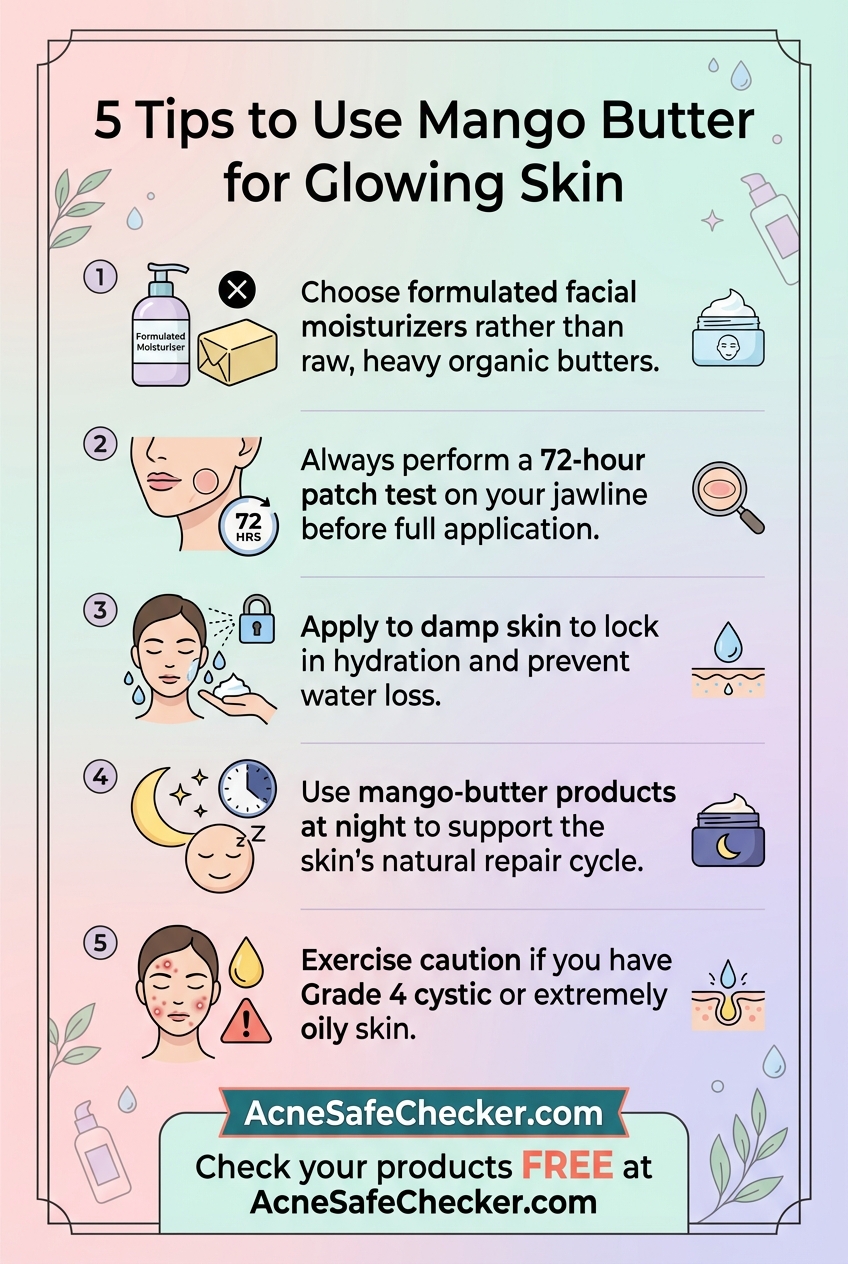
However, dermatology is rarely one-size-fits-all. While mango butter is non-comedogenic for the vast majority of users, those with Grade 4 Cystic Acne or extremely oily, sebum-heavy complexions should exercise caution. If your skin already produces an excess of heavy wax esters (sebum), adding any concentrated butter—even a low-rated one—might be too occlusive.
For those with dry, dehydrated, or sensitive skin, mango butter is often a godsend. It provides a protective "breathable" barrier that prevents Transepidermal Water Loss (TEWL), which is essential for repairing a compromised skin barrier caused by harsh acne treatments like benzoyl peroxide or retinoids.
Practical Steps: How to Incorporate Mango Butter Into Your Routine
If you’re ready to try mango butter on your face, follow these professional tips to minimize the risk of breakouts:
1. Look for Formulated Products
While you can use raw, organic mango butter, it is often better to use a facial moisturizer where mango butter is one of several ingredients. Chemists balance the heavy butters with "dry" oils (like rosehip or squalane) to ensure the product remains lightweight and non-greasy.
2. The Patch Test is Mandatory
Apply a small amount of the product to the side of your jawline for three consecutive nights. If you don't see any whiteheads or inflammatory bumps in that specific area after 72 hours, it is likely safe for full-face application.
3. Use on Damp Skin
Mango butter is an occlusive emollient. This means its primary job is to lock in moisture. For the best results, apply it while your skin is still slightly damp from a toner or serum. This traps the hydration into the skin rather than just sitting on top of a dry surface.
4. Nighttime Application
Because of its rich nature, I recommend using mango-butter-based products as part of your evening routine. This allows the vitamins and fatty acids to support the skin’s natural repair cycle during sleep without interfering with your makeup or sunscreen during the day.
The Verdict
Mango butter is a highly misunderstood ingredient in the acne community. Far from being a pore-clogger, its low comedogenic rating and high antioxidant content make it a sophisticated choice for facial care. If you have been avoiding natural butters out of fear, mango butter is the perfect "entry-point" ingredient to help soothe, hydrate, and protect your skin without the consequence of a breakout.
As always, listen to your skin. If you notice an increase in texture, scale back. But for most, mango butter is a hidden gem in the quest for a clear, radiant, and well-moisturized complexion.