
Scanning a cosmetic label can often feel like deciphering a complex chemical code. For those of us with acne-prone or sensitive skin, this process is even more stressful. Every unfamiliar term represents a potential breakout. One ingredient that frequently appears in high-end foundations, setting powders, and sunscreens is Nylon-12.
Is Your Routine Acne-Safe?
Do not guess. Instantly check your products for pore-clogging ingredients with our AI-powered tool.
Check Ingredients NowBecause the word "nylon" is associated with synthetic fabrics and plastics, many consumers worry that it creates a suffocating film over the skin. The primary concern for acne sufferers is simple: Is Nylon-12 pore-clogging?
As a dermatologist, I see this question often. Let’s break down the science of Nylon-12, its comedogenicity profile, and why it might actually be a secret weapon for those struggling with oily skin.
What Exactly is Nylon-12?
Nylon-12 is a synthetic polymer used primarily as an opacifying agent, a bulking agent, and a texture enhancer. In the world of cosmetic formulation, it is valued for its ability to create a "soft-focus" effect, blurring fine lines and imperfections without the heavy feel of traditional waxes or oils.
Structurally, Nylon-12 consists of tiny, microscopic spherical beads. These beads provide a silky, "rolling" texture that allows makeup to glide onto the skin smoothly. Beyond aesthetics, these spheres are porous, which plays a significant role in how the ingredient interacts with your skin’s natural oils.
The Big Question: Is Nylon-12 Pore Clogging?
The short answer is: No, Nylon-12 is not considered a comedogenic (pore-clogging) ingredient.
In dermatology, we rank ingredients on a comedogenicity scale of 0 to 5. Nylon-12 consistently scores a 0. This means it has a near-zero probability of causing follicular occlusion, which is the technical term for a clogged pore. Unlike heavy oils (like cocoa butter) or certain fatty acids that can sink into the pore and mix with sebum to form a plug, Nylon-12 is biologically inert and physically too large to penetrate the skin barrier.
The Science of Particle Size and Penetration
One of the reasons Nylon-12 is so safe for acne-prone individuals is its molecular structure. Because it is composed of large polymers, it sits on the surface of the stratum corneum (the outermost layer of the skin). It does not get absorbed into the living tissue of the skin, nor does it wedge itself into the sebaceous glands.
Instead, it acts as a breathable barrier. Think of it as a microscopic mesh that allows heat and sweat to escape while sitting comfortably on the surface.
Why Nylon-12 is Actually Beneficial for Acne-Prone Skin
If you struggle with an overproduction of oil—a common precursor to acne—Nylon-12 might actually improve your skin’s appearance and health throughout the day. Here is why:
1. Superior Sebum Absorption
Because the spherical beads of Nylon-12 are porous, they act like tiny sponges. They are specifically designed to absorb excess sebum (oil) as it is produced. By mopping up this oil, the ingredient helps prevent the "shiny" look and, more importantly, prevents excess oil from sitting on the skin where it can mix with dead skin cells and bacteria to cause a breakout.
2. Mattifying Without Dehydration
Unlike denatured alcohol, which dries out the skin to control oil, Nylon-12 provides a mattifying effect without stripping the skin of essential moisture. This is crucial for acne patients who may be using drying treatments like benzoyl peroxide or retinoids, as it helps maintain the appearance of a healthy skin barrier.
3. Reduced Friction
Inflamed acne can be aggravated by the physical act of applying makeup. Because Nylon-12 improves the "slip" of a product, it reduces the amount of tugging and friction required during application, which can help minimize irritation in sensitive areas.
Potential Considerations: When to Be Cautious
While Nylon-12 itself is safe, no ingredient exists in a vacuum. If you find that a product containing Nylon-12 is causing breakouts, consider these two factors:
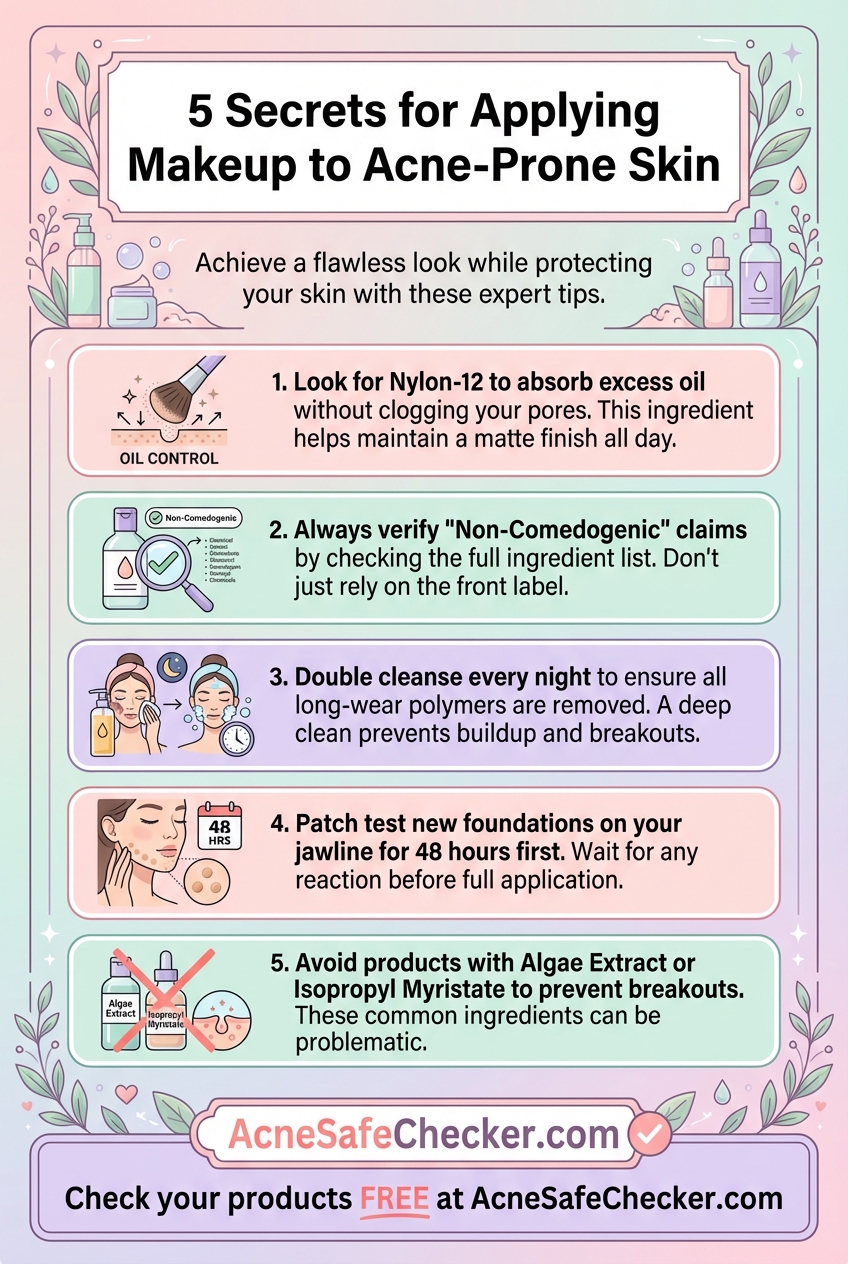
- The Formulation as a Whole: A product might contain non-comedogenic Nylon-12 alongside high-ranking comedogenic ingredients like Isopropyl Myristate or certain algae extracts. Always look at the full ingredient list.
- Proper Cleansing: Because Nylon-12 is designed to adhere to the skin to provide a long-lasting finish and oil control, it requires thorough removal. If you don't properly wash your face at the end of the day, any makeup residue—regardless of how safe the ingredients are—can contribute to skin congestion.
Practical Steps for Acne-Prone Consumers
If you are auditing your skincare and makeup routine, here is how to handle Nylon-12:
- Don't Fear the Label: If you see Nylon-12 in a setting powder or foundation, do not be deterred. It is generally a sign of a high-quality, high-performance formula designed for a smooth finish.
- Look for "Non-Comedogenic" Claims: While Nylon-12 is safe, ensure the entire product has been tested and labeled as non-comedogenic or oil-free.
- Practice Double Cleansing: To ensure all spherical polymers and pigments are removed, use a micellar water or a gentle oil-based cleanser followed by a water-based foaming cleanser. This ensures your pores are completely clear before you go to sleep.
- Patch Test: If you have extremely sensitive skin or a history of reacting to synthetic polymers, patch test the product on your jawline for 48 hours before applying it to your entire face.
Conclusion
In the search for acne-safe cosmetics, Nylon-12 is one of the "good guys." It offers a sophisticated texture and excellent oil-management properties without the risk of clogging your pores or exacerbating inflammatory acne. By sitting on the skin’s surface and absorbing excess sebum, it can actually help keep your complexion looking clear and matte throughout the day.
As always, the key to healthy skin is a combination of safe ingredients, a consistent routine, and thorough cleansing. If you continue to experience persistent breakouts, consult with a board-certified dermatologist to create a customized treatment plan tailored to your specific skin type.