
If you have ever spent time scrolling through skincare forums or TikTok, you have likely encountered the term "acne-safe." For many, this phrase has become the ultimate litmus test for any product entering their bathroom cabinet. But when we ask, "Is Panoxyl acne-safe?" we are faced with a bit of a paradox. Panoxyl is one of the most recommended over-the-counter acne treatments by dermatologists worldwide.
Is Your Routine Acne-Safe?
Do not guess. Instantly check your products for pore-clogging ingredients with our AI-powered tool.
Check Ingredients NowSo, why the question? Usually, when users ask if a product is acne-safe, they are looking to ensure it is non-comedogenic—meaning it won’t clog pores—and that it won’t exacerbate the very breakouts they are trying to heal. In this guide, we will dive into the science of Panoxyl, its ingredient profile, and how to use it effectively without damaging your skin barrier.
What Exactly is Panoxyl?
Panoxyl is a brand best known for its foaming acne washes containing the active ingredient Benzoyl Peroxide (BPO). It typically comes in two strengths: a 4% creamy wash and a 10% maximum strength foaming wash. Unlike many cosmetic cleansers, Panoxyl is classified as a drug by the FDA because it contains active medication designed to treat a specific medical condition: acne vulgaris.
The Science: How Benzoyl Peroxide Works
To understand if Panoxyl is "safe" for your acne, you need to understand how it interacts with your skin. Benzoyl peroxide is a powerhouse because it tackles acne via three distinct mechanisms:
- Antibacterial Action: It introduces oxygen into the pores. The bacteria responsible for acne, Cutibacterium acnes, are anaerobic, meaning they cannot survive in the presence of oxygen. BPO kills them on contact.
- Keratolytic Effect: It helps to shed dead skin cells and clear out excess sebum, preventing the initial formation of a "microcomedone" (the precursor to a pimple).
- Anti-inflammatory Properties: By reducing the bacterial load, it indirectly reduces the redness and swelling associated with inflammatory acne.
Is Panoxyl Non-Comedogenic?
Yes. Panoxyl is formulated specifically for acne-prone skin. The inactive ingredients in both the 4% and 10% formulas are chosen to be non-comedogenic. You won't find heavy oils, waxes, or esters that typically trigger breakouts in those with oily or sensitive skin. From a formulation standpoint, Panoxyl is exceptionally "acne-safe."
Why Some People Think It Breaks Them Out
If Panoxyl is designed to treat acne, why do some users report "purging" or new breakouts after using it? There are two main reasons for this:
1. The Purging Phase
Because Benzoyl Peroxide increases cell turnover and clears out pores, it can accelerate the appearance of blemishes that were already forming under the surface. This is a temporary phase that usually subsides within 2–4 weeks.
2. Skin Barrier Disruption
This is the most common issue. Benzoyl Peroxide is potent. If used too frequently or on sensitive skin, it can cause extreme dryness, redness, and peeling. When the skin barrier is compromised, it becomes susceptible to external bacteria and inflammation, which can look like a new breakout. In this case, the product isn't "clogging" your pores; it is irritating your skin.
4% vs. 10%: Which Should You Choose?
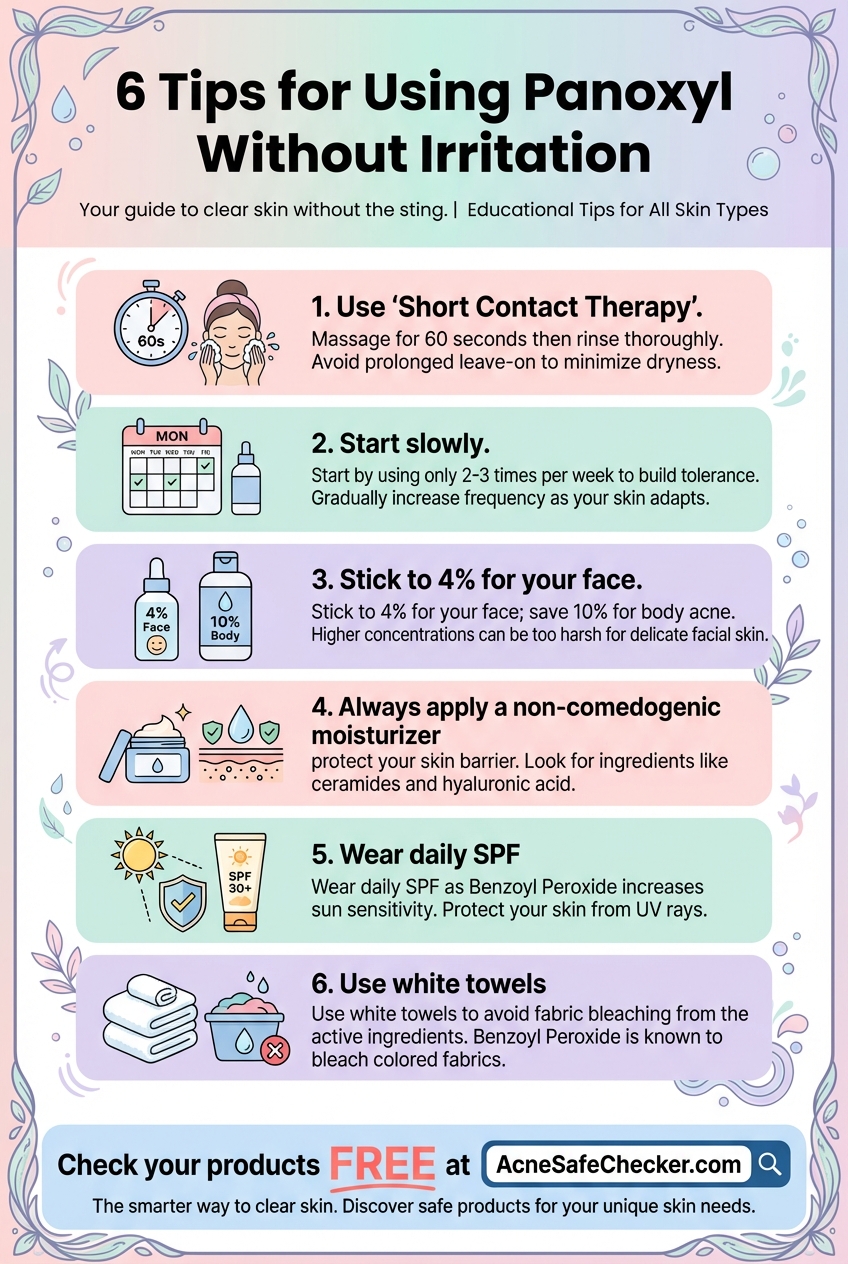
A common misconception in skincare is that "stronger is better." However, clinical studies have shown that 2.5%, 4%, and 5% Benzoyl Peroxide can be nearly as effective as 10% but with significantly less irritation.
- Choose 4% Acne Creamy Wash: If you have sensitive skin, dry skin, or are using it on your face for the first time.
- Choose 10% Maximum Strength Wash: If you have "body acne" (back, chest, or shoulders) where the skin is thicker and more resilient, or if you have tried lower percentages without results.
How to Use Panoxyl Safely: Practical Steps
To ensure Panoxyl remains a friend rather than a foe to your skin, follow these dermatological best practices:
The "Short Contact Therapy" Method
You do not need to leave the wash on your skin like a mask for long periods. Wet your skin, massage the wash in for about 30 to 60 seconds, and rinse thoroughly. This allows the medication to penetrate the pores without sitting on the surface long enough to cause a chemical burn.
Ease Into It
Start by using Panoxyl once every other day, or even twice a week. Once your skin builds a tolerance, you can move to once-daily use. For most people, using a BPO wash twice a day is unnecessary and overly drying.
Moisturize and Protect
Always follow up with a non-comedogenic, oil-free moisturizer to replenish the skin barrier. Additionally, Benzoyl Peroxide can make your skin more sensitive to the sun, so daily SPF is non-negotiable.
A Note on Bleaching
One "safety" warning that isn't about your skin: Benzoyl Peroxide will bleach your towels, pillowcases, and clothing. Always rinse your skin thoroughly and consider using white towels to avoid ruining your linens.
The Verdict: Is Panoxyl Acne-Safe?
From a clinical and dermatological perspective, Panoxyl is absolutely acne-safe. It contains no pore-clogging ingredients and features one of the most well-researched acne-fighting ingredients in history.
However, "safe" does not mean "weak." It is a powerful medical-grade cleanser that requires respect. If you use it correctly—by starting slowly, moisturizing, and choosing the right percentage for your skin type—it can be the most effective tool in your journey toward clear skin. If you experience persistent blistering, extreme swelling, or a rash, discontinue use and consult a board-certified dermatologist, as you may have a rare allergy to Benzoyl Peroxide.