
In the world of skincare, few products have achieved the "holy grail" status of La Roche-Posay Cicaplast Baume B5. It is celebrated by dermatologists and beauty enthusiasts alike for its ability to soothe irritated skin, repair a compromised barrier, and calm redness overnight. However, for those of us with acne-prone or oily skin, a thick, rich balm can be intimidating. The primary question usually remains: Does La Roche-Posay Cicaplast clog pores?
Is Your Routine Acne-Safe?
Do not guess. Instantly check your products for pore-clogging ingredients with our AI-powered tool.
Check Ingredients NowAs a dermatologist, I see this concern daily. When your skin is breaking out, the last thing you want to do is apply a heavy cream that might lead to more congestion. In this guide, we will break down the science behind the formulation, analyze the ingredients, and help you determine if this cult-favorite product belongs in your routine.
Understanding the Formulation: What is Cicaplast?
La Roche-Posay Cicaplast Baume B5 is a multi-purpose soothing balm designed to support skin recovery. It is frequently recommended for post-procedure care, dry patches, and skin sensitivity. Its efficacy lies in its "bandage-like" texture, which provides a protective layer over the skin.
Key Ingredients and Their Functions
- Panthenol (Pro-Vitamin B5): This is the star of the show. At a 5% concentration, it acts as a humectant (drawing moisture in) and a soothing agent to reduce inflammation.
- Madecassoside: Derived from Centella Asiatica, this ingredient is famous for its wound-healing and anti-inflammatory properties.
- Copper, Zinc, and Manganese: This mineral complex provides antibacterial benefits, helping to keep the skin environment clean while it repairs.
- Shea Butter and Glycerin: These emollients and humectants provide the rich, moisturizing base that helps restore the lipid barrier.
The Scientific Verdict: Is It Non-Comedogenic?
Technically, La Roche-Posay Cicaplast Baume B5 is labeled as non-comedogenic. In clinical terms, this means the product has been tested and found not to cause pore blockages or acne in a controlled study environment.
However, "non-comedogenic" is not a regulated term with a universal standard. While the formula passes the test for most people, the heavy texture comes from ingredients like shea butter and dimethicone. For someone with extremely active sebaceous glands (very oily skin), any thick occlusive layer can theoretically trap sebum and dead skin cells, leading to what we call "mechanical" congestion.
The Role of Dimethicone and Shea Butter
There is a common misconception that dimethicone (a silicone) clogs pores. Scientifically, dimethicone has a large molecular structure that sits on top of the skin without sinking into the pore. It allows the skin to "breathe" while preventing transepidermal water loss. Shea butter, while rich in fatty acids, is generally rated low on the comedogenic scale, but it can be "heavy" for certain individuals.
Why It Might Feel Like It's Clogging Your Pores
If you find yourself breaking out after using Cicaplast, it might not be because the ingredients are clogging your pores directly. Instead, it could be due to occlusion.
Cicaplast is an occlusive. If you apply it over "dirty" skin—skin with trapped bacteria, sweat, or uncleansed makeup—the balm will seal those irritants in. Furthermore, if you are using it in a humid environment or layering it over heavy oils, the sheer weight of the product might be too much for your skin to process, leading to whiteheads or milia.
Practical Advice: How to Use Cicaplast if You Have Acne-Prone Skin
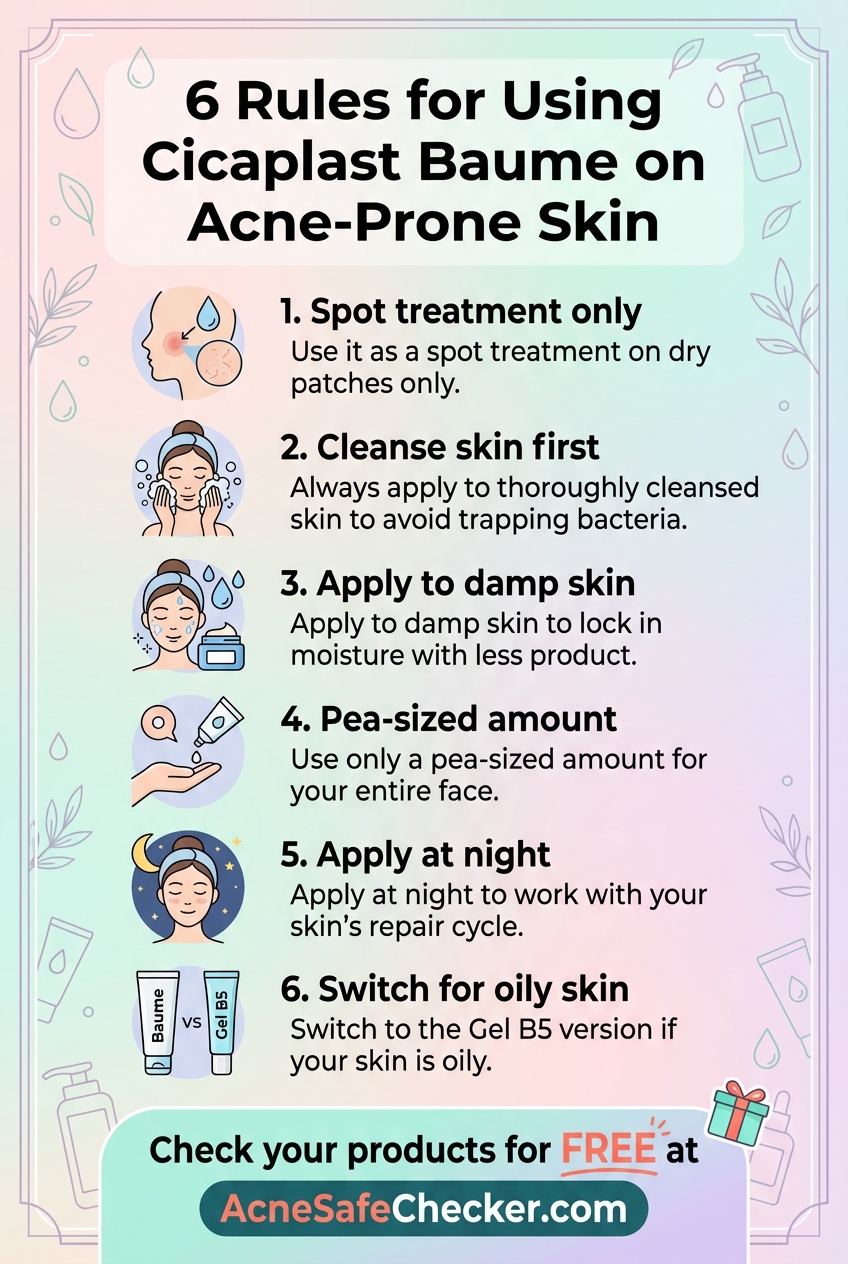
You don't have to avoid Cicaplast just because you have acne. In fact, it is excellent for healing the "red marks" (Post-Inflammatory Erythema) left behind after a pimple has flattened. Here is how to use it safely:
1. The "Spot Treatment" Method
Instead of applying it all over your face like a traditional moisturizer, use it only on areas that need it—such as dry patches, healing acne scars, or irritated spots. This prevents the oilier parts of your face (like the T-zone) from becoming over-saturated.
2. Apply to Damp, Clean Skin
Ensure your skin is thoroughly cleansed before application. Applying Cicaplast to damp skin (after a hydrating serum or just water) helps lock in moisture without needing a massive amount of product.
3. Use it at Night
Because of its thick texture and slight white cast, Cicaplast is best used as a final step in your evening routine. This allows it to work with your skin’s natural repair cycle during sleep.
4. Less is More
You only need a pea-sized amount for the entire face. If your skin looks greasy rather than dewy, you have likely applied too much.
Who Should Avoid It?
While most people tolerate Cicaplast well, you might want to skip the Baume version and try the Cicaplast Gel B5 if:
- You have extremely oily skin that feels congested easily.
- You live in a very hot, humid climate.
- You are currently experiencing a widespread cystic acne flare-up (where you need active treatments rather than occlusives).
Conclusion
Does La Roche-Posay Cicaplast clog pores? For the vast majority of users, the answer is no. It is a non-comedogenic formula specifically designed for sensitive and compromised skin. However, skincare is deeply personal. Its rich, occlusive nature means it must be used with intention, especially if you are prone to breakouts.
If you are looking to repair your skin barrier after over-using actives like retinol or salicylic acid, Cicaplast is one of the safest and most effective tools in your arsenal. Just remember: keep your skin clean, use a small amount, and listen to how your skin responds. If the Baume feels too heavy, the Gel version offers many of the same healing benefits with a much lighter, breathable finish.