
The Science of Smooth: Transitioning from Textured to Radiant Skin
Is Your Routine Acne-Safe?
Do not guess. Instantly check your products for pore-clogging ingredients with our AI-powered tool.
Check Ingredients NowFew things are as frustrating as looking in the mirror under harsh lighting and seeing a sea of tiny, flesh-colored bumps across your forehead, cheeks, or chin. Unlike a standard whitehead or a painful cystic breakout, these bumps—known clinically as closed comedones—don't often come to a head. Instead, they sit stubbornly beneath the surface, creating an uneven, sandpaper-like texture that is notoriously difficult to cover with makeup.
As a dermatologist, I see these concerns daily. The good news is that with a targeted approach rooted in follicular health, you can smooth your skin’s texture and prevent these clogs from returning. In this guide, we will break down the science behind these bumps and build a professional-grade routine to clear them for good.
What are Closed Comedones?
To treat them, we must understand them. A closed comedon is a type of non-inflammatory acne. It occurs when a pore (a hair follicle) becomes completely blocked by a combination of hardened sebum (oil) and dead skin cells (keratinocytes).
In a healthy skin cycle, dead cells shed into the environment. However, for those prone to texture, a process called retention hyperkeratosis occurs. The cells stick together rather than shedding, creating a "plug." Because the pore is closed to the air, the debris doesn't oxidize and turn black (like a blackhead); it remains white or flesh-colored.
The Professional Routine for Smooth Skin
Managing texture requires a delicate balance: you must encourage cell turnover and dissolve oil without stripping the skin barrier, which can actually lead to more clogs as the skin overproduces oil to compensate for dryness.
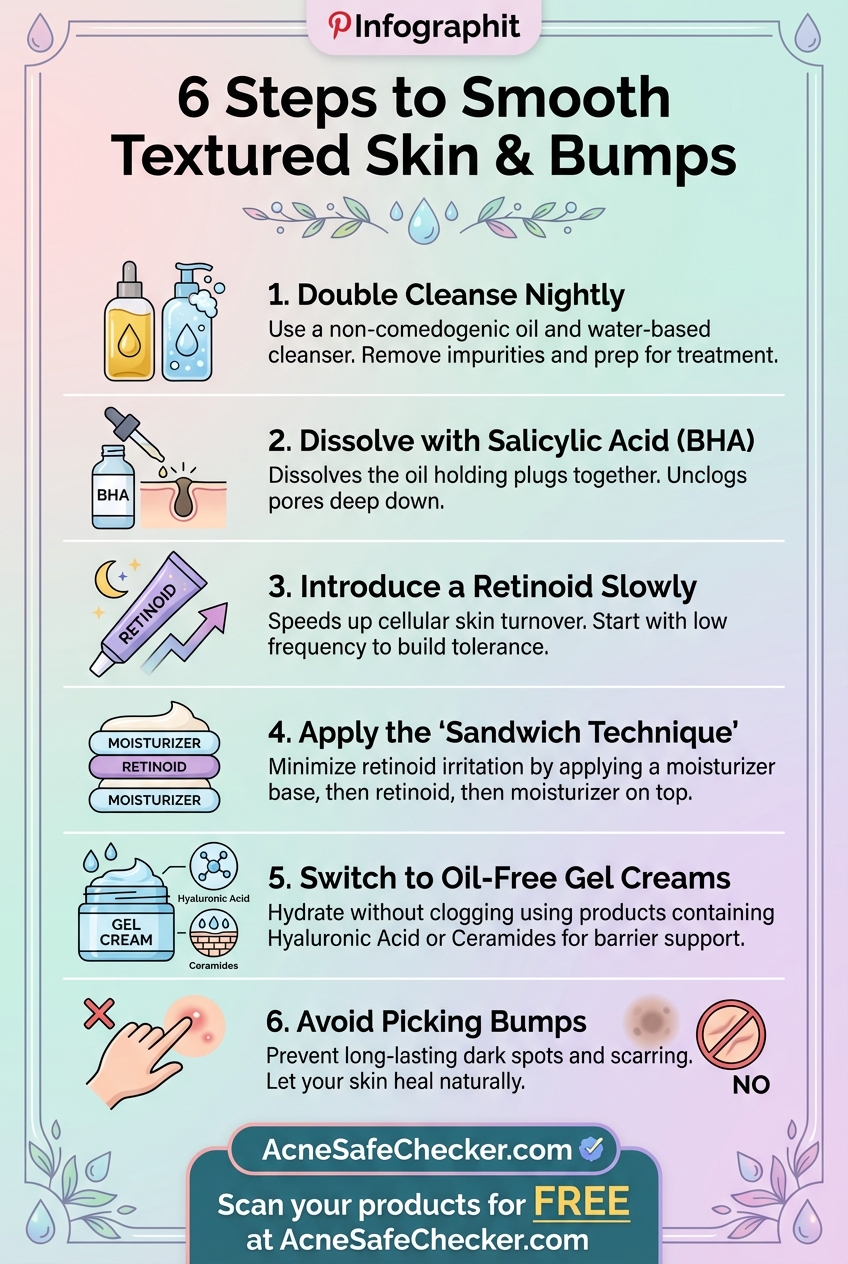
Step 1: The Double Cleanse (Evening Only)
Texture is often exacerbated by leftover sunscreen, silicone-based primers, and long-wear makeup.
- The Method: Start with a non-comedogenic cleansing oil or balm. This utilizes the "oil dissolves oil" principle to break down surface debris. Follow this with a gentle, water-based foaming or hydrating cleanser to ensure a totally clean canvas.
Step 2: Chemical Exfoliation (The BHA Advantage)
Physical scrubs can cause micro-tears and rarely reach the root of the problem. Instead, look for Salicylic Acid (BHA).
- Why it works: Unlike AHAs which are water-soluble, BHA is oil-soluble. This allows it to penetrate deep into the pore to dissolve the glue holding the plug together.
- Usage: Apply a 2% BHA liquid exfoliant 2–3 times a week at night to start.
Step 3: The Gold Standard: Retinoids
Retinoids (such as Adapalene or Tretinoin) are the most effective long-term solution for texture. They work by communicating with your skin cells to behave more "normally," speeding up turnover and preventing the initial formation of the plug.
- Clinical Tip: Start slow. Apply a pea-sized amount over a layer of moisturizer (the "sandwich technique") to minimize irritation during the first few weeks of use.
Step 4: Weightless Hydration
Many patients with closed comedones make the mistake of skipping moisturizer, fearing it will clog their pores. However, dehydrated skin is less efficient at shedding dead cells.
- Look for: Oil-free, non-comedogenic gel creams containing hyaluronic acid, ceramides, or glycerin. Avoid heavy waxes (like beeswax) or thick plant butters (like cocoa butter) if you are prone to comedones.
Ingredients to Avoid
When scanning your ingredient labels, be wary of "pore-cloggers" that can trigger texture in susceptible individuals. While everyone's skin is different, common culprits include:
- Isopropyl Myristate: Often found in foundations for a smooth glide, but highly comedogenic.
- Coconut Oil: While great for the body, it is a known trigger for facial comedones.
- Heavy Silicones: While not inherently comedogenic, certain thick silicones can trap sweat and sebum in people with oily skin types.
Managing Expectations and Results
It is vital to understand that skin cells take roughly 28 to 40 days to turn over. When you begin a routine focused on closed comedones, you may experience a "purging" phase where the underlying bumps transition into active whiteheads as they are pushed to the surface.
Do not pick at them. Picking causes inflammation and post-inflammatory hyperpigmentation (dark spots), which are much harder to treat than the texture itself. Most patients see a significant improvement in 8 to 12 weeks of consistent use.
Conclusion
Smoothing skin texture and clearing closed comedones is not an overnight process, but it is entirely achievable with the right scientific approach. By prioritizing chemical exfoliation, incorporating a retinoid, and ensuring your products are truly non-comedogenic, you can regain a smooth, radiant complexion. If your condition persists after three months of a consistent routine, consult with a board-certified dermatologist to discuss prescription-strength options or professional chemical peels.