
As a dermatologist, I often see patients who are doing everything "right"—they cleanse twice a day, never sleep in makeup, and invest in high-end products—yet they still struggle with persistent congestion and breakouts. Often, the culprit isn’t their technique, but the very ingredients hidden within their skincare and makeup formulations.
Is Your Routine Acne-Safe?
Do not guess. Instantly check your products for pore-clogging ingredients with our AI-powered tool.
Check Ingredients NowIn the industry, we call these "comedogenic" ingredients. Understanding which substances are likely to trigger acne is the first step toward achieving the clear, radiant complexion you deserve. In this guide, we will break down the science of pore-clogging ingredients and provide a comprehensive list of what to watch for on your product labels.
Understanding the Comedogenic Scale
Before we dive into specific ingredients, it is essential to understand how we categorize them. The Comedogenic Scale is a system that ranks ingredients from 0 to 5 based on their likelihood of clogging pores:
- 0: Will not clog pores
- 1: Very low probability of clogging pores
- 2: Moderately low probability
- 3: Moderate probability
- 4: Fairly high probability
- 5: High probability of clogging pores
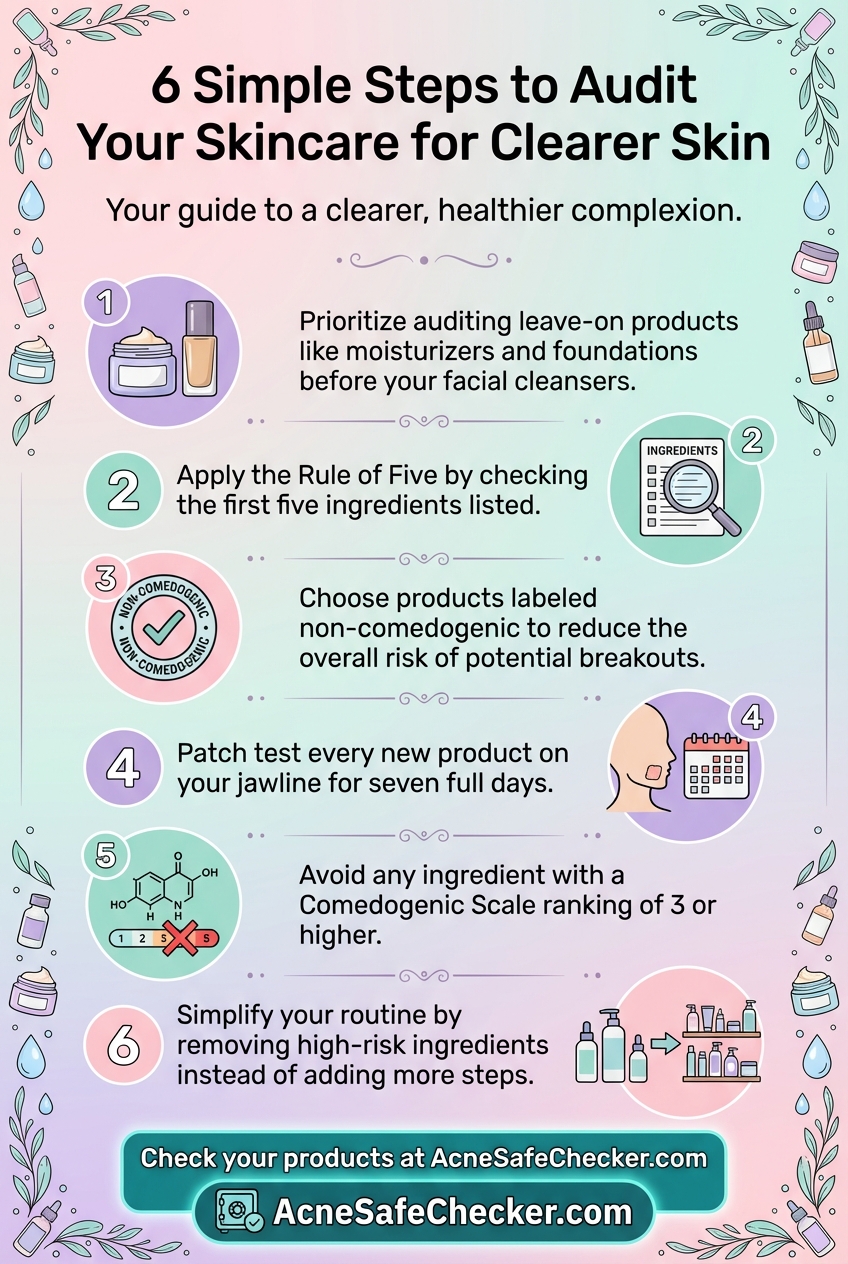
While this scale provides a helpful baseline, it is not an absolute science. Factors like the concentration of the ingredient, the overall formulation of the product, and your unique skin chemistry play a significant role. However, if you are prone to acne or blackheads, avoiding ingredients ranked 3 or higher is a prudent clinical strategy.
The Science of a Clogged Pore
A pore becomes "clogged" through a process known as retention hyperkeratosis. In healthy skin, dead skin cells are shed naturally. In acne-prone individuals, these cells stick together and mix with sebum (your skin's natural oil).
Comedogenic ingredients exacerbate this process in two ways: some physically block the pore opening due to their molecular size or "heavy" texture, while others trigger an inflammatory response or alter the composition of your sebum, making it thicker and more likely to get trapped. When a pore is blocked, oxygen cannot enter, creating the perfect anaerobic environment for Cutibacterium acnes (the bacteria responsible for breakouts) to thrive.
Top Pore-Clogging Ingredients to Avoid
If you have oily or acne-prone skin, keep a close eye out for these common offenders on the "Ingredients" (INCI) list of your products.
1. Natural Oils and Butters
While "natural" is a popular marketing term, many plant-derived fats are highly comedogenic.
- Coconut Oil (Cocos Nucifera Oil): This is one of the most notorious offenders, often ranking a 4 or 5 on the scale. While great for body hair, it is frequently too heavy for facial skin.
- Cocoa Butter: Frequently used in rich moisturizers, it is highly likely to cause breakouts in acne-prone individuals.
- Wheat Germ Oil: Boasting a ranking of 5, this is one of the most comedogenic oils available.
2. Isopropyl Esters and Fatty Acids
These are often added to products to give them a silky feel or to help other ingredients penetrate the skin.
- Isopropyl Myristate: A common ingredient in many foundations and creams that is highly effective at clogging pores.
- Isopropyl Palmitate: Similar to myristate, this emollient can cause significant congestion.
- Myristyl Myristate: Often used to thicken creams, it is highly comedogenic.
3. Algae and Seaweed Extracts
Commonly found in high-end "marine-based" skincare, these can be problematic due to their high iodine content.
- Algae Extract: Depending on the source, many algae extracts can irritate the pore lining and trigger acne.
- Carrageenan: Derived from red seaweed, this thickening agent is a known comedogen.
4. Synthetic Dyes
Keep an eye on your makeup labels for specific red dyes, which are often derived from coal tar.
- D&C Red #3, #30, and #40: These are frequently found in blushes and lip products and can cause "acne cosmetica" around the cheeks and mouth.
Practical Steps: How to Audit Your Routine
Transitioning to a non-comedogenic routine doesn't happen overnight. Here is how I recommend my patients approach the process:
- Check Your "Leave-On" Products First: Prioritize auditing products that sit on your skin all day, such as moisturizers, sunscreens, and foundations. Cleansers are less concerning as they are rinsed off quickly.
- The Rule of Five: If a comedogenic ingredient is listed within the first five ingredients, it is present in a high concentration and is more likely to cause issues. If it is the very last ingredient, the risk is lower.
- Look for "Non-Comedogenic" Labels: While this term isn't strictly regulated by the FDA, products with this label have generally been formulated with acne-prone skin in mind.
- Perform a Patch Test: If you aren't sure about a product, apply it to a small area of your jawline for 5–7 days before applying it to your entire face.
Conclusion
Achieving clear skin is often about subtraction rather than addition. By removing these high-risk, pore-clogging ingredients from your daily regimen, you allow your skin to function as it was intended.
Remember, everyone’s skin is a unique ecosystem. What clogs one person’s pores may not affect another’s. However, if you are struggling with persistent breakouts, auditing your ingredient list for these common offenders is an empowered, scientific approach to skincare. Stay patient, stay consistent, and always prioritize the health of your skin barrier.