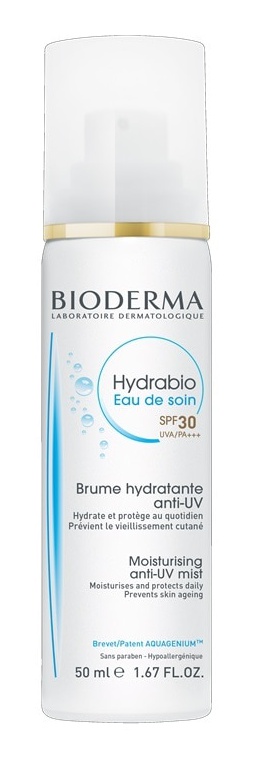
Bioderma Hydrabio 2-In-1 Moisturising Anti-Uv Mist (Eau De Soin Spf 30)
The Bioderma Hydrabio 2-In-1 Moisturising Anti-Uv Mist (Eau De Soin Spf 30) is an innovative skincare solution designed to provide both intense hydration and essential sun protection in a convenient mist format. This unique product from Bioderma features a weightless, water-like texture that feels incredibly refreshing upon application, making it an ideal choice for setting makeup or rehydrating the skin throughout the day. Key beneficial ingredients include Glycerin, a powerful humectant that draws moisture into the skin, and Isononyl Isononanoate, which lends a silky, non-greasy feel to the finish. As part of the Hydrabio range, it aims to stimulate the skin's natural moisturizing abilities. However, while the delivery system is lightweight, the formula contains specific ingredients that require attention from those with reactive skin. It is primarily marketed as a solution for dehydrated sensitive skin, offering a quick way to top up SPF 30 protection without the heavy feel of traditional creams.
Our Analysis
Our analysis of the Bioderma Hydrabio UV Mist indicates a Moderate comedogenic risk level. The most significant concern is Algae Extract, which has a 5/5 rating; it is rich in iodides that can irritate the pore lining and trigger micro-comedones. The formula also contains Capric/Caprylic Triglyceride and Tocopherol (Vitamin E), both rated 2/5. While these are generally safe for many, they can contribute to congestion in individuals with highly sensitive or oily skin. Given the high rating of the algae extract, users with active acne should exercise caution when using this mist regularly.
Skin Type Recommendations
This mist is best for dry or dehydrated skin types seeking a moisture boost. However, it is not recommended for oily or acne-prone skin. The presence of highly comedogenic algae extract (5/5) makes it a risky choice for those prone to clogged pores, potentially leading to increased breakouts.
Flagged Ingredients
Rich in iodides which irritate the pore lining, triggering inflammation and micro-comedones.
Fractionated coconut oil; removed most clogging long-chain acids but can still affect some.
Pure Vitamin E is thick and sticky; safe in small amounts as an antioxidant, but potentially clogging in pure oil form.
Want Deeper Analysis?
Run our MACR (Multi-Axis Comedogenic Risk) analysis to get a comprehensive 5-axis risk assessment. This AI-powered analysis evaluates ingredients for Plugging Risk, Barrier Damage, Fungal Acne Risk, Oxidation Risk, and real-world User Reports — giving you personalized scores for your skin type.