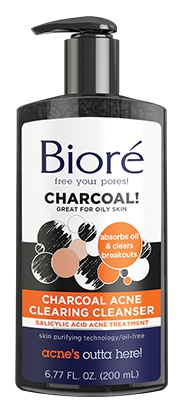
Biore Charcoal Acne Clearing Cleanser
Biore Charcoal Acne Clearing Cleanser is a widely recognized drugstore staple designed to tackle stubborn breakouts and excess oil. Formulated with 1% Salicylic Acid, this cleanser works as a chemical exfoliant to dissolve skin-cell buildup and keep pores clear. The addition of natural charcoal helps to draw out impurities and deep-seat dirt, giving the skin a refreshed, detoxified feeling. The texture is a cooling, deep-pigmented gel that transforms into a rich, airy lather upon contact with water. While it provides an invigorating sensation that oily skin types often crave, it also contains Sorbitol to provide a touch of humectant hydration to prevent immediate post-wash tightness. However, despite its 'Acne Clearing' marketing, the formulation contains specific surfactants that may be counterproductive for those with highly reactive or congestion-prone skin. Understanding the balance between its medicated active ingredients and its cleansing base is key to determining if this product fits into your specific acne-safe regimen.
Our Analysis
Our analysis of the Biore Charcoal Acne Clearing Cleanser reveals a Moderate comedogenic risk, which may surprise users seeking an acne-clearing solution. The primary concern is Laureth-4, which carries a maximum comedogenic rating of 5/5. This oxidative surfactant is known to contribute to inflammatory comedones, potentially causing new clogs while you try to treat existing ones. Additionally, the formula utilizes Sodium Laureth Sulfate (SLES). While ethoxylated to be gentler than SLS, it can still strip essential lipids and disrupt the skin barrier, leading to irritation that exacerbates acne-prone conditions. Factoring in these ingredients is vital for clear skin maintenance.
Skin Type Recommendations
This cleanser is best suited for very oily skin that is not easily sensitized. It is not recommended for dry or sensitive skin due to the stripping nature of SLES. Most importantly, those with acne-prone skin should exercise caution, as the Laureth-4 may trigger new pore blockages.
Flagged Ingredients
Oxidative surfactant creating inflammatory comedones.
Less irritating than SLS due to ethoxylation, but still capable of stripping oils and causing barrier disruption.
Want Deeper Analysis?
Run our MACR (Multi-Axis Comedogenic Risk) analysis to get a comprehensive 5-axis risk assessment. This AI-powered analysis evaluates ingredients for Plugging Risk, Barrier Damage, Fungal Acne Risk, Oxidation Risk, and real-world User Reports — giving you personalized scores for your skin type.