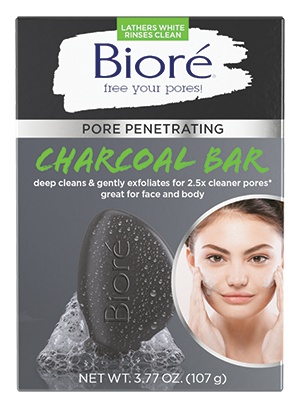
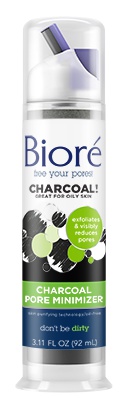
Biore Charcoal Pore Minimizer
Biore Charcoal Pore Minimizer is a physical exfoliant and cleanser designed to target congested pores and uneven skin texture. Formulated with natural charcoal, which is known for its ability to draw out impurities, this product aims to provide a deep-clean sensation. The formula features Alumina as a primary exfoliating agent to manually resurface the skin, while Sorbitol acts as a humectant to provide a hint of hydration. The texture begins as a liquid and develops into a cooling foam that works to strip away excess sebum. While it is marketed as a solution for large pores, the ingredient list reveals a heavy reliance on surfactants like Sodium Laureth Sulfate and Cocamidopropyl Betaine to achieve its cleansing power. For those with oily, non-sensitive skin, it may provide a temporary smoothing effect; however, users with active acne or a compromised skin barrier should proceed with caution due to the inclusion of several high-risk pore-cloggers that could potentially aggravate existing breakouts.
Our Analysis
Our analysis of the Biore Charcoal Pore Minimizer reveals a MODERATE comedogenic risk level, primarily due to the inclusion of Laureth-4. This specific ingredient is highly comedogenic, with a rating of 5/5, and is known as an oxidative surfactant that can lead to inflammatory comedones. We also flagged Sodium Laureth Sulfate (SLS), which has a rating of 3/5. Although it is less irritating than traditional SLS, it remains capable of stripping essential oils and causing barrier disruption. For individuals struggling with persistent acne, these ingredients pose a significant risk of clogging pores and triggering new flare-ups.
Skin Type Recommendations
This product is best suited for very oily or resilient skin types that require intensive sebum removal. It is not recommended for dry, sensitive, or acne-prone skin. The presence of Laureth-4 and SLES makes it likely to cause irritation or new breakouts in those with a predisposition to clogged pores.
Flagged Ingredients
Oxidative surfactant creating inflammatory comedones.
Less irritating than SLS due to ethoxylation, but still capable of stripping oils and causing barrier disruption.
Want Deeper Analysis?
Run our MACR (Multi-Axis Comedogenic Risk) analysis to get a comprehensive 5-axis risk assessment. This AI-powered analysis evaluates ingredients for Plugging Risk, Barrier Damage, Fungal Acne Risk, Oxidation Risk, and real-world User Reports — giving you personalized scores for your skin type.