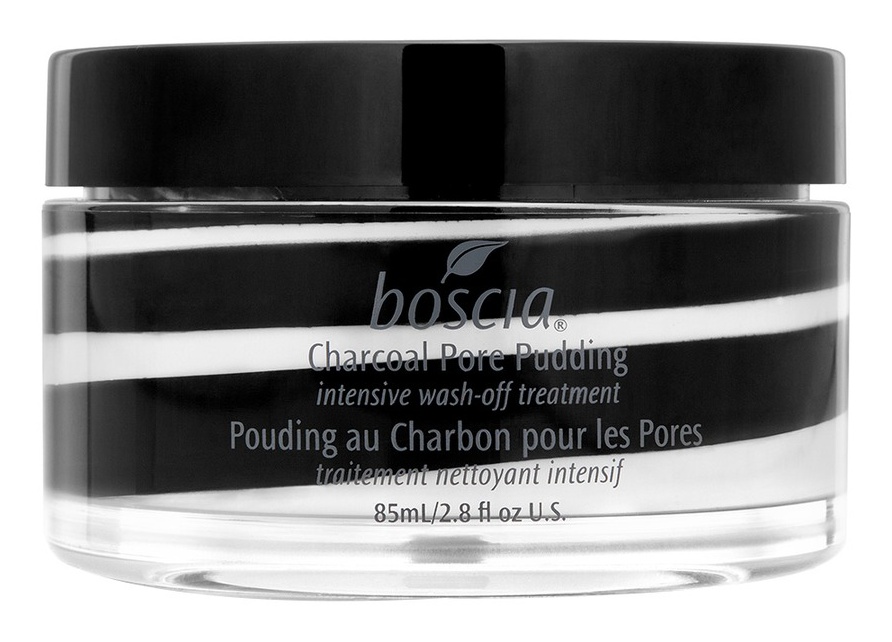
BOSCIA Charcoal Pore Pudding Intensive Wash-Off Treatment
BOSCIA Charcoal Pore Pudding Intensive Wash-Off Treatment is a visually striking, dual-action mask designed to deeply cleanse and minimize the appearance of pores without stripping the skin of essential moisture. This treatment features a unique swirled texture of black Binchotan charcoal and white kaolin clay, which work together to detoxify and balance the complexion. The formula is anchored by Montmorillonite and Corn Starch to absorb excess sebum, while Diglycerin and Glycerin ensure the skin remains hydrated during the masking process. Unlike traditional clay masks that dry down to a crackling, uncomfortable finish, this 'pudding' formula maintains a creamy, supple feel on the skin. It is specifically formulated to address congestion while providing a soothing ritual for tired or dull skin. While it offers powerful purification through its charcoal-infused blend, it is essential to look closely at its specific formulation if you have highly reactive or acne-prone skin. The inclusion of charcoal helps draw out impurities and toxins, making it a popular choice for those looking to refresh their T-zone and refine their overall skin texture.
Our Analysis
Our analysis of the BOSCIA Charcoal Pore Pudding reveals a moderate comedogenic risk level. While the formula uses effective detoxifying clays, it contains two ingredients of concern for those with acne-prone skin. Sodium laureth sulfate (SLES) is present; although it is less irritating than SLS, it can still strip natural oils and potentially disrupt the skin barrier. Additionally, the formula contains capric/caprylic triglyceride. While this is a refined emollient, it is derived from coconut oil and carries a comedogenic rating of 2/5, which may contribute to pore clogging for individuals particularly sensitive to fractionated oils.
Skin Type Recommendations
This treatment is best suited for oily or combination skin types dealing with surface congestion. However, those with very sensitive or dry skin should use it with caution due to the presence of sulfates. Acne-prone users should patch test first, as the coconut-derived triglycerides may trigger breakouts for certain individuals.
Flagged Ingredients
Less irritating than SLS due to ethoxylation, but still capable of stripping oils and causing barrier disruption.
Fractionated coconut oil; removed most clogging long-chain acids but can still affect some.
Want Deeper Analysis?
Run our MACR (Multi-Axis Comedogenic Risk) analysis to get a comprehensive 5-axis risk assessment. This AI-powered analysis evaluates ingredients for Plugging Risk, Barrier Damage, Fungal Acne Risk, Oxidation Risk, and real-world User Reports — giving you personalized scores for your skin type.