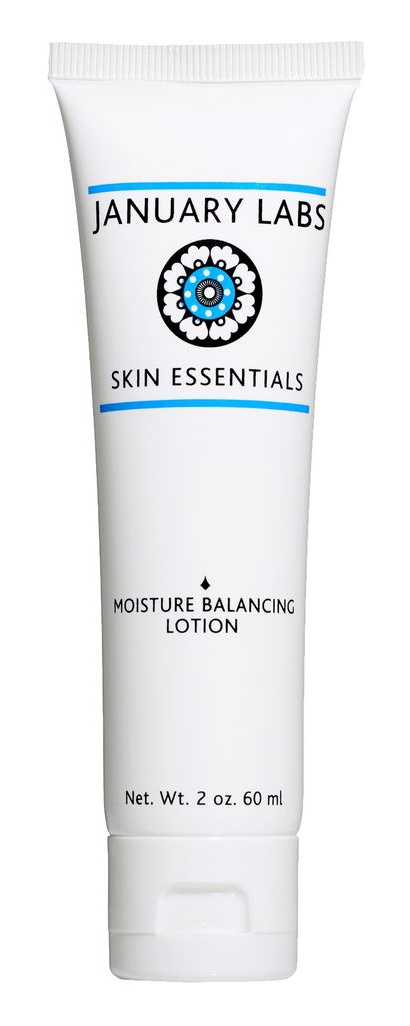
January Labs Moisture Balancing Lotion (Discontinued)
January Labs Moisture Balancing Lotion was designed as a lightweight daily moisturizer aimed at maintaining skin hydration while providing a soothing finish. Formulated with Squalane—a skin-identical lipid that mimics the skin's natural oils—and C12-15 Alkyl Benzoate, this lotion initially feels silky and non-greasy upon application. However, a deeper look at the ingredient list reveals a complex profile. While it contains beneficial humectants intended to balance moisture levels, the formula also integrates several rich botanical lipids such as Avocado Oil and Olive Oil, alongside Palm Oil. These ingredients are often prized for their nutrient density but present a specific challenge for those with congestion-prone skin. Although this particular product has been discontinued, understanding its formulation is crucial for those who previously used it and are looking for similar alternatives or trying to understand why it may have caused breakouts. The blend of Stearic Acid and Cetyl Alcohol provides a creamy texture, but the heavy saturated fat profile makes it a significant risk for individuals struggling with active acne or closed comedones.
Our Analysis
Our analysis of the January Labs Moisture Balancing Lotion reveals a High comedogenic risk level, primarily due to the presence of Palm Oil, which carries a high rating of 4/5. Palm oil is rich in Palmitic Acid, which can create a heavy, pore-clogging film on the skin. Additionally, the formula contains several ingredients with a 2/5 rating, including Avocado Oil, Olive Oil, and Stearic Acid. While these are nourishing for very dry skin, they can be problematic for acne-prone individuals. The inclusion of Capric/Caprylic Triglyceride and Cetyl Alcohol further increases the likelihood of congestion for those with sensitive, breakout-prone skin.
Skin Type Recommendations
This lotion is best suited for very dry, non-acne-prone skin types that require heavy emollients. It is not recommended for oily, combination, or acne-prone skin due to the high risk of clogged pores. Those with fungal acne (Malassezia) should also avoid this formula due to the high Oleic Acid content in the Olive Oil.
Flagged Ingredients
High saturated fat (Palmitic Acid) content creates a heavy, clogging film.
A fatty alcohol (emollient) that is generally safe, but can be problematic for very sensitive individuals.
Rich and heavy oil; excellent for dry skin but can be too heavy for very oily skin types.
High Oleic Acid content (similar to sebum); generally safe but can exacerbate fungal acne (Malassezia).
Fractionated coconut oil; removed most clogging long-chain acids but can still affect some.
Found in many butters; thickening agent with low-moderate risk.
Want Deeper Analysis?
Run our MACR (Multi-Axis Comedogenic Risk) analysis to get a comprehensive 5-axis risk assessment. This AI-powered analysis evaluates ingredients for Plugging Risk, Barrier Damage, Fungal Acne Risk, Oxidation Risk, and real-world User Reports — giving you personalized scores for your skin type.