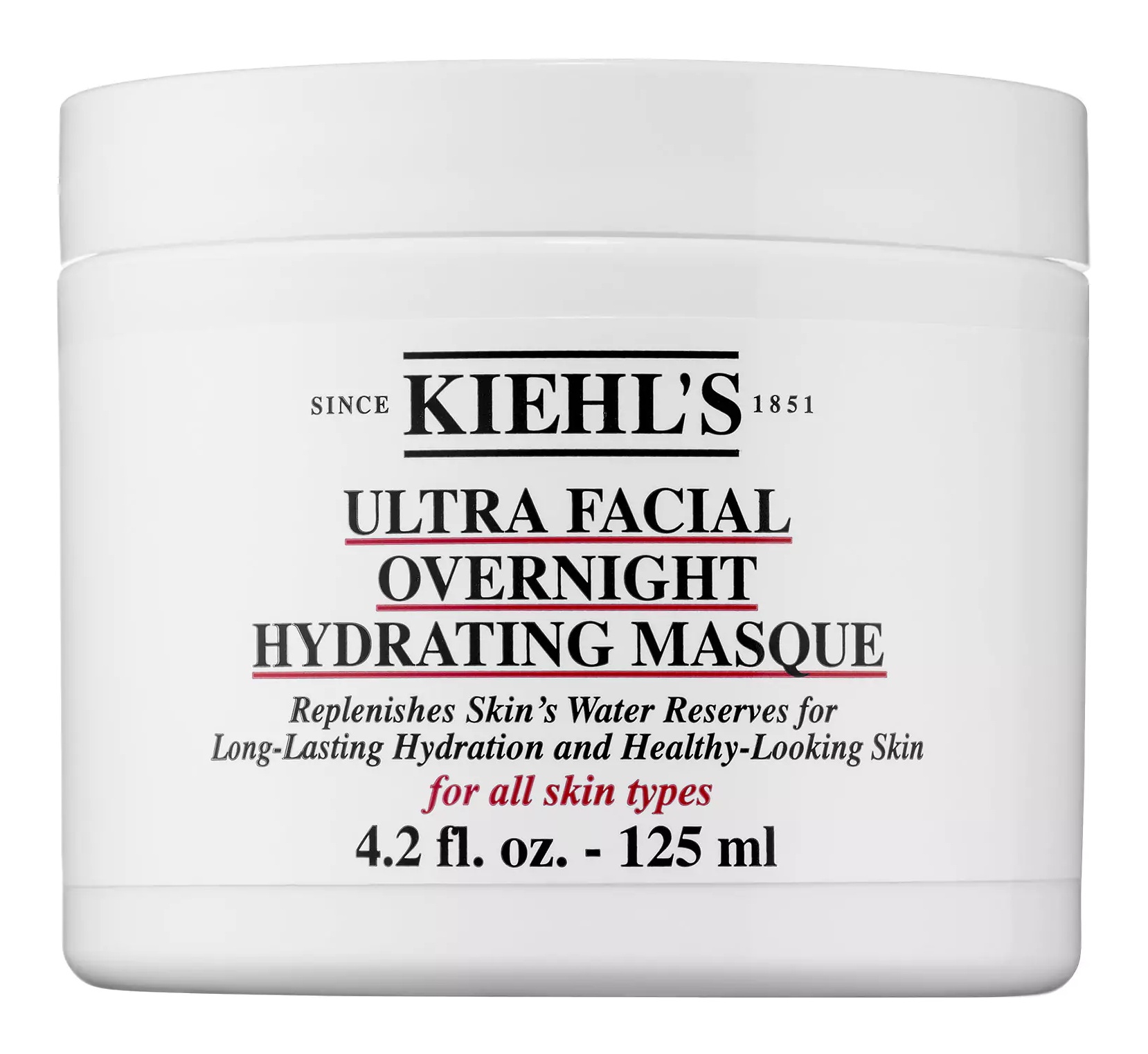
Kiehl’s Ultra Facial Overnight Hydrating Masque
Kiehl’s Ultra Facial Overnight Hydrating Masque is an intensive moisturizing treatment designed to replenish the skin's moisture reserves while you sleep. Formulated by the skincare experts at Kiehl’s, this mask leverages high-performance ingredients like Squalane and Shea Butter to deeply nourish and strengthen the skin's protective barrier. The inclusion of humectants like Glycerin and Propylene Glycol ensures that moisture is effectively drawn into the skin, preventing overnight dehydration and morning dullness. The texture is a rich, creamy balm that melts into the skin, providing a soothing and cocooning sensation without feeling overly greasy. As an overnight treatment, it works during the skin’s peak recovery phase to leave the complexion looking plumped, radiant, and refreshed by morning. This fragrance-free formula is particularly beneficial for those experiencing dryness, flakiness, or seasonal dehydration. By prioritizing skin barrier health and long-lasting hydration, this masque helps maintain a smooth and supple skin texture, making it an excellent addition to any intensive evening skincare routine.
Our Analysis
Our analysis of the Kiehl’s Ultra Facial Overnight Hydrating Masque reveals a low comedogenic risk level, making it a safe and favorable choice for most users. We found no flagged ingredients in this specific formulation that are known to actively clog pores or trigger inflammatory acne. While it does contain Shea Butter, which is a rich emollient, it is generally well-tolerated when formulated in this manner. The inclusion of Squalane is a major plus, as it mimics the skin's natural sebum without the risk of oxidation or congestion. For users concerned about breakouts, this product provides deep hydration without the typical risks associated with heavy night creams.
Skin Type Recommendations
This masque is ideal for dry, dehydrated, and sensitive skin types that require significant moisture replenishment. Its non-comedogenic profile makes it suitable for combination and acne-prone skin as well, though very oily types should use it sparingly. It is particularly effective for soothing skin that has been compromised by harsh weather or active treatments.
Flagged Ingredients
This product does not contain known high-risk comedogenic ingredients.
MACR Analysis
5-Axis AI-Powered Risk Assessment
The MACR analysis found moderate concerns not captured by traditional comedogenic ratings, such as barrier disruption or irritation potential.
Recommendations
This cream is best avoided by individuals with oily, acne-prone, or fungal acne-prone skin types.
Normal skin types seeking hydration, provided no sensitivity to ingredients., Very dry skin that tolerates occlusives and humectants well.
Sensitive skin due to Propylene Glycol and Urea., Combination skin types.
Oily skin, Acne-prone skin, Fungal acne-prone skin, Individuals with known sensitivity to Shea Butter or Propylene Glycol
- •Patch test thoroughly before applying to the entire face, especially if you have a history of breakouts or sensitivity.
- •Use sparingly if you choose to try it, focusing on drier areas.
- •Do not use if you have active breakouts or suspect fungal acne.
Overall Risk Score
Lower is better
Score by Skin Type
Lower is better
Same product, different risks based on your skin type
This leave-on cream presents a moderate overall risk, primarily driven by the fungal acne potential of Shea Butter and the barrier-disrupting properties of Propylene Glycol. While containing some generally safe ingredients, the combination and concentration of key actives pose a higher risk for acne-prone and sensitive skin types.
Risk Breakdown
Ingredient Interactions
These ingredients may interact to increase risk beyond their individual scores.
Propylene Glycol can enhance the penetration of Shea Butter's fatty acids into the skin, potentially exacerbating fungal acne concerns.
Propylene Glycol's role as a penetration enhancer can facilitate the deeper delivery of oleic and stearic acids from Shea Butter, increasing their availability for Malassezia yeast metabolism within the follicular canal.
The film-forming properties of Dimethicone can potentially trap comedogenic components of Shea Butter deeper into the pores.
Dimethicone creates an occlusive layer. If Shea Butter contains any residual lipids or compounds that can interact with sebum, this layer can prevent their normal shedding and potentially trap them, leading to pore congestion.
Why This Score?
The overall score of 45 is calculated by weighting the individual axis scores (PR x 7, BR x 5, FR x 3, OR x 2, UR x 3). The dominant contributors are Shea Butter's fungal risk (FR) and user-reported breakouts (UR), coupled with Propylene Glycol's barrier risk (BR). The presence of potentially pore-clogging ingredients like Dimethicone and Aluminum Starch Octenylsuccinate also adds to the plugging risk (PR).
Main factors:
- •Fungal Risk (FR) due to Shea Butter
- •User-Reported Risk (UR) from Shea Butter
- •Barrier Risk (BR) from Propylene Glycol
Reducing factors:
- •Inclusion of generally safe humectants like Glycerin and Squalane.
- •Low oxidation risk due to stable ingredient choices.
- •Absence of known harsh surfactants or highly problematic oils in the top positions.
Skin Type Considerations
This analysis uses the Multi-Axis Comedogenic Risk (MACR) system. Results are AI-estimated and cannot account for actual ingredient concentrations. Individual reactions may vary. Consult a dermatologist for personalized advice.