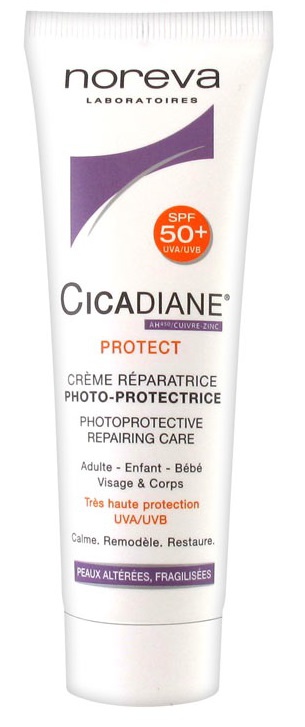
Noreva Cicadiane Protect Photoprotective Repairing Care Spf 50+
Noreva Cicadiane Protect Photoprotective Repairing Care SPF 50+ is a specialized sunscreen designed to soothe and repair damaged or irritated skin while providing broad-spectrum UV defense. Formulated by the French dermatological brand Noreva, this product bridges the gap between post-procedure recovery and sun safety. It features high-performance chemical filters like Bis-Ethylhexyloxyphenol Methoxyphenyl Triazine (Tinosorb S) and Diethylamino Hydroxybenzoyl Hexyl Benzoate (Uvinul A Plus) to prevent hyperpigmentation and scarring caused by sun exposure. The inclusion of Diisopropyl Sebacate and Dibutyl Adipate ensures a fluid, easy-to-spread texture that provides an emollient feel without being excessively greasy. While intended for sensitive and compromised skin barriers, the formula utilizes repairing agents to facilitate the skin's natural healing process. However, those with highly reactive or blemish-prone skin should pay close attention to the ingredient profile, as it contains specific surfactants and fatty alcohols that may pose a moderate risk for pore-clogging or irritation for certain users. Overall, it is a robust choice for skin recovery during sun exposure.
Our Analysis
Our analysis of Noreva Cicadiane Protect reveals a Moderate comedogenic risk level. The formula contains Sodium Laureth Sulfate (SLES), which is an ethoxylated surfactant used for texture and cleansing; however, it can potentially strip natural oils and cause barrier disruption for some. Additionally, Cetearyl Alcohol is present. While this fatty alcohol is a common emollient, it can be problematic when combined with other ingredients that increase its penetration. Given these flags, the product is more focused on barrier repair and protection than maintaining clear pores, making it a moderate choice for those with active acne.
Skin Type Recommendations
This product is best suited for dry, sensitive, or compromised skin types, particularly those recovering from dermatological procedures. Due to the moderate comedogenic rating and the presence of SLES, it is not recommended for oily or acne-prone skin, as it may contribute to congestion or irritation in those types.
Flagged Ingredients
Less irritating than SLS due to ethoxylation, but still capable of stripping oils and causing barrier disruption.
Fatty alcohol emollient with low-moderate comedogenicity on its own. However, when combined with Ceteareth-20, the synergistic effect can significantly increase pore-clogging potential (combined rating of 4).
Want Deeper Analysis?
Run our MACR (Multi-Axis Comedogenic Risk) analysis to get a comprehensive 5-axis risk assessment. This AI-powered analysis evaluates ingredients for Plugging Risk, Barrier Damage, Fungal Acne Risk, Oxidation Risk, and real-world User Reports — giving you personalized scores for your skin type.