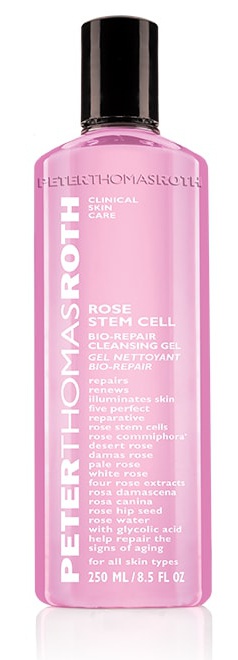
Peter Thomas Roth Rose Stem Cell Bio-Repair Cleansing Gel
Peter Thomas Roth Rose Stem Cell Bio-Repair Cleansing Gel is a sophisticated anti-aging facial cleanser that combines advanced plant biotechnology with traditional botanical extracts. This gel-to-foam formula features five different rose stem cells—including Rose Hip Seed, Damas Rose, and Pale Rose—alongside four rose extracts to help rejuvenate the skin while washing away impurities. The texture is a refreshing, cooling gel that glides easily over the skin, effectively dissolving makeup and excess sebum without the need for harsh scrubbing. In addition to the floral waters, the formula utilizes Cocamidopropyl Betaine and Lauryl Glucoside to provide a balanced cleansing experience. While it focuses on brightening and smoothing the skin's surface, the inclusion of soothing rose water helps to mitigate potential dryness. It is designed to leave the complexion looking radiant and feeling supple, making it a dual-purpose product for those seeking both cleanliness and anti-aging benefits in a single step.
Our Analysis
Our analysis of the Peter Thomas Roth Rose Stem Cell Bio-Repair Cleansing Gel reveals a Low comedogenic risk level. The primary ingredient flagged is Sodium Laureth Sulfate (SLES), which carries a comedogenic rating of 3 out of 5. While SLES is ethoxylated to be less irritating than SLS, it is still a strong surfactant that can potentially strip the skin's natural barrier if used too frequently. Because this is a wash-off product, the contact time with the skin is minimal, which greatly reduces the risk of pore-clogging. Most acne-prone users should find this product safe for daily use.
Skin Type Recommendations
This cleansing gel is ideal for oily, combination, and mature skin types that enjoy a deep-clean feel. It is generally safe for acne-prone skin. However, those with very dry or highly reactive sensitive skin should monitor for potential dryness or barrier disruption due to the sulfate content.
Flagged Ingredients
Less irritating than SLS due to ethoxylation, but still capable of stripping oils and causing barrier disruption.
Want Deeper Analysis?
Run our MACR (Multi-Axis Comedogenic Risk) analysis to get a comprehensive 5-axis risk assessment. This AI-powered analysis evaluates ingredients for Plugging Risk, Barrier Damage, Fungal Acne Risk, Oxidation Risk, and real-world User Reports — giving you personalized scores for your skin type.