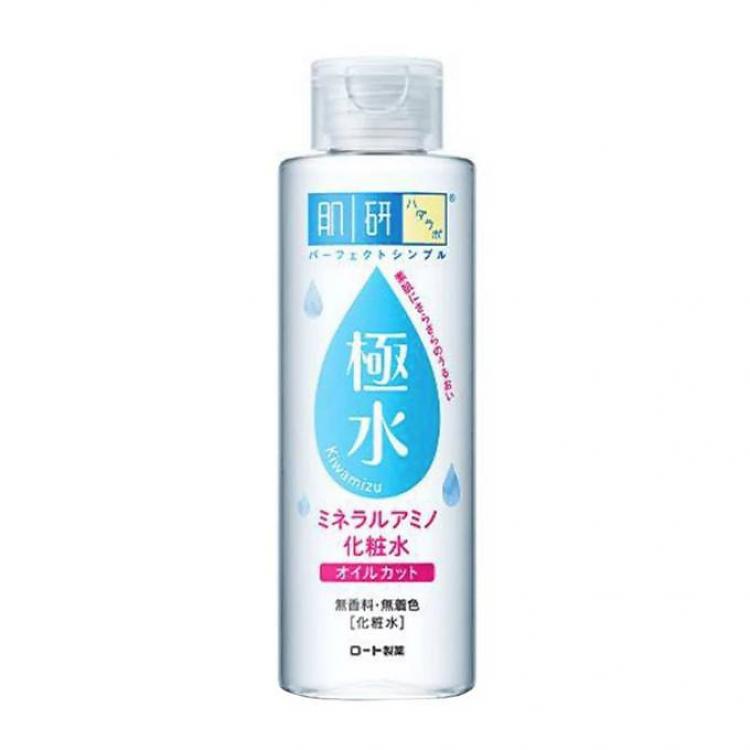
Rohto Hada Labo Kiwamizu Mineral Amino Lotion
Rohto Hada Labo Kiwamizu Mineral Amino Lotion is a lightweight, mineral-rich toner designed to provide refreshing hydration without weighing down the skin. Hailing from the renowned Japanese skincare brand Rohto Hada Labo, this lotion is formulated to restore the skin’s natural balance through a blend of minerals and amino acids. Its texture is incredibly watery and fast-absorbing, thanks to a base of Water, Butylene Glycol, and Ethanol. Glycerol and Diglycerol serve as powerful humectants, pulling moisture into the skin to leave it feeling supple and plump. Unlike heavier creams or serums, this Kiwamizu lotion offers a non-greasy finish that layers perfectly under other products in your routine. It is particularly effective for those seeking a 'skin-quenching' effect that mimics the skin's natural moisture factors. Whether used as a traditional toner or as part of a multi-layer hydration method, it provides a cooling sensation that calms the complexion. For users concerned about pore-clogging ingredients, this formula is exceptionally clean, focusing on essential hydration while maintaining a weightless feel that won’t contribute to congestion or breakouts.
Our Analysis
Our deep dive into the Rohto Hada Labo Kiwamizu Mineral Amino Lotion reveals a formula that is highly compatible with acne-prone skin. After analyzing the full ingredient list, our experts found no flagged comedogenic ingredients. The product relies on simple humectants like Glycerol and Diglycerol rather than heavy oils or waxes that often lead to clogged pores. Because it contains zero known pore-cloggers, it receives a 'Low Risk' rating from AcneSafe. This makes it a fantastic option for anyone struggling with congestion or active breakouts who still needs lightweight, effective hydration to maintain a healthy skin barrier.
Skin Type Recommendations
This lotion is ideal for oily and combination skin types due to its watery, non-comedogenic formula. It is excellent for acne-prone skin as it won't clog pores. However, those with very dry or extremely sensitive skin should be cautious of the Ethanol content, which may feel drying or irritating.
Flagged Ingredients
This product does not contain known high-risk comedogenic ingredients.
MACR Analysis
5-Axis AI-Powered Risk Assessment
The MACR analysis found moderate concerns not captured by traditional comedogenic ratings, such as barrier disruption or irritation potential.
Recommendations
This serum is best avoided by individuals with sensitive, dry, or highly acne-prone skin due to its alcohol content and potential for irritation and fungal support.
Individuals with normal to combination skin seeking moderate penetration enhancement for actives., Users not sensitive to alcohol or polysorbates.
Acne-prone skin due to potential for irritation and fungal acne support., Oily skin that is also sensitive., Individuals seeking a completely 'clean' fungal acne safe product.
Dry skin, Sensitive skin, Individuals with a known sensitivity to alcohol or parabens, Individuals actively managing fungal acne breakouts.
- •Patch test on a small area of skin before applying to the entire face, especially if you have sensitive or acne-prone skin.
- •Use sparingly, perhaps every other day initially, to gauge tolerance.
- •Ensure you are using a good moisturizer afterwards to combat potential dryness from Ethanol.
Overall Risk Score
Lower is better
Score by Skin Type
Lower is better
Same product, different risks based on your skin type
This leave-on serum presents a moderate risk, primarily driven by the penetration-enhancing and barrier-disrupting properties of its top ingredients, Butylene Glycol and Ethanol. While containing beneficial minerals and amino acids, the formulation's alcohol content and the presence of Polysorbate 20 warrant caution for acne-prone and sensitive skin types.
Risk Breakdown
Ingredient Interactions
These ingredients may interact to increase risk beyond their individual scores.
The combination of Butylene Glycol as a penetration enhancer and Ethanol as a potential barrier disruptor significantly increases the risk of other ingredients being driven deeper into the skin, potentially causing irritation or breakouts.
Ethanol's ability to strip lipids and transiently compromise the stratum corneum, coupled with Butylene Glycol's humectant and penetration-enhancing properties, creates a more permeable skin barrier. This synergistic effect can lead to increased absorption of other formulation components, exacerbating their potential risks.
Why This Score?
The overall score is calculated by weighing the risks of each ingredient. The high concentration of Butylene Glycol and Ethanol in the top 5 positions significantly contributes to the Barrier Risk (BR) and, to a lesser extent, the Plugging Risk (PR) and Oxidation Risk (OR) due to their penetration-enhancing and disruptive effects. Polysorbate 20 adds a moderate Fungal Risk (FR) and User-Reported (UR) concern, while Methyl Paraben contributes minor BR and OR. The synergistic effect of Butylene Glycol and Ethanol is a key driver of the elevated overall risk.
Main factors:
- •Barrier Risk (BR) due to Ethanol and Butylene Glycol
- •Penetration enhancement from Butylene Glycol and Ethanol
- •Fungal Risk (FR) from Polysorbate 20
Reducing factors:
- •Leave-on product format is evaluated at full risk, not reduced.
- •Low concentration of Polysorbate 20 and Methyl Paraben (last third of INCI).
- •Absence of highly comedogenic or problematic oils/butters.
- •Presence of beneficial minerals and amino acids.
Skin Type Considerations
This analysis uses the Multi-Axis Comedogenic Risk (MACR) system. Results are AI-estimated and cannot account for actual ingredient concentrations. Individual reactions may vary. Consult a dermatologist for personalized advice.