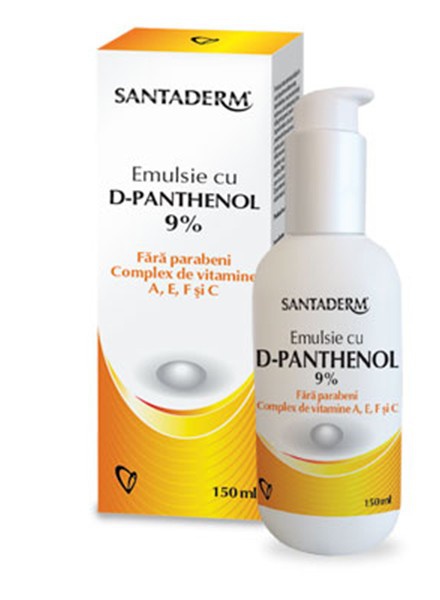
Santaderm Emulsie Cu D-Panthenol 9%
Santaderm Emulsie Cu D-Panthenol 9% is a specialized skin-soothing treatment formulated to accelerate the recovery of irritated or damaged skin. With a potent 9% concentration of D-Panthenol (Pro-Vitamin B5), this emulsion acts as a powerful humectant, drawing moisture into the skin and supporting the natural healing process. The formula includes Olea Europaea (Olive) Fruit Oil to provide essential fatty acids, creating a texture that is spreadable and softening. Designed for use after sun exposure, minor burns, or dermatological procedures, it aims to restore the skin barrier and alleviate redness. While the high panthenol content is excellent for regeneration, the emollient base is rich and heavy. Users will find it provides an immediate sense of relief to parched skin, though the complex ingredient list warrants a closer look for those with specific skin sensitivities or concerns regarding pore congestion.
Our Analysis
Our analysis of Santaderm Emulsie Cu D-Panthenol 9% indicates a HIGH comedogenic risk. While the product is marketed for healing, it contains Isopropyl Myristate and Ceteareth-20, both of which carry the highest possible pore-clogging rating (5/5). These ingredients act as penetration enhancers that can trap sebum and debris deep within the follicle. Furthermore, the combination of Cetearyl Alcohol and Ceteareth-20 creates a synergistic effect that increases congestion potential. With the addition of Oleic Acid, this formulation is highly likely to trigger breakouts and exacerbate acne in those prone to oiliness.
Skin Type Recommendations
This emulsion is best suited for very dry, damaged, or mature skin types that are not prone to acne. It is an effective recovery tool for localized irritation. However, it is strongly discouraged for oily, combination, or acne-prone skin due to multiple high-rated comedogenic ingredients that will likely cause blockages.
Flagged Ingredients
Penetration enhancer that dives deep into pores and hardens, causing blockages.
Highly comedogenic penetration enhancer. Opens the skin barrier to drag other ingredients deeper, causing congestion.
Disrupts skin barrier function and induces pore blockage.
High Oleic Acid content (similar to sebum); generally safe but can exacerbate fungal acne (Malassezia).
Fatty alcohol emollient with low-moderate comedogenicity on its own. However, when combined with Ceteareth-20, the synergistic effect can significantly increase pore-clogging potential (combined rating of 4).
Want Deeper Analysis?
Run our MACR (Multi-Axis Comedogenic Risk) analysis to get a comprehensive 5-axis risk assessment. This AI-powered analysis evaluates ingredients for Plugging Risk, Barrier Damage, Fungal Acne Risk, Oxidation Risk, and real-world User Reports — giving you personalized scores for your skin type.