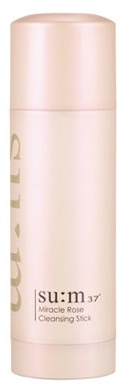
SU:M37 Miracle Rose Cleansing Stick
The SU:M37 Miracle Rose Cleansing Stick is a cult-favorite Korean skincare product known for its innovative solid-to-foam format and luxurious real rose petals embedded within the formula. This unique cleansing stick is designed to offer a gentle yet effective cleanse, utilizing a base of Glycerol and botanical extracts to maintain skin hydration. Infused with aromatic oils like Orange, Lime, and Lemon peel oils, it provides a refreshing sensory experience while breaking down surface impurities and light makeup. The stick format makes it exceptionally travel-friendly and easy to use on the go. While it features fermented ingredients that are hallmark to the SU:M37 brand, it also contains moisturizing oils intended to leave the skin feeling soft and supple rather than stripped. However, users should be aware of the dense, balm-like texture that transitions into a creamy lather. Despite its popularity for providing a radiant glow, the formulation includes several heavy emollients that require careful consideration for those tracking their pore-clogging ingredient intake and overall skin clarity.
Our Analysis
Our analysis of the SU:M37 Miracle Rose Cleansing Stick reveals a HIGH comedogenic risk, primarily due to the presence of Coconut Oil and Lauric Acid, both rated 4/5 on the comedogenic scale. Coconut oil is rich in Lauric Acid, which can solidify inside the pore, potentially leading to stubborn breakouts. Additionally, the formula contains Olive Oil (2/5), which may exacerbate fungal acne (Malassezia) due to its high Oleic Acid content. Stearic Acid and Tocopherol further contribute to the risk level. While these ingredients provide deep nourishment, they are known triggers for individuals with acne-prone or congestion-prone skin.
Skin Type Recommendations
This cleanser is best suited for dry or very dry skin types that require intense moisture and do not struggle with frequent breakouts. It is NOT recommended for oily, acne-prone, or sensitive skin. The high concentration of citrus peel oils and comedogenic fats like coconut oil may cause irritation or significant pore clogging.
Flagged Ingredients
High Lauric Acid content solidifies inside the pore.
Can be irritating and clogging in isolation due to molecular structure.
High Oleic Acid content (similar to sebum); generally safe but can exacerbate fungal acne (Malassezia).
Found in many butters; thickening agent with low-moderate risk.
Pure Vitamin E is thick and sticky; safe in small amounts as an antioxidant, but potentially clogging in pure oil form.
Want Deeper Analysis?
Run our MACR (Multi-Axis Comedogenic Risk) analysis to get a comprehensive 5-axis risk assessment. This AI-powered analysis evaluates ingredients for Plugging Risk, Barrier Damage, Fungal Acne Risk, Oxidation Risk, and real-world User Reports — giving you personalized scores for your skin type.