
Finding the perfect makeup primer often feels like a balancing act. You want that velvet-smooth, airbrushed finish that blurs imperfections and keeps your foundation in place for hours. However, for those with acne-prone or sensitive skin, that smooth finish often comes with a nagging fear: Is this clogging my pores?
Is Your Routine Acne-Safe?
Do not guess. Instantly check your products for pore-clogging ingredients with our AI-powered tool.
Check Ingredients NowAt the center of this debate is dimethicone, a type of silicone found in the vast majority of cosmetic primers. If you have ever felt like your skin was "suffocating" under a layer of makeup, you likely suspected dimethicone was the culprit. As a dermatologist, I hear this concern daily. Today, we will dive into the science of silicones to answer once and for all: Does dimethicone in primer actually clog pores?
What is Dimethicone and Why is it in Your Primer?
Dimethicone is a silicone-based polymer (polydimethylsiloxane) known for its unique sensory properties. In the world of formulation, it is a "hero" ingredient because it provides a silky, slippery texture without being oily.
In beauty primers, dimethicone serves three primary purposes:
- Smoothing: It fills in fine lines, large pores, and uneven skin texture, creating a level canvas for foundation.
- Protecting: It forms a temporary, breathable barrier on the skin’s surface, preventing transepidermal water loss (TEWL).
- Longevity: It helps makeup adhere to the skin and resist sweat and humidity.
The Comedogenicity Myth: Is Dimethicone the Problem?
To understand if an ingredient clogs pores, we look at its comedogenicity scale, which ranks substances from 0 (non-comedogenic) to 5 (highly comedogenic).
Scientifically speaking, dimethicone has a comedogenicity rating of 1 or 0.
This means that, on its own, the dimethicone molecule is too large to actually enter the pore and create a physical plug (a comedone). Unlike heavy oils or waxes, dimethicone does not sink into the skin; it sits on top. Therefore, from a purely chemical standpoint, dimethicone is not considered a pore-clogging ingredient.
If it’s not comedogenic, why do I break out?
If dimethicone doesn't physically clog pores, why do so many people swear that silicone primers cause their acne? The answer lies in the occlusive nature of the ingredient rather than the ingredient itself.
While dimethicone doesn't enter the pore, it creates a film over the skin. This film can trap other substances underneath it, including:
- Excess sebum (natural skin oil)
- Dead skin cells
- Sweat and bacteria
- Other potentially irritating ingredients from your skincare or foundation
When these elements are "sealed" against the skin for 8 to 12 hours under a layer of primer, they can irritate the follicle, leading to inflammation and breakouts. This is often referred to as acne cosmetica.
The Role of Skin Type: Who Should Be Cautious?
Not all skin reacts to dimethicone in the same way. Your skin type plays a massive role in how your pores respond to silicone-heavy products.
Oily and Acne-Prone Skin
If you already produce an abundance of sebum, the occlusive barrier of a silicone primer can act like a greenhouse for P. acnes bacteria. For these individuals, the "trapping" effect is more likely to lead to whiteheads or congestion.
Dry and Mature Skin
For those with dry skin, dimethicone is often a godsend. It prevents moisture from evaporating and provides a smooth surface that prevents makeup from flaking or settling into lines. These skin types rarely experience breakouts from silicones because they lack the excess oil that usually gets trapped.
Practical Steps: How to Use Primer Without the Breakouts
You don’t necessarily have to throw away your favorite silicone primer. If you love the finish but fear the pimples, follow these dermatologist-recommended steps:
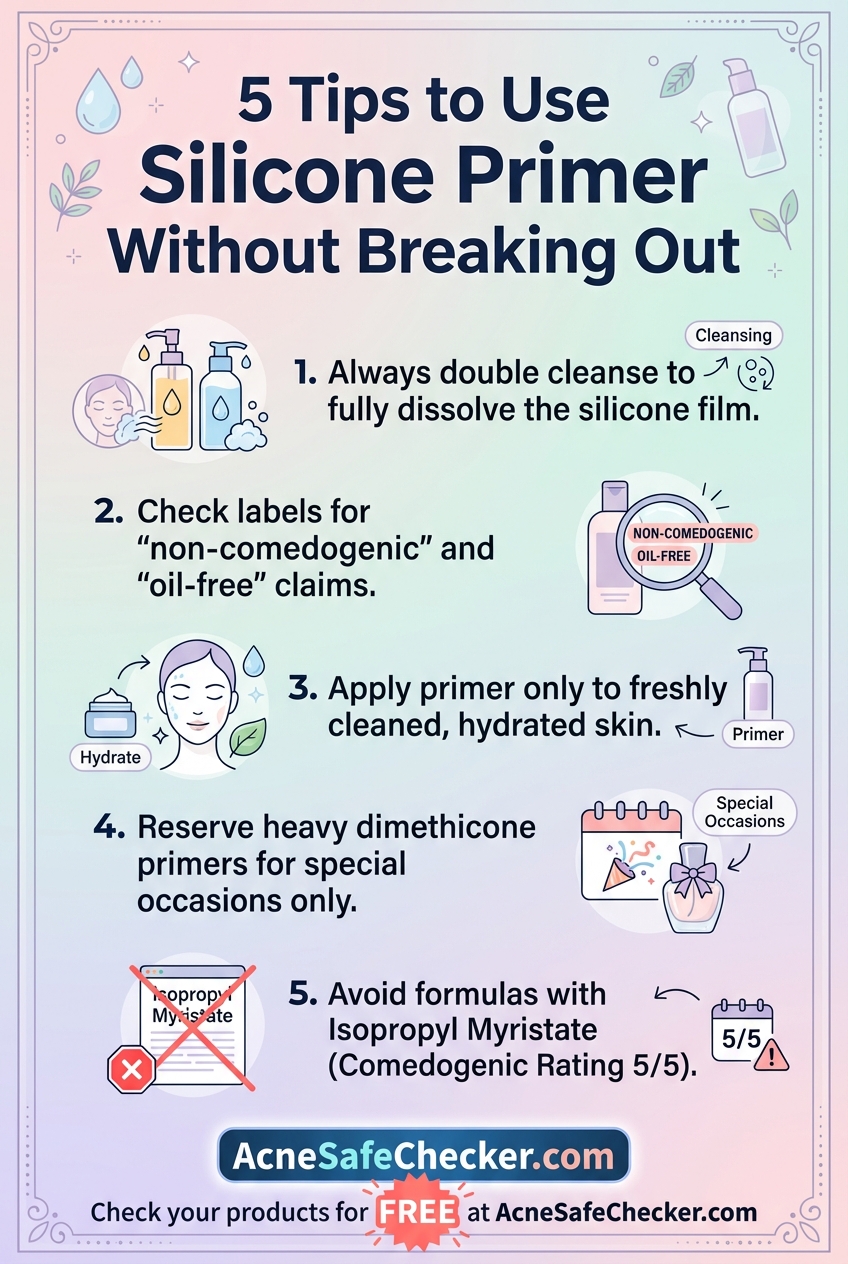
1. The Double Cleanse is Non-Negotiable
Silicones are designed to stay put. Standard water-based cleansers often fail to break down the silicone film entirely. If you leave traces of primer on your skin overnight, you will experience clogged pores. Use an oil-based cleanser or micellar water first to dissolve the primer, followed by a gentle pH-balanced water-based cleanser.
2. Check for "Hidden" Comedogens
Sometimes dimethicone gets the blame when the real culprit is another ingredient in the primer, such as isopropyl myristate, certain oils, or synthetic fragrances. Ensure your primer is labeled "non-comedogenic" and "oil-free."
3. Apply on Clean, Hydrated Skin
Never apply primer to dirty skin. Ensure you have a fresh base and a light layer of moisturizer. This creates a healthy barrier between your skin and the occlusive layer of the primer.
4. Reserve Silicone Primers for Special Occasions
If you have highly reactive skin, you might consider saving the heavy dimethicone primers for photoshoots or long events. For daily wear, look for water-based primers or those that use lighter, volatile silicones (like cyclopentasiloxane) which evaporate rather than sitting heavily on the skin.
The Verdict: Does Dimethicone Clog Pores?
In summary, dimethicone does not technically clog pores. It is a chemically inert, non-comedogenic ingredient that is safe for the vast majority of users. However, because it creates an effective seal on the skin, it can trap acne-causing debris if your skin isn't properly cleaned or if you are prone to extreme oiliness.
If you enjoy the blurring effect of silicones, continue to use them, but prioritize a rigorous double-cleansing routine at the end of the day. If your skin continues to break out despite perfect hygiene, your skin may simply be sensitive to the occlusive environment silicones create, and a water-based, silicone-free primer may be your best alternative.