
For anyone who has dealt with adult acne or persistent breakouts, the morning makeup routine often feels like a high-stakes gamble. You want your foundation to look flawless and stay put throughout the day, but you also live in fear of the "morning-after" breakout. The final step of that routine—the setting spray—is often the most overlooked culprit in the cycle of clogged pores.
Is Your Routine Acne-Safe?
Do not guess. Instantly check your products for pore-clogging ingredients with our AI-powered tool.
Check Ingredients NowAs a dermatologist, I frequently see patients who invest in medical-grade cleansers and oil-free foundations, only to sabotage their progress with a setting spray laden with occlusive film-formers. In this guide, we will break down the science of non-comedogenic setting sprays and how to protect your skin barrier without sacrificing your makeup’s longevity.
Why Setting Sprays Can Be Tricky for Acne-Prone Skin
Setting sprays are designed to create a thin, invisible film over your makeup to prevent smudging, melting, or fading. While this is great for your aesthetic, it can be problematic for your biology. Standard setting sprays often rely on a combination of alcohols and polymers to "lock" products in place.
For someone with acne-prone skin, this seal can trap sebum (oil), sweat, and environmental pollutants against the skin. If the formula contains heavy oils or certain waxes, these ingredients can sink into the ostium—the opening of the pore—leading to the formation of comedones (blackheads and whiteheads).
Understanding the Term "Non-Comedogenic"
In the world of dermatology, "non-comedogenic" indicates that a product is formulated specifically to avoid clogging pores. However, it is important to understand that this term is not strictly regulated by the FDA. It is often a claim made by brands based on ingredient analysis or clinical testing.
When we look for a non-comedogenic setting spray, we aren't just looking for a label; we are looking for a formula that respects the skin’s natural respiratory and excretory functions. A truly skin-friendly spray should be "breathable," allowing moisture to move while keeping pigments stationary.
Ingredients to Look For
To keep your skin clear while maintaining a 12-hour wear time, look for these dermatologist-approved ingredients:
1. Niacinamide (Vitamin B3)
Niacinamide is a powerhouse for acne-prone individuals. It helps regulate oil production, reduces the appearance of enlarged pores, and strengthens the skin barrier. Seeing this in a setting spray is a major plus.
2. Hyaluronic Acid and Glycerin
Instead of heavy oils, look for humectants. These ingredients pull moisture into the skin without adding oiliness, ensuring that your skin doesn't overproduce sebum in response to dehydration.
3. Zinc Ricinoleate or Witch Hazel (Alcohol-Free)
These ingredients help absorb excess oil throughout the day. If you struggle with a "shiny" T-zone, these can act as a gentle mattifying agent within the spray.
4. Aloe Vera and Rose Water
These botanical extracts provide anti-inflammatory benefits, which can help soothe existing acne lesions while you wear your makeup.
Red Flags: Ingredients to Avoid
If you are prone to breakouts, examine the label for these common offenders:
- Isopropyl Myristate: This emollient is notorious for being highly comedogenic.
- High Concentrations of Alcohol Denat: While alcohol helps the spray dry quickly, it can strip the skin’s natural oils, causing a rebound effect where your skin produces more oil to compensate.
- Heavy Silicones: While some silicones (like dimethicone) are generally safe, some heavier versions can create a plastic-like seal that traps bacteria.
- Synthetic Fragrances: Fragrance is a leading cause of contact dermatitis and can irritate active acne, leading to post-inflammatory hyperpigmentation (PIH).
The Science of Application: How to Use Setting Spray Safely
How you apply your product is just as important as what is in the bottle. Follow these steps to minimize the risk of irritation:
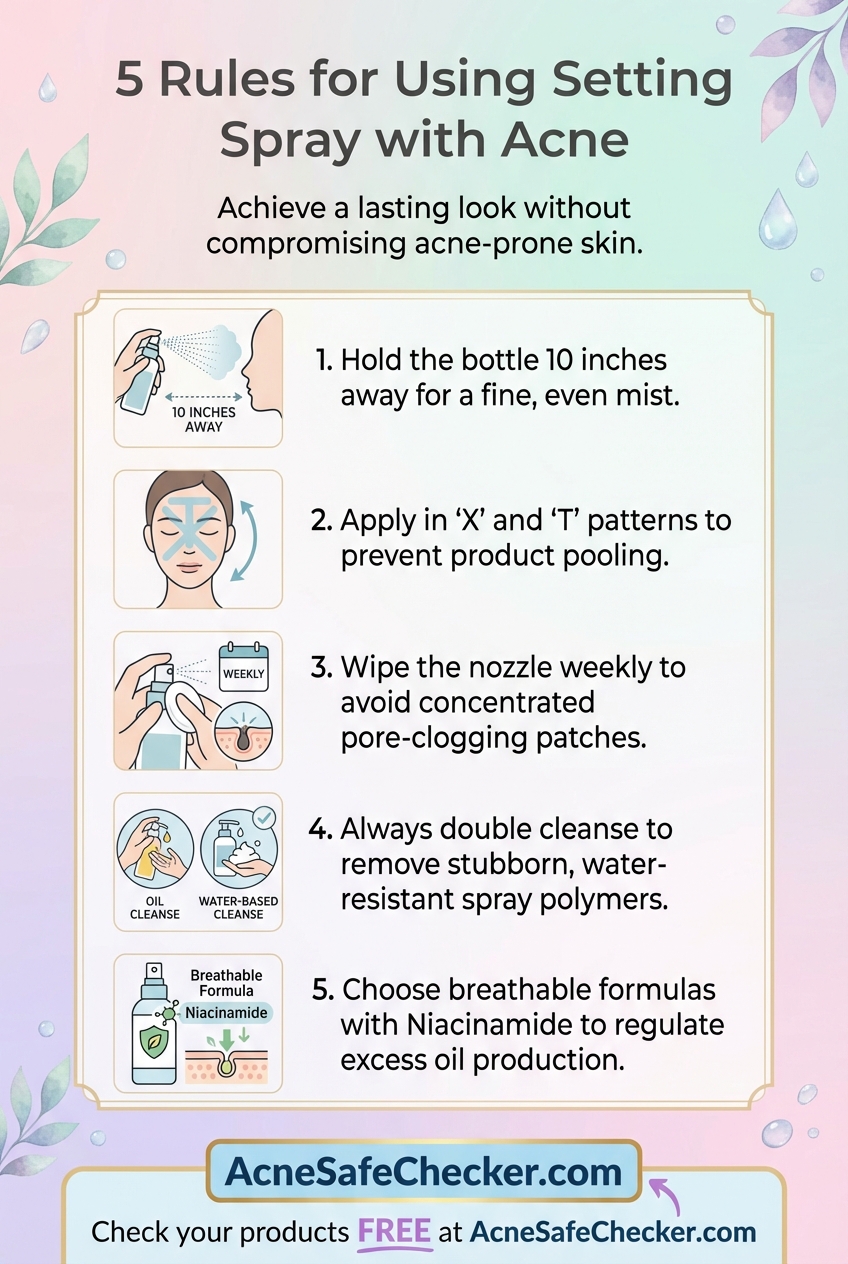
- The 10-Inch Rule: Always hold the bottle at least 8 to 10 inches away from your face. This ensures a fine, even mist rather than large droplets that can pool in pores.
- The "X" and "T" Pattern: Spray in an 'X' shape across the face, followed by a 'T' shape. This covers the perimeter and the oil-prone T-zone without over-saturating any single area.
- Clean the Nozzle: Setting spray contains polymers that can harden. A dirty nozzle creates an uneven spray (spit), which can lead to concentrated patches of product that clog pores. Wipe the nozzle with an alcohol wipe weekly.
- The Double Cleanse: This is the most critical step. Setting sprays are designed to resist water. To fully remove them at the end of the day, start with a micellar water or oil-based cleanser (specifically one for acne-prone skin) followed by a gentle foaming cleanser.
Conclusion: Balance is Key
You don't have to choose between a clear complexion and a makeup look that lasts. By opting for non-comedogenic formulas and avoiding harsh drying alcohols, you can enjoy the benefits of a setting spray without the subsequent breakout.
Remember, your skin is a living organ. Treat it with ingredients that soothe and protect, and always prioritize a thorough nighttime cleansing routine to let your pores breathe. If you continue to experience breakouts despite switching to non-comedogenic products, consult with a board-certified dermatologist to rule out other underlying causes.